Did you know that Truthout is a nonprofit and independently funded by readers like you? If you value what we do, please support our work with a donation.
I’ve actually been avoiding thinking about President Obama’s latest cave-in, on ozone regulation; these repeated retreats are getting painful to watch.
For what it’s worth, I think it’s bad politics. Mr. Obama’s political people seem to think that their route to victory is to avoid doing anything that the Republicans might attack — but the G.O.P. will call Mr. Obama a socialist job-killer no matter what they do. Meanwhile, they just keep reinforcing the perception of mush from the wimp — of a president who doesn’t stand for anything.
Whatever. Let’s talk about the economics, because the ozone decision is definitely a mistake on that front. As some of us keep trying to point out, the United States is in a liquidity trap: private spending is inadequate for achieving full employment, and with short-term interest rates close to zero, conventional monetary policy is exhausted.
This puts us in a world of topsy-turvy, in which many of the usual rules of economics cease to hold. Thrift leads to lower investment; wage cuts reduce employment; even higher productivity can be a bad thing.
And the broken windows fallacy ceases to be a fallacy: Something that forces firms to replace capital, even if that something seemingly makes them poorer, can stimulate spending and raise employment. Indeed, in the absence of effective policy, that’s how recovery eventually happens: as the economist John Maynard Keynes put it in his “General Theory of Employment, Interest, and Money,” a slump goes on until “the shortage of capital through use, decay and obsolescence” gets firms spending again to replace their plants and equipment.
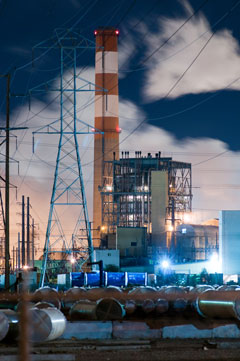
And now you can see why tighter ozone regulation would actually have created jobs: It would have forced firms to spend on upgrading or replacing equipment, helping to boost demand. Yes, it would have cost money — but that’s the point! And with corporations sitting on lots of idle cash, the money spent would not, to any significant extent, have come at the expense of other investments. More broadly, if you’re going to push environmental investments — things that are worth doing even in flush times — it’s hard to think of a better time to do them than when the resources needed to make those investments would otherwise have been idle.
So, a lousy decision all around. Are you surprised?
Truthout has licensed this content. It may not be reproduced by any other source and is not covered by our Creative Commons license.
Paul Krugman joined The New York Times in 1999 as a columnist on the Op-Ed page and continues as a professor of economics and international affairs at Princeton University. He was awarded the Nobel in economic science in 2008.
Mr Krugman is the author or editor of 20 books and more than 200 papers in professional journals and edited volumes, including “The Return of Depression Economics” (2008) and “The Conscience of a Liberal” (2007). Copyright 2011 The New York Times.
25 Years of Truthout: An important fundraising appeal
This September, Truthout is celebrating 25 years of publication. For over two decades, we have been a trusted source for fiercely independent journalism thanks to readers like you.
As we look to the next 25 years, we have launched a special fundraising campaign. This campaign is almost over! We have a goal to raise $18,000 before midnight tonight.
We are asking for your support at this juncture because we face greater threats than ever before in our organizational history. Trump and his MAGA allies are determined to control the information ecosystem, and movement-based organizations are subject to dangerous censorship and scrutiny.
If you can support Truthout with a one-time or monthly donation, you will make a significant impact on our work and our legacy. Anything you can do makes a difference!