Support justice-driven, accurate and transparent news — make a quick donation to Truthout today!
The first time they gassed us, I was reading in my cell. It was 2009, and I had just arrived in prison.
There was no warning, no incident — just the sudden hiss of oleoresin capsicum, better known as pepper spray, deployed because the guards said someone “refused to comply.” This refusal was defined as not returning to their assigned cell fast enough during count time, when security staff documents our presence at designated times.
Within seconds, my eyes, throat, and skin started burning. Women began screaming, coughing, and vomiting. In these dilapidated buildings without adequate ventilation, with most windows nailed shut, the gas lingers for hours. It seeps into our clothes, our bedding, our bodies.
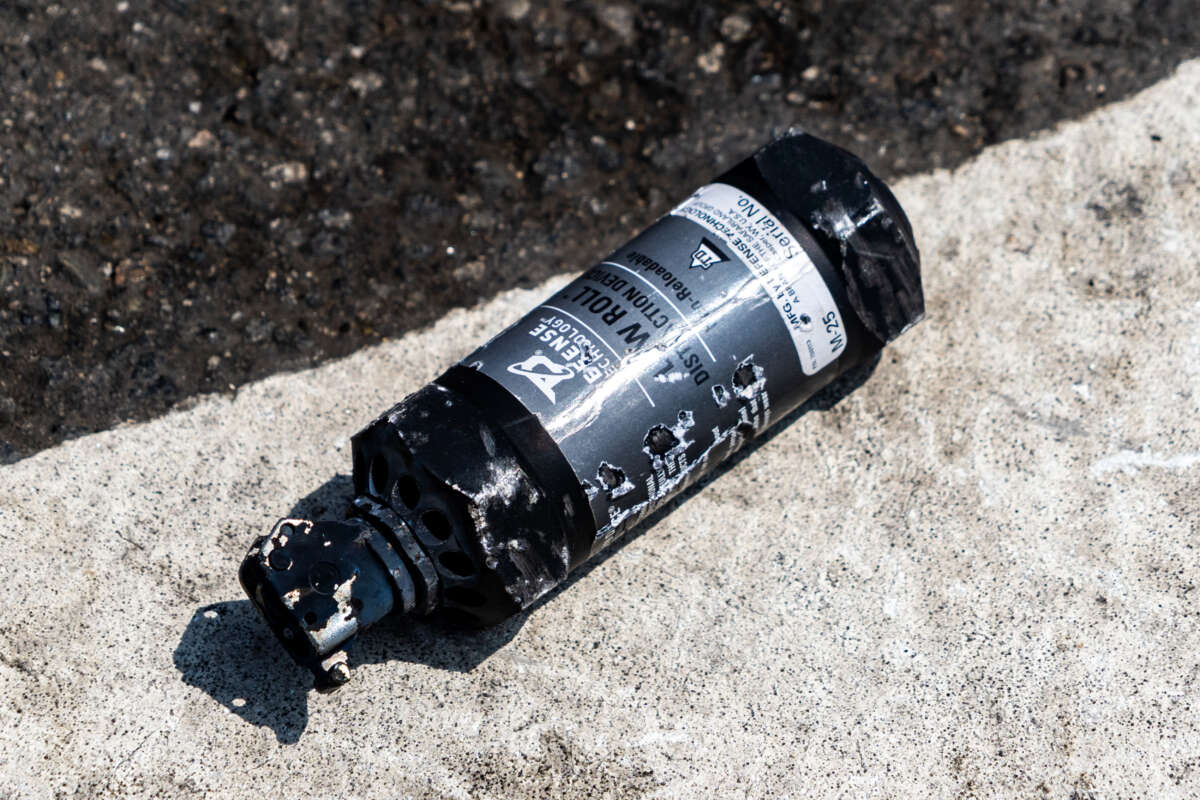
This wasn’t an isolated incident. In women’s prisons across Texas, tear gas — which includes agents such as pepper spray — has become the go-to response for minor infractions. Guards deploy it at close range in enclosed spaces, against policy, against humanity. They gas entire housing units to punish one person’s “noncompliance.” What they don’t tell you is how this chemical weapon — which is banned in warfare by the Chemical Weapons Convention, an international treaty that aims to eliminate weapons of mass destruction — affects women’s bodies differently than men’s.
Studies have found that women experience more serious reactions to tear gas exposure, particularly impacting reproductive health. In 2021, a study on the effects of tear gas on reproductive health found that nearly 900 people reported abnormal menstrual changes after exposure to tear gas, including intense cramping and bleeding that persisted for days. And while research is limited, other studies have linked tear gas exposure to miscarriage and fetal harm. On top of reproductive health issues, medical researchers from the University of Minnesota found that repeated exposure to tear gas can also lead to chronic pain and respiratory problems.
Yet, the prison staff continues gassing us without hesitation, without immediate medical attention, without accountability.
This January, they gassed our housing dorm because M was having a mental health crisis and wouldn’t come out from under a table. (M and the other women in this essay are going by their first initials to protect their identities.) Three days later, M complained of heavy menstrual bleeding during her second cycle of the month. The medical clinic said they couldn’t definitively link it to the tear gas exposure, but we all knew the truth, having experienced similar effects before.
These physical effects of being gassed are just the beginning. In poorly ventilated prison dorms, tear gas residue clings to surfaces for days. When that happens, we’re forced to sleep on contaminated mattresses, wear contaminated clothes, and breathe contaminated air. The burning sensation returns every time we sweat, reactivating chemicals trapped in our pores. Women with asthma or other respiratory conditions suffer from choking and gasping for breath in cells that become gas chambers.
A 2020 report by Physicians for Human Rights documented the long-term effects of tear gas exposure: chronic bronchitis, asthma, reproductive health issues, and psychological trauma. But these studies were conducted on populations with access to proper medical care and compliance with decontamination procedures. In prison, we’re lucky if they let us shower after exposure. With six showers for 88 women, decontamination is impractical. More often, we’re left to decontaminate using the small sink basins in our cells, with only the hot water tap working. It spreads the chemicals around rather than removing them.
Trauma from each gassing builds up. Every hiss of a spray can trigger panic attacks. Women who’ve experienced sexual assault — and that’s most of us in here — find the loss of bodily autonomy specifically triggering. Being trapped in a small space, unable to breathe, and at the mercy of others recreates past trauma with devastating effectiveness.
Earlier this year, they gassed another dorm because someone flushed a tampon and clogged the day room toilet. S, who resides in that dorm, has severe asthma. As she struggled to breathe in her locked cell, begging for her inhaler, guards watched from behind masks. Hours later, when she finally got medical attention, they dismissed her complaints as “being dramatic.” For days, she continued coughing up mucus-streaked blood.
Criminal justice advocates have decried the growing use of tear gas and pepper spray in prisons, saying that they should only be used as a last resort when there’s a serious threat to safety. But I’ve seen guards deploy it for cursing, for walking too slowly, for asking too many questions. It’s not about safety; it’s about control, about breaking our spirits through chemical warfare.
The solution isn’t better ventilation or more careful deployment, though both would help. The solution is recognizing that the use of chemical weapons against the incarcerated — many of whom are trauma survivors — is inherently sadistic and unnecessary. Tear gas is even used in Texas juvenile facilities, as revealed in a scathing report issued by the U.S. Department of Justice that called out the misuse of tear gas on incarcerated children ages 9 and up.
D, now 22 years old, was 13 years old when she entered the juvenile facility and only 18 when she arrived at the adult prison. She told me that she experienced tear gas exposure dozens of times before turning 20. But there are other new women who arrive at the prison daily who don’t know to hold a wet cloth over their faces and aim one fan in their cell toward the door when the gas comes. They don’t understand why the air suddenly burns for no apparent reason. Maybe by the end of their first week, I’ll see less fear in their eyes because they’ve learned to recognize the hissing sound. But I still see their panic surface when they realize there’s nowhere to run, nowhere to hide.
This isn’t correction or rehabilitation. It’s torture by another name.
Until there’s meaningful independent oversight and accountability, women behind bars will continue to suffer the consequences of tear gas exposure, in both the immediate and long term. Our bodies absorb these chemicals, holding and remembering them. Like so much prison trauma, we’ll carry this with us long after we’re released.
The next time you hear about tear gas being used for “riot control” or “maintaining order” in women’s prisons, remember this: There are women right now struggling to breathe, experiencing unexplained bleeding, and developing chronic conditions that will follow them for life. And for what? Because someone walked too slowly, spoke too loudly, existed too inconveniently for those with power over their bodies?
We’re not just serving time; we’re serving as test subjects for chemical weapons that no one fully understands the long-term effects. This isn’t justice. This is state-sanctioned violence against captive women, and it needs to stop.
Daniel Mollenkamp and Lola Carino assisted with developing and researching this essay.
The Right to Write (R2W) project is an editorial initiative where Prism works with incarcerated writers to share their reporting and perspectives across our verticals and coverage areas. Learn more about R2W and how to pitch here.
Prism is an independent and nonprofit newsroom led by journalists of color. We report from the ground up and at the intersections of injustice.
Press freedom is under attack
As Trump cracks down on political speech, independent media is increasingly necessary.
Truthout produces reporting you won’t see in the mainstream: journalism from the frontlines of global conflict, interviews with grassroots movement leaders, high-quality legal analysis and more.
Our work is possible thanks to reader support. Help Truthout catalyze change and social justice — make a tax-deductible monthly or one-time donation today.