Truthout is an indispensable resource for activists, movement leaders and workers everywhere. Please make this work possible with a quick donation.
Truthout combats corporatization by bringing you trustworthy news: click here to join the effort.
Last year, not one of the 491,687 new minivans sold in the United States was made in America by unionized workers.
Some were manufactured overseas by companies owned by non-American manufacturers. The Kia Sedona, with 24,047 sales, was built in South Korea, Russia, and the Philippines. The MAZDA5, with 19,155 sales, was built in China, Japan, and Taiwan.
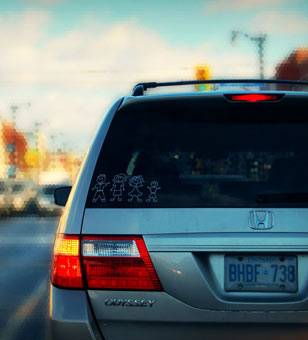
Some minivans from Japanese companies were built in the U.S., but by non-unionized workers. Honda sold 107,068 Odysseys built in Alabama. Toyota Siennas, built in Indiana, went to 111,429 persons. The Nissan Quest, built in Ohio, had 12,199 sales.
Only three minivans were built by unionized workers, but they were made in Canada by members of the Canadian Auto Workers. The Dodge Grand Caravan, with 110,996 sales; Chrysler Town & Country, with 94,320 sales; and the VW Routan, with 12,473 sales, all share the same basic body; most differences are cosmetic. GM and Ford no longer produce minivans.
The United Auto Workers (UAW) suggests that members who wish to buy minivans buy one of the three Chrysler products because much of the parts are manufactured in the United States by UAW members.
All cars, trucks, and vans from GM, Ford, and Chrysler are produced by union workers in the U.S. or Canada. The Japanese-owned Mitsubishi Eclipse, Spyder, and Galant, and the Mazda6 are produced in the U.S. under UAW contracts; neither company makes minivans. All vehicles produced in the U.S. have the first Vehicle Identification Number (VIN) as a 1, 4, or 5; vehicles produced in Canada have a 2 as the first VIN number.
Founded in 1935, the UAW quickly established a reputation for creating the first cost-of-living allowances (COLAs) and employer-paid health care programs. It helped pioneer pensions, supplementary unemployment benefits, and paid vacations.
It has been at the forefront of social and economic justice issues; Walter Reuther, its legendary president between 1946 and his death in 1970, marched side-by-side with Martin Luther King Jr. and Cesar Chavez, and helped assure that the UAW was one of the first unions to allow minorities into membership and to integrate the workforce. Bob King, its current president, a lawyer, was arrested for civil disobedience, carrying on the tradition of the social conscience that has identified the union and its leadership.
The UAW doesn’t mind that corporations make profits; it does care when some of the profit is at the expense of the worker, for without a competent and secure work force, there would be no profit. When the economy failed under the Bush–Cheney administration, and the auto manufacturers were struggling, the UAW recognized it was necessary for the workers to take pay cuts and make other concessions for the companies to survive.
But not all corporations have the social conscience that the UAW and the “Big 3” auto manufacturers developed. For decades, American corporations have learned that to “maximize profits,” “improve the bottom line,” and “give strength to shareholder stakes” they could downsize their workforce and ship manufacturing throughout the world. Our companies have outsourced almost every form of tech support, as well as credit card assistance, to vendors whose employees speak varying degrees of English, but tell us their names are George, Barry, or Miriam. Clothing, toys, and just about anything bought by Americans could be made overseas by children working in abject conditions; their parents might make a few cents more, and in certain countries would be thrilled to earn less than half the U.S. minimum wage.
Americans go along with this because they think they are getting their products cheaper. What they don’t want to see is the working conditions of those who are employed by companies that are sub-contractors to the mega-conglomerates of American enterprise. These would be the same companies whose executives earn seven and eight-figure salaries and benefits, while millions are unemployed.
But, Americans don’t care. After all, we’re getting less expensive products, even if what we buy is cheaply made because overseas managers, encouraged by American corporate executives, lower the quality of materials and demand even more work from their employees.
Walk into almost every department store and Big Box store, and it’s a struggle to find clothes, house supplies, and entertainment media made in America. If you do find American-made products, they are probably produced in “right-to-work” states that think unionized labor is a Communist-conspiracy to destroy the free enterprise system of the right to make obscene profits at the expense of the working class.
We can wave flags and tell everyone how much more patriotic we are than them, but we still can’t buy a minivan made in America by unionized workers—even when the price is lower than that of the non-unionized competition.
• Sales figures of minivans are from Edmunds.com. Also assisting was Rosemary Brasch.
An urgent fundraising appeal: 24 Hours to raise $21,000
Truthout is one of only a few platforms for justice-oriented, grassroots journalism. Today, we face an existential threat.
Due to Google’s launch of AI search, we’ve seen a drastic plunge in our site traffic and, as a result, our revenue. We lost 15 percent of our readership overnight. This was a readership we painstakingly built over decades, and it vanished because Google chose corporate greed over a healthy democracy.
We are fundraising right now to meet our basic operating expenses. If you can support Truthout with a one-time or monthly donation, you will make a significant impact on our work. Anything you can do makes a difference — we appreciate your support.