
Truthout is an indispensable resource for activists, movement leaders and workers everywhere. Please make this work possible with a quick donation.
Paris, France — The march on the iconic Place de la République in the French capital had barely begun when riot police — known as the Compagnies républicaines de sécurité, or CRS — fired tear gas in the square. The demonstration on October 17, 2026, had been officially declared to the Paris prefecture, which banned the longer route organizers planned through the center of the city but allowed a march departing from the square. Even so, police launched tear gas that incapacitated the 400 musicians of the Orchestre du Nouveau Monde, an activist classical ensemble that had played at earlier high school protests and came to perform again.
The heavy police presence did not deter protesters who dressed the statue of Marianne, a figure personifying the French Republic, at the center of the square in a giant yellow vest — a reference to the “yellow vest” protest movement that began in 2018 over rising fuel prices and cost of living and has recently joined forces with the French high schoolers’ protests. An inscription on the statue read: “2026, the police mutilate high schoolers.”

Similar crowds filled cities and towns across France. Organizers counted about 800,000 people among the protesters while authorities reported 550,000. Officials had expected far fewer, about 200,000, and Interior Minister Laurent Nuñez later conceded the state had been caught off guard.
The movement began in early September with blockades at high schools in France’s overseas territories — where students denounced decaying buildings, unfilled teaching posts and shrinking budgets — and then spread to underserved Paris suburbs and the rest of the country, in part through social media.
The police sometimes used force to contain and arrest students who were protesting and blocking off their schools. By October 1, the Collectif d’action judiciaire, a group of lawyers defending arrested students, said police in the Parisian suburb of Saint-Denis had pressured, blackmailed, and even beaten detained high schoolers. Several cases of police wounding students have been reported.
Unions, student organizations, and activist groups joined the movement, tying the school-related grievances to frustrations with the cost of living and anger at the government in a general convergence of struggles.


Daniel, 29, said French mainstream media tended to ignore the students’ demands, which is why the movement started on social media. “It breaks the dialogue, so it has to go through social media, where a freer thought for young people in general can emerge,” he said.
He argued that the French government in recent years has ignored every democratic channel, from the left’s win in the 2024 legislative elections after the National Assembly was dissolved by President Emmanuel Macron to citizen petitions against laws passed without debate.
“All of that creates a break between two parts of society, the elites in power and the rest of society, with those elites telling us, essentially, ‘you lot don’t understand anything, you’re idealists,’” he said.
Videos of police brutality shared on social media brought Éric, 32, into the streets on October 17, he said, adding that he was impressed by the scale of the Gen Z mobilization: “It took very little time to mobilize this many young people, and that’s impressive.”


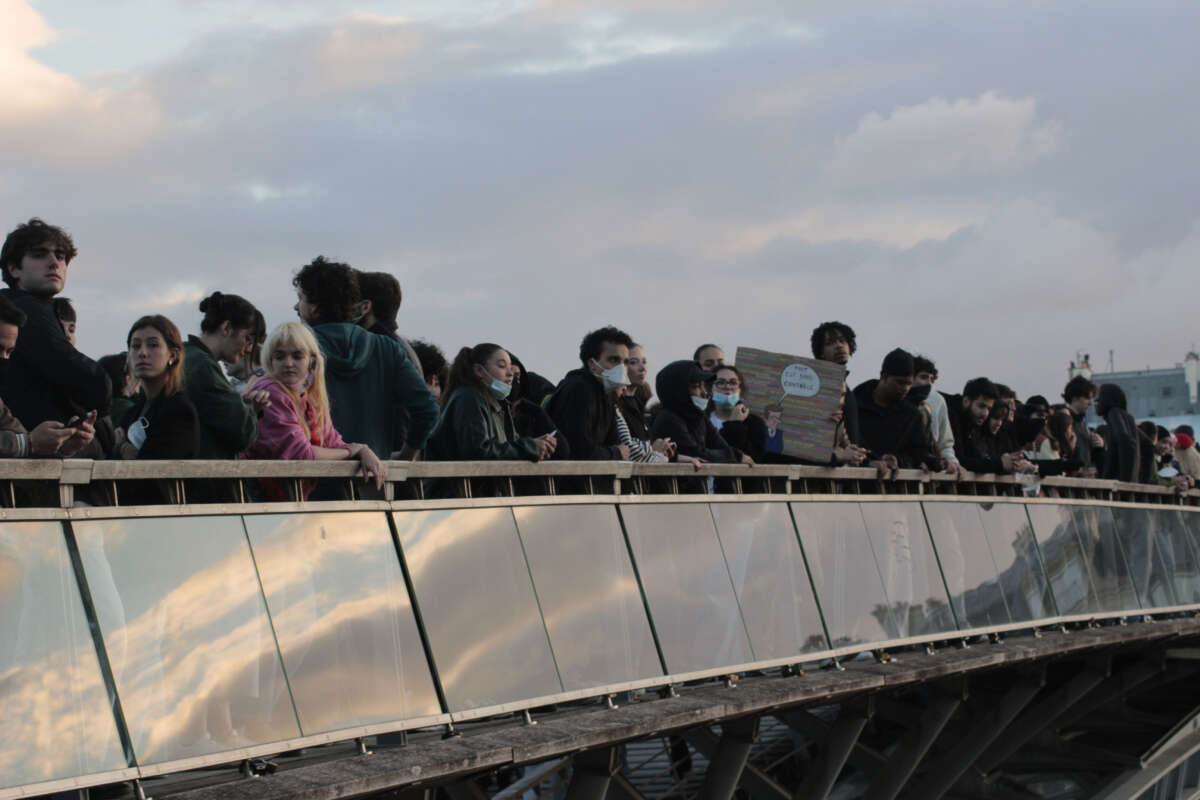
With at least 1,400 arrests, 3,000 businesses robbed, and several public buildings set ablaze that day, media coverage in France and abroad has generally focused on looting and arson on the margins on the protests, which some organizers and independent media have denounced, pointing to escalation from the police and anger built up over weeks of heavy-handed repression against students.
For Éric, the anger has been building for years. “Everything that has been done since the Macron era, such as the abolition of the TV license fee [a tax that funded public broadcasting] that brought the public service to its knees, with the rest of the media largely owned by far right billionaires — we’ve reached a critical point in the history of France and of Macron’s two terms, and it’s catastrophic,” he said.

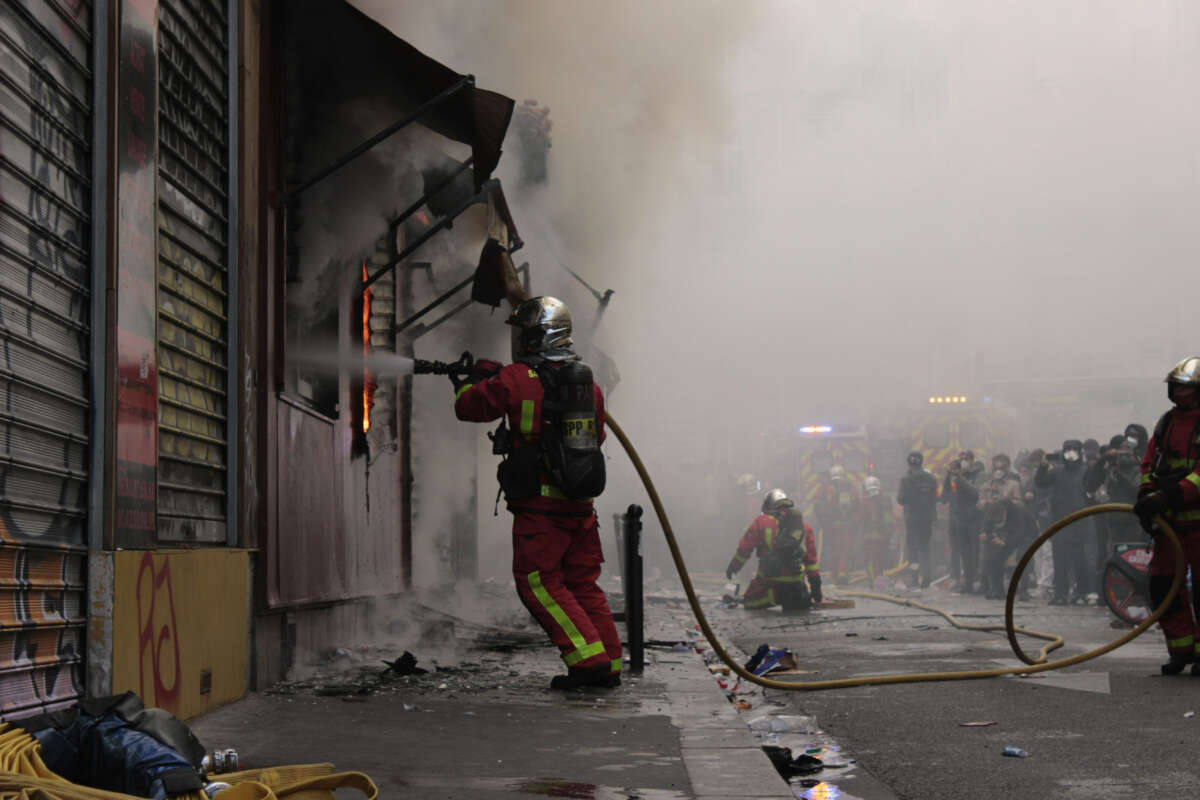
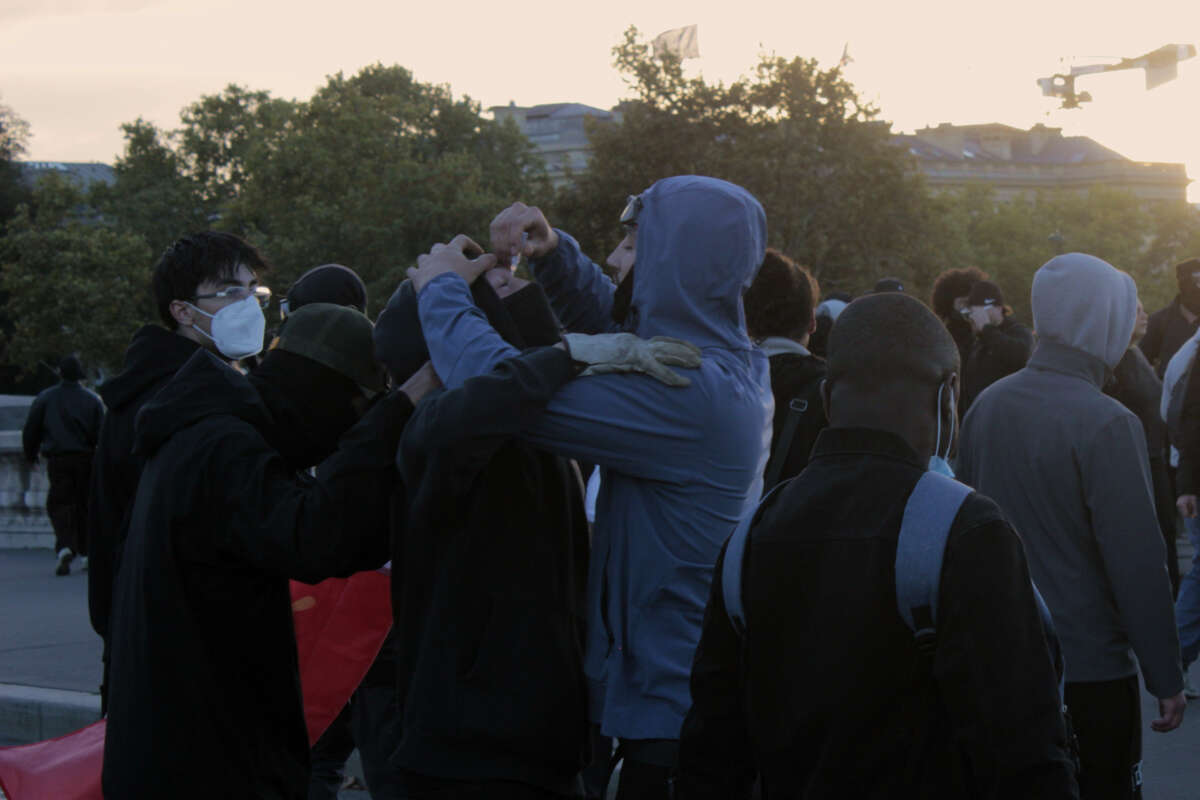
The French online media outlet StreetPress reported about 50 cases of police violence from the weekend so far, which include a 17-year-old in Saint-Étienne whose hand was torn off by a police grenade and a 17-year-old in Mulhouse who lost sight in her left eye.
The French government in recent days banned public gatherings in some cities, installed local curfews, and announced that the police will step up its response to any further demonstrations and call in army reinforcements.
The movement shows no sign of slowing, with more actions planned throughout the week, ahead of another protest on October 24.
“This government’s policy of extreme austerity isn’t necessary; we’re told there’s no other solution, but that’s not the case,” said Éric, who wants to continue rallying for students’ demands and against the high cost of living. “The proof is that other European countries have adopted different solutions that, while certainly not perfect, have proven way more effective than those last 10 years of Macron’s administration.”
An important fundraising appeal: 9 Days to raise $50,000
Donations are down for Truthout at a time when media is under immense pressure. Google’s AI search has driven our traffic down by 15 percent, Trump is arresting journalists, and many independent media organizations face heartbreaking cutbacks and closures.
At the same time, movement media is vital in the fight against Trump’s authoritarian reign. Our mandate to tell the truth, share strategies for resistance, and speak against fascism is ever more urgent in this deluge of political censorship and misinformation. Yet, we are struggling to meet our publishing costs when our work is so urgently needed.
We are fundraising right now for those basic operating expenses — we need $50,000 in the next 9 days. If you can support Truthout with a one-time or monthly donation, you will make a significant impact on our work. Anything you can do makes a difference.