Truthout is a vital news source and a living history of political struggle. If you think our work is valuable, support us with a donation of any size.
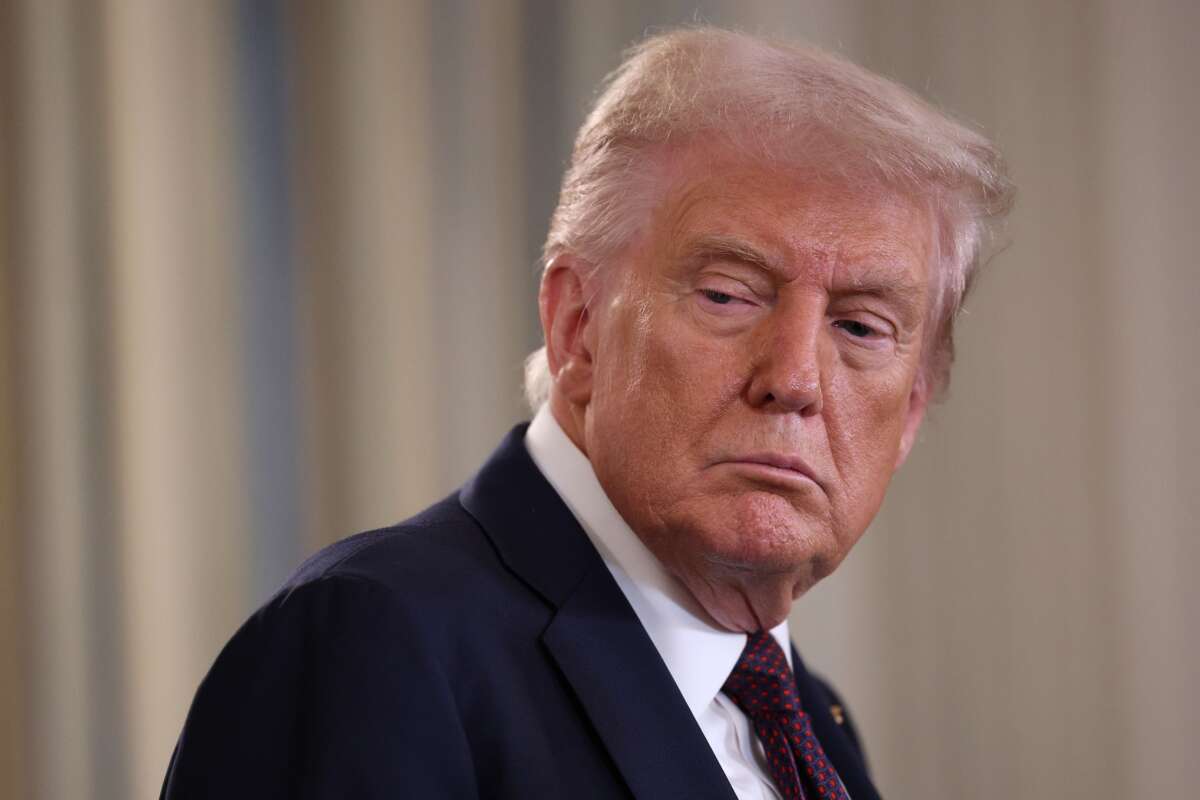
President Donald Trump told Congress on October 2 that the United States is now formally engaged in an “armed conflict” with drug cartels, which his administration has labeled “unlawful combatants” — an attempt to provide legal cover for unilateral action against civilians.
Trump’s announcement was made without a formal Authorization for Use of Military Force (AUMF) from Congress and violates constitutional requirements saying that only the legislative branch can declare war.
The news comes after the U.S. military illegally bombed at least three boats in the Caribbean Sea over the past month, claiming, without evidence, that they were targeting drug traffickers. The attacks killed 17 people and have been condemned by human rights organizations as “unlawful extrajudicial killings.”
The memo to Congress states in part that:
Based upon the cumulative effects of these hostile acts against the citizens and interests of the United States…the President determined that the United States is in a non-international armed conflict with these designated terrorist organizations. The President directed the Department of War [sic] to conduct operations against them pursuant to the law of armed conflict.
Congress hasn’t authorized any military action against cartels. Ordinarily, members of cartels are civilians, subject to the domestic criminal laws of the countries they operate in, and afforded due process. Under this logic, the administration’s strikes on the boats in the Caribbean would amount to extrajudicial killings, which is what some legal experts have already designated the attacks. This new determination from the Trump administration attempts to bypass that, equating drug cartels in general to “non-state armed groups” and individuals to “unlawful combatants,” and suggesting that “their actions constitute an armed attack against the United States.” This would mean the administration’s actions were subject to international humanitarian law, rather than domestic U.S. law. Even international humanitarian law requires the parties of armed conflicts to distinguish between combatants and civilians when targeting attacks.
The move essentially means the U.S. has been engaged in a “secret war” for the past several weeks, many critics contend, even as the administration has yet to provide evidence that the boats it bombed were actually operated by drug cartels. Indeed, a woman who identified herself as the wife of a man killed by the strikes said her husband was a fisherman with four children. He left for work one day and never came back, she said.
Geoffrey S. Corn, a retired judge advocate general lawyer, told The New York Times that the administration’s action goes beyond the pale.
“This is not stretching the envelope. This is shredding it. This is tearing it apart,” Corn said.
Meanwhile, a draft proposal to obtain an AUMF has been circulating in Congress. If passed, it would grant the Trump administration broad powers to target so-called “narco-terrorists” under domestic law. The ambiguous language of the proposal would also potentially allow U.S. military action against anyone the military deems to be involved with cartels across 60 different countries.
It’s unclear whether the White House has enough votes in Congress to pass such a measure, as it would likely be blocked by a Senate filibuster.
Meanwhile, the White House has indicated that it hasn’t ruled out using military force within Venezuela, where many cartels operate. Such an action would likely lead to a crisis — and potentially a war — between Venezuela and the U.S.
“If Venezuela is sending drug cartels to the United States by land or sea, he’ll consider action on it,” a senior official in the Trump White House told Semafor, notably leaving out that, legally, Congress would have to weigh in on the matter.
Critics condemned Trump’s announcement, warning that bypassing Congress to declare war could have dire consequences.
“Trump doesn’t get to ‘determine’ we’re at war — that’s Congress’s job,” Sen. Chris Van Hollen (D-Maryland) said, adding that the matter “isn’t about public safety” but rather is “a power grab” by Trump.
“Trump’s actions are illegal, unconstitutional, and dangerous,” Sen. Ed Markey (D-Massachusetts) chimed in.
“[Trump] has ABSOLUTELY no right under US or international law to blow up Venezuela boats. This state-sponsored piracy, and it must be universally condemned,” said Medea Benjamin, co-founder of CODEPINK.
“The president has just much authority to make this determination as they have to call it the Department of War. Zero.” constitutional law professor Anthony Michael Kreis wrote.
Press freedom is under attack
As Trump cracks down on political speech, independent media is increasingly necessary.
Truthout produces reporting you won’t see in the mainstream: journalism from the frontlines of global conflict, interviews with grassroots movement leaders, high-quality legal analysis and more.
Our work is possible thanks to reader support. Help Truthout catalyze change and social justice — make a tax-deductible monthly or one-time donation today.