Part of the Series
The Road to Abolition
Honest, paywall-free news is rare. Please support our boldly independent journalism with a donation of any size.
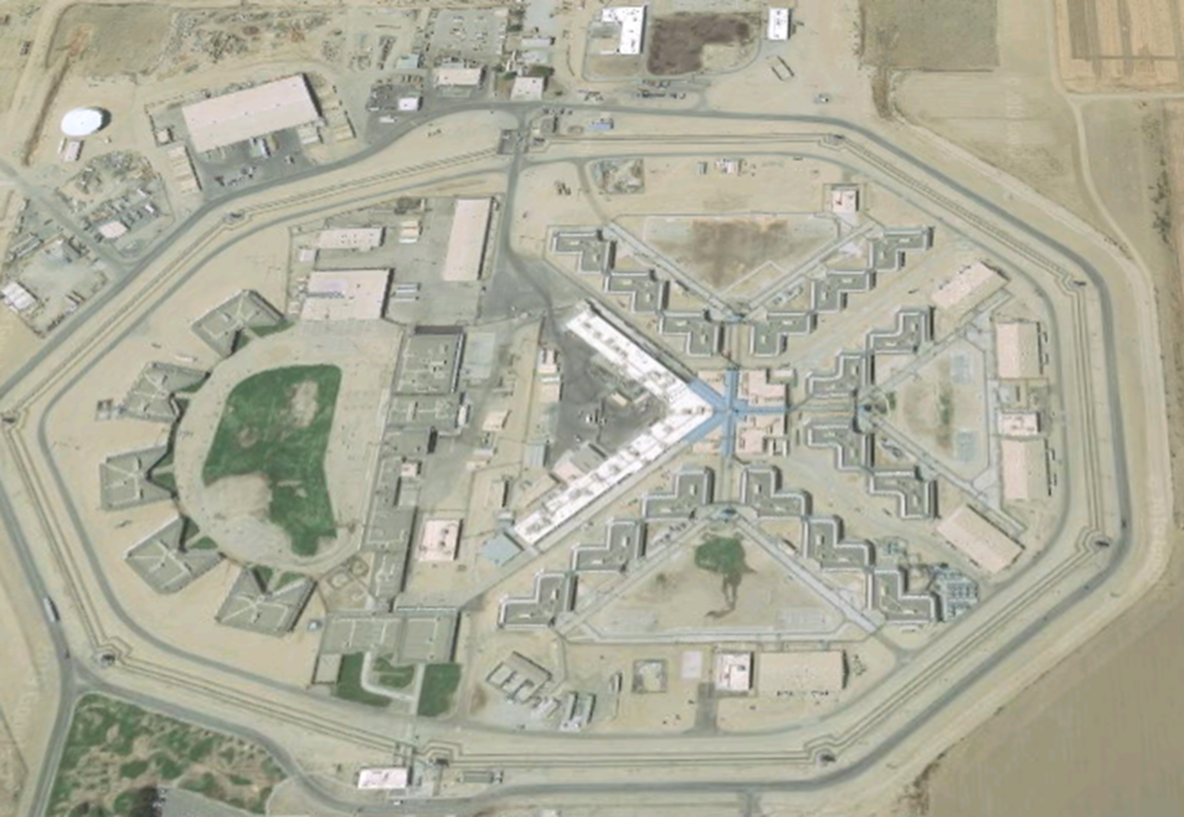
While incarcerated at California’s Wasco State Prison in November 2024, I woke up drenched in sweat. I quickly became sicker: body aches, shortness of breath, and no energy. I recognized the symptoms of valley fever, a lung infection caused by fungus that grows in the Southwest. Despite repeated requests to be tested for it, I was instead told it was pneumonia and given antibiotics.
My symptoms worsened. My face swelled. My breathing became labored, and I had to be rushed to an outside hospital. I lost 25 pounds in two weeks and feared I wouldn’t survive to see my family again. After weeks of declining health and multiple sick call forms, I was finally able to get tested for Valley fever in December. The result came back: positive.
It shouldn’t have taken that long. I now have to take lifelong medication for a disease I knew I had but was ignored. As a Black man — part of a group at higher risk for valley fever — it feels like I was sent to Wasco to die.
What happened to me is part of a larger story, with deeper roots that trace back to the siting of prisons on drought-damaged, devalued land during California’s prison-building boom of the 1980s and ’90s. Prisons were seen as an alternative economic engine for land that was no longer agriculturally productive. Twenty of California’s 31 prisons were built in this 13-year period. Sixteen of those prisons are located in California’s Central Valley, an area known for its toxic air. Four of them were built in counties with the highest Valley fever contraction rates — caused by land containing spores of Coccidioides Fungus.
Since 2005, 4,000 imprisoned people in California have been diagnosed with Valley fever, causing at least 53 deaths. Valley fever impacts the same populations mass incarceration disproportionately targets — Black, Asian and Pacific Islander, and Latinx people. Like the devalued land prisons were initially built on, human life has also been devalued to the point where we force people to be warehoused in spore-ridden dirt.
Valley fever and its impacts on Black and Brown people is not the only example of environmental racism perpetuated by California’s prison system. As of 2021, at least 21 state prison water sources were found toxic and unsafe for human consumption.
As found in the Ella Baker Center for Human Rights’ Hidden Hazards report, 18 of California’s prisons are located in areas vulnerable to wildfires, flooding, and/or extreme heat. The recently released Office of the Inspector General audit affirmed the California Department of Corrections and Rehabilitation (CDCR) is “not adequately prepared to respond to emergencies posed by natural disasters”. The audit goes on to say that “not only are some prisons overcrowded, but the department is unable to evacuate the incarcerated population and staff at most prisons within the first critical 72 hours of an emergency.”
I know the impacts of this lack of preparedness all too well. I was incarcerated in the California Correctional Center (CCC) in Susanville, during the Dixie Fire — the second largest fire in California state history. Imagine living in your home for 28 days with no electricity. Imagine you are forced to sleep in your home while it is filled with smoke. Imagine you can’t do anything about it. This was the reality for those of us incarcerated in CCC. The public was largely unaware of this. The thought of prisons like CCC being kept open for any reason — to remain “flexible” in the event of wildfires and climate emergencies, for instance — is extremely troubling.
One of the most concrete ways to address the impact of escalating environmental crises is through decarceration and prison closures. Recommendations in the Hidden Hazards report include: reducing the size of the incarcerated population by 50,000 with a focus on people 50 years or older and those who are most vulnerable; requiring CDCR to create rapid release policies to use during times of emergency; and closing prisons most vulnerable to climate hazards.
Continued prison closure and decarceration are possible. Despite short-term fluctuations tied to Proposition 36, the incarcerated population is on a long-term steady decline, with the population expected to reach 89,692 by June 2029. While Prop 36 may increase jail and prison use temporarily, the governor’s own data shows no substantial or sustained population increase. California could close several additional prisons without overcrowding the remaining facilities.
Prison closures are also an effective budget solution. California has already saved $900 million by closing prisons — critical dollars that can be used to offset devastating cuts to safety net services.
CDCR has already spent $300 million keeping closed prisons in “warm shutdown” mode — allowing empty facilities to be maintained should the state choose to reopen them. (CCC, where I was incarcerated, is currently in this mode.) Multiple closed prisons are currently being eyed for detention center use — the threat of which is growing as Donald Trump pours billions more into Immigration and Customs Enforcement (ICE). Permanently shuttering these facilities is another life and money saving action the state can take right now.
Luckily, Gov. Gavin Newsom recently signed AB 137, which gives California new tools to prevent ICE from taking over closed state prison sites. However, this bill is only as good as its implementation. It is critical for Governor Newsom to declare closed prisons such as Chuckawalla Valley State Prison and California Correctional Center “excess” capacity so they can undergo the AB 137 process and be protected from ICE. These facilities closed for a reason. Every prison we fail to permanently shutter opens the door for federal takeover and backtracks our progress towards ending the grip prisons have on our communities.
Rather than appeasing calls for prison closure with “warm shutdowns” it’s time for the state to permanently shutter these facilities. Permanent closures can create endless opportunities for healthier communities. The state can achieve this by returning the land closed prisons are located on to Indigenous and Black people, remediating toxic sites so the land can begin to heal, and repurposing facilities in non-carceral ways.
Amidst escalated federal repression and state financial woes, now is the time for more than rhetoric about protecting the health and actual safety of our communities. Tools like AB 137 are a key first step. The question now is whether California will use it to block ICE, permanently shutter prisons, and imagine a better future for California.
An important fundraising appeal: 9 Days to raise $50,000
Truthout is one of only a few platforms for justice-oriented, grassroots journalism. Today, as political censorship from the right intensifies, we have no choice but to ask for your help.
We are fundraising right now to cover our basic operating expenses. If you can support Truthout with a one-time or monthly donation, you will make a significant impact on our work. Anything you can do makes a difference — we appreciate your support.