Part of the Series
Struggle and Solidarity: Writing Toward Palestinian Liberation
Support justice-driven, accurate and transparent news — make a quick donation to Truthout today!
Since September 30, 2025, the Italian government has undertaken a major operation to offer a future for Gaza’s students. While evacuation to Italy was previously available to Palestinians only for medical treatment and family reunification, the Italian government has now taken the unprecedented step of opening the nation’s universities under the Italian Universities for Palestinian Students project, allowing Gazan students to pursue their studies abroad away from the war.
The Italian Universities for Palestinian Students project offers a unique lifeline for young students whose academic futures were destroyed in Gaza. Since October 2023, nearly all of Gaza’s universities and schools have been bombed, leaving students struggling to access education. Back in August 2025, the Palestinian Ministry of Education and Higher Education reported that more than 18,000 Palestinian students had already been killed since October 2023, and the deaths have continued to mount since then.
I am one of the more than 180 Palestinian students who fled to Italy from Gaza through the new Italian Universities for Palestinian Students program. I was evacuated from Gaza in December 2025 and am now pursuing a bachelor’s degree in languages at the University of Siena. Even though Gaza is my beloved home, I made the painful decision to leave because I cannot watch and do nothing as my education journey is destroyed in front of my eyes.
Since arriving in Italy, I have interviewed three other Palestinian students who also recently arrived through the Italian Universities for Palestinian Students project. All three spoke to me about how, despite their successful escape from the terror that the Israeli military had brought down on Gaza, they still struggle with the feeling that the war has destroyed their lives’ meaning.
Tarek Al Farra, 23, worked as a storyteller and teacher for children in Gaza’s tents after their schools were destroyed. While in Gaza, he was documenting the war on Instagram, capturing his experiences of displacement, hunger, and loss. Arriving in Turin, Italy, has given Al Farra the chance to save his future and start to share his experiences in a safer environment. “I feel free, I feel like a bride,” he wrote on Instagram when he first left Gaza.
This feeling of freedom is often the first emotion anyone experiences after years of suffocation. For Palestinians, however, happiness almost always comes at a price. “I left my backpack in Gaza. I left my parents suffering in tent life,” Al Farra said during our interview.
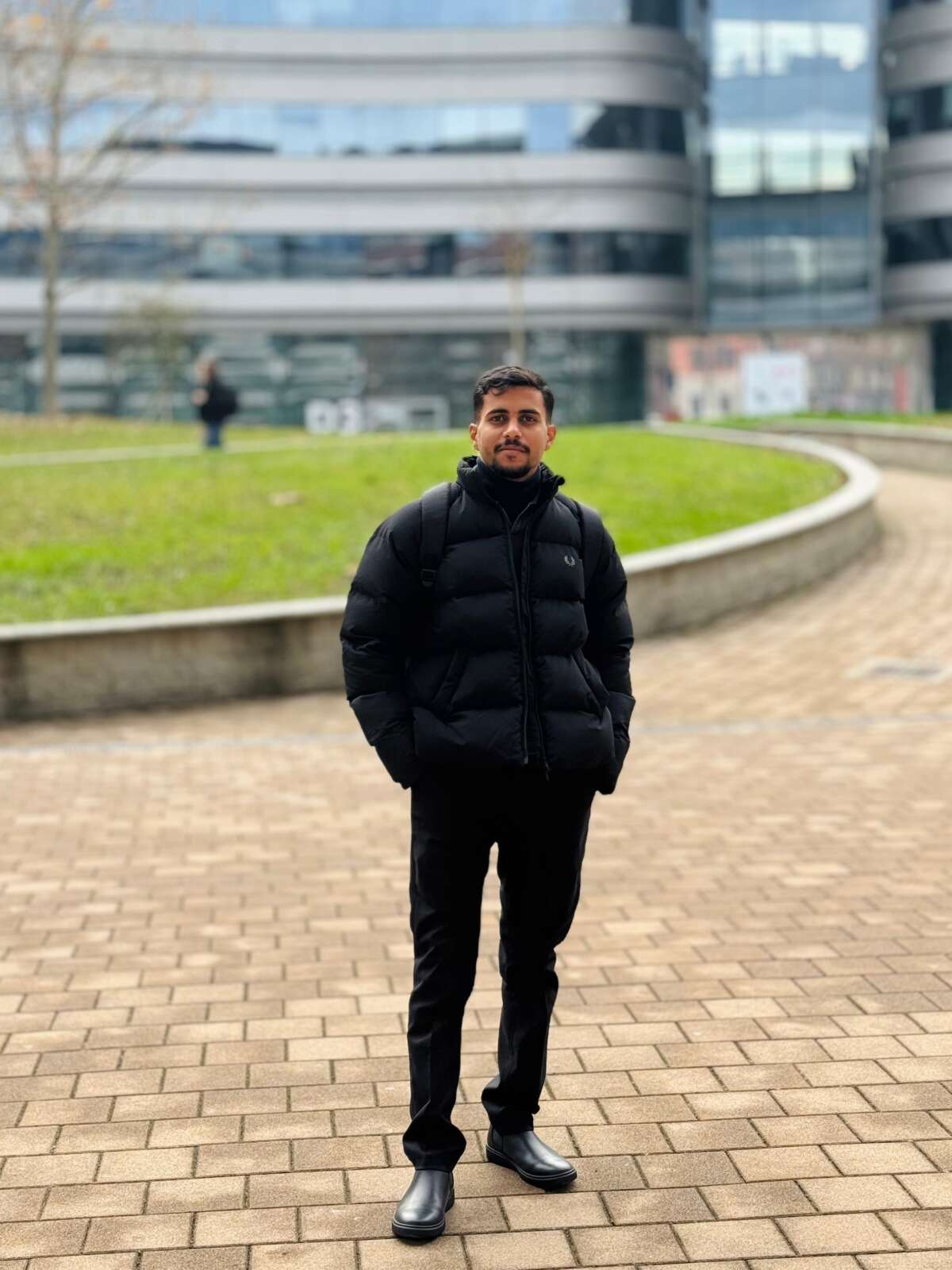
Al Farra was accepted into the Italian Universities for Palestinian Students project to study comparative law and economics at the University of Turin, one of the 41 Italian universities participating in the program. He completed his bachelor’s degree in English translation at Al-Azhar University in Gaza and had a clear plan for his future. Then the war left him with no choice but to flee in order to save his future.
When I did the interviews with these three brave students, it was a rainy day in Gaza. They were speaking to me, but their minds went to their families in Gaza, in tents.
Starting a new life in Italy has meant adapting to different cultures, people, and places. Al Farra set his previous dreams on the shelf and began down a path shaped by circumstances rather than choice. “Economics is not my career,” he said, “I had no luxury to choose.”
His experience closely matched that of his younger brother, Fares Al Farra, 21, who was injured during the war when his home was bombed in 2024. For Fares, the Italian Universities for Palestinian Students program is more than just a scholarship — it is also the vehicle through which he hopes to receive medical treatment and heal enough to return to his normal life after almost two years of living between hospitals and tents. “I am not only here to study,” Fares said, “I am here in order to receive the treatment I could not find in Gaza.” Fares’s situation clarifies that the Italian Universities for Palestinian Students program is not only an educational initiative, but also a humanitarian mission that restores some of the rights and opportunities taken from Palestinian in Gaza.
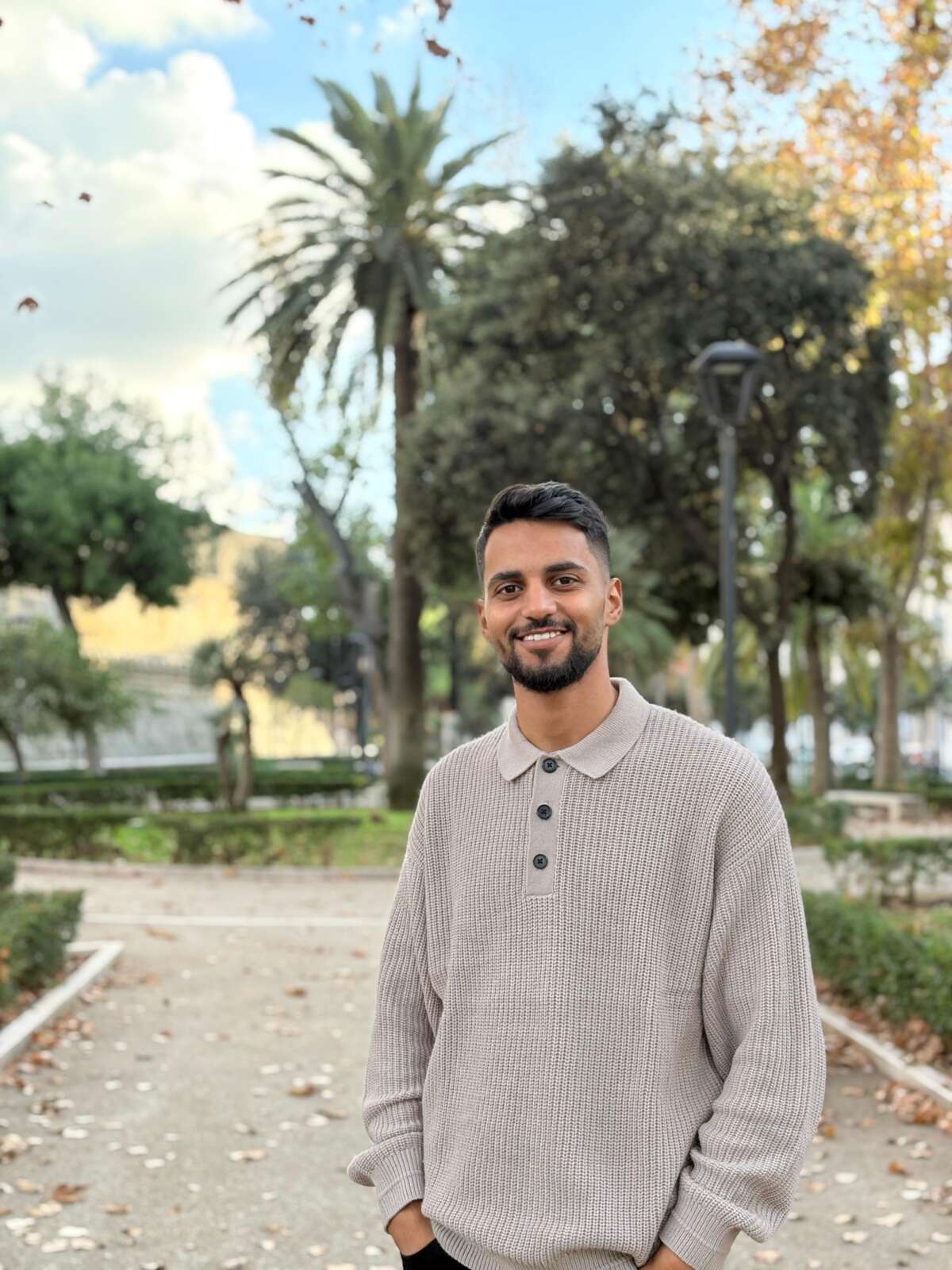
Because evacuations take place on different dates — due to the scale and complexity of the missions — Fares left Gaza before Tarek. “I felt terrible leaving before my older brother,” Fares said. His fear was rooted in the reality that Gaza remains unsafe, despite the supposed ceasefire. Tarek shared the same anxiety, “I was afraid … Not afraid of death, afraid of being attacked and injured in Gaza before reaching the freedom date.”
Fares was accepted to study political science at the University of Bari Aldo Moro in Italy. He completed his high school education in Gaza before the war and had never experienced studying or attending classes in a university setting under normal circumstances. Alongside his studies, he must also manage ongoing medical treatments abroad.
“People see my opportunity as the best possible outcome,” Fares said. “But they do not understand how hard it is to carry both visible and invisible pain.”
Students who receive scholarships abroad often face pressure to appear happy, satisfied, and grateful. Many of them genuinely do. However, it is very hard to do so when their hearts are still broken. “I don’t know what I should post to my followers on Instagram,” Tarek told me. “I need to be very careful before explaining my feelings.”
Yahya Hassan Nasrallah’s story illustrates another aspect of evacuation from Gaza.
Nobody can fully see the pain they carry, and the pain I carry too, as one of the students who also arrived in Italy through a scholarship.
Nasrallah is 21 years old and is working online to complete his bachelor’s degree in software development from the University College of Applied Sciences in Gaza, even as he also studies in person in Italy. His story is a bit different: He had totally forgotten that he had once applied to study in Italy, seeing it as a possible ticket to survival. He had applied for the Italian Universities for Palestinian Students program in May 2024, and then the war became even harder and more devastating. Nasrallah had previously had a chance to leave Gaza before the war through a different program, but at that time he refused. “I don’t like to leave Gaza. I had the opportunity, but I felt Gaza was the best place for me,” he said. However, his feelings started to change after living in Gaza became an experience of constant suffering.
Nasrallah found out that he had qualified for evacuation just five days before his official departure date, and he had no time to even remember when he had applied. “Maybe I forgot, but God doesn’t,” he said.
Nasrallah left his family in Gaza — as all the students did. For two years, he endured the pain of Israel’s assault without even one tear, but on his last night in Gaza, he broke down in tears in his family’s tent. “It was like a flashback of everything I experienced with my family,” he said.
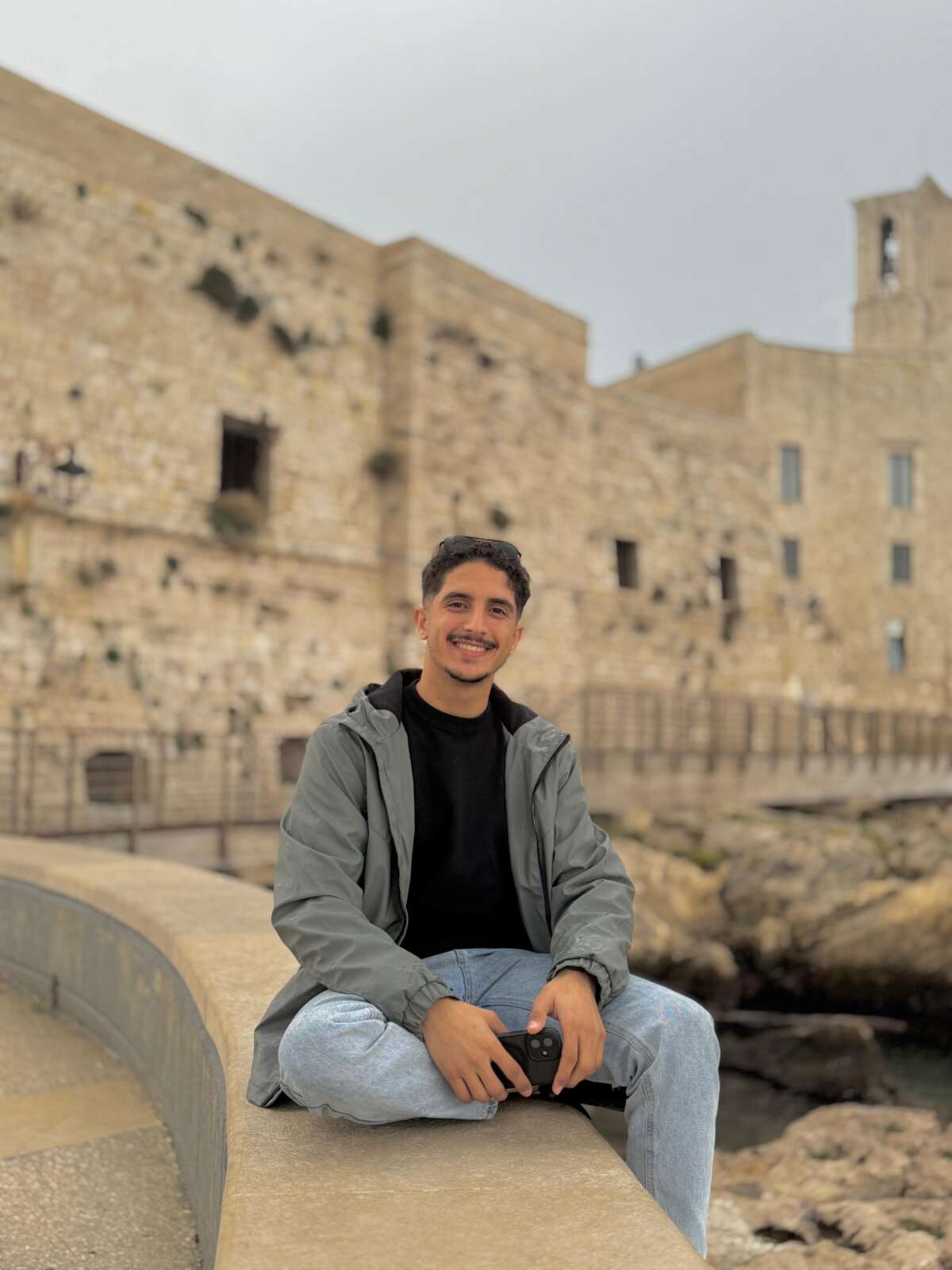
Nasrallah has now begun a new chapter in Bari, Italy. He studies in a safe environment, surrounded by kind people, and he is finally getting closer to himself again. “I feel myself again, finally,” Nasrallah posted on Instagram when he marked two months in Italy.
When I did the interviews with these three brave students, it was a rainy day in Gaza. They were speaking to me, but their minds went to their families in Gaza, in tents.
“I am trying to bridge the gap between them and me,” Nasrallah said.
“I hate when they ask me about my routine,” Fares Al Farra added.
We hold on to the hope of returning and reuniting with our families — with more strength, hope, and determination. Palestine needs us.
These are just a few perspectives from three of the 180 Gazan students now in Italy. Nobody can truly understand what they feel — whether they try to or not. Nobody can fully see the pain they carry, and the pain I carry too, as one of the students who also arrived in Italy through a scholarship.
But for me, and for all Palestinian students in Italy, we are here to rebuild what was destroyed. We hold on to the hope of returning and reuniting with our families — with more strength, hope, and determination. Palestine needs us. We must make the impossible possible for Gaza and Palestine.
We are deeply thankful to all those who have worked — and continue to work — for students from Gaza. We are grateful to finally experience the right to education and to life, and we hope that other universities across the world will offer similar opportunities for evacuation and education to the tens of thousands of other university students in Gaza whose education has been disrupted by the genocide and scholasticide committed by the Israeli military.
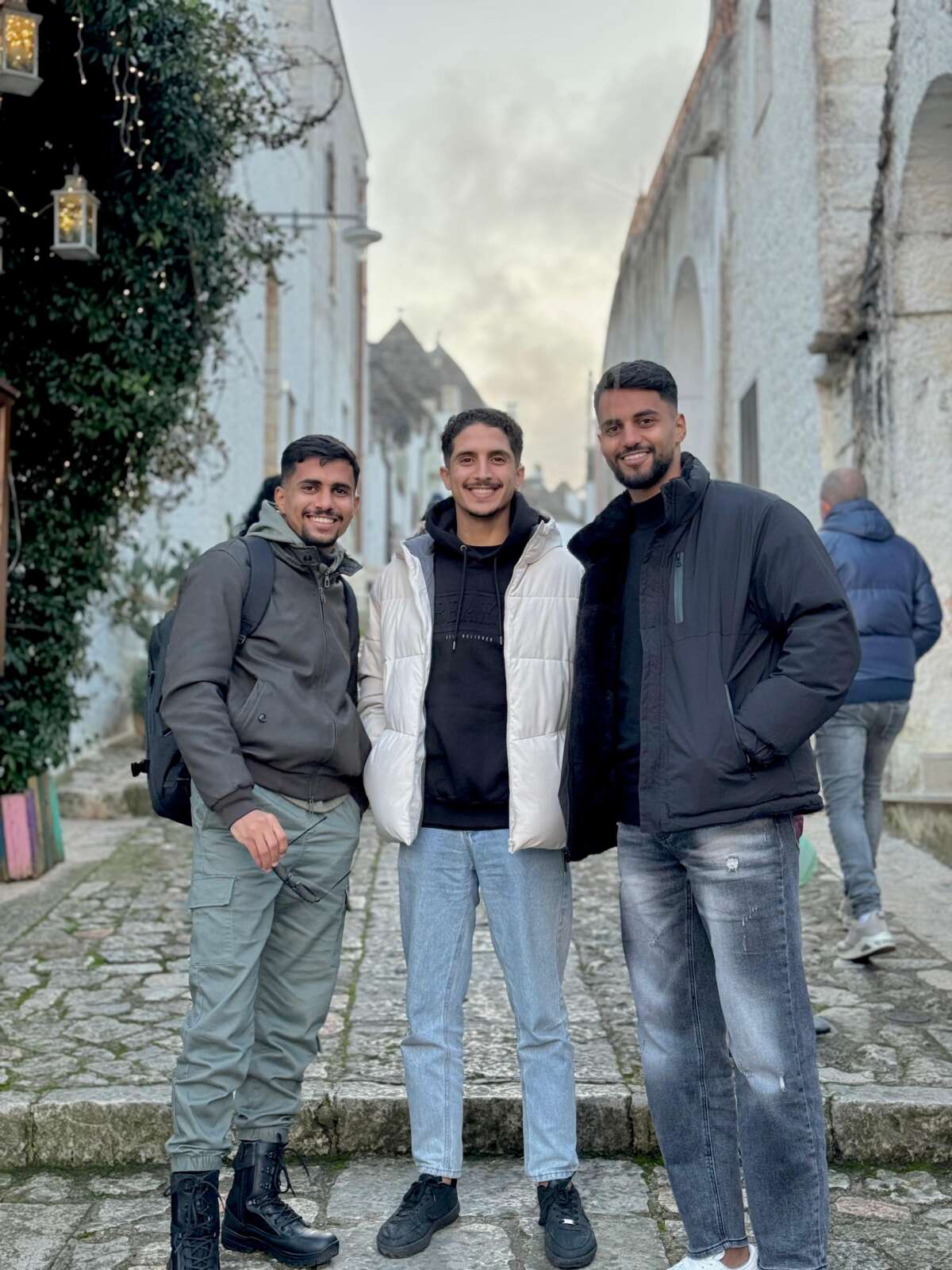
Additionally, I would like to express my sincere appreciation to Anna Giada Altomare, the founder of the project Fiori Dai Cannoni, which was created to support students from Gaza. The four students mentioned in this article, including me, received our scholarships through this project. We urge universities, organizations, and individual projects to continue supporting students from Gaza like Fiori Dai Cannoni and the Italian Universities for Palestinian Students program do, so that many students from Gaza can access education, safety, and a chance to rebuild their future.
Important Message: Please Read
For 25 years, Truthout has survived by publishing impactful investigative journalism and analysis; distributing full editions 365 days a year; and building a community of readers who support us with small, hard-earned donations.
Eighty percent of our $3 million yearly budget comes from small donors alone. Of those, 8,000 readers support us with monthly donations. Back in 2018, when Facebook decided to suppress the circulation of posts made by organizations, thereby cutting readers off from seeing many articles shared by the news organizations they had intentionally decided to follow, Truthout’s total traffic declined by 40 percent, as nearly all of our traffic from that platform disappeared.
Now, Google has recently rolled out its AI search bar, providing AI summaries instead of directing readers to our site. Google Search is our single largest source of traffic; it’s the route by which nearly one third of our readers find us. Much like in 2018, a shocking 40 percent of our Google traffic has disappeared overnight.
It will not be easy for Truthout to shoulder this blow. Nor will it be easy for our peers and collaborators — news sites that depend on traffic and aren’t bankrolled by large corporations.
If you can support Truthout with a donation today, you can help us resist the AI onslaught. Please give today.