Did you know that Truthout is a nonprofit and independently funded by readers like you? If you value what we do, please support our work with a donation.
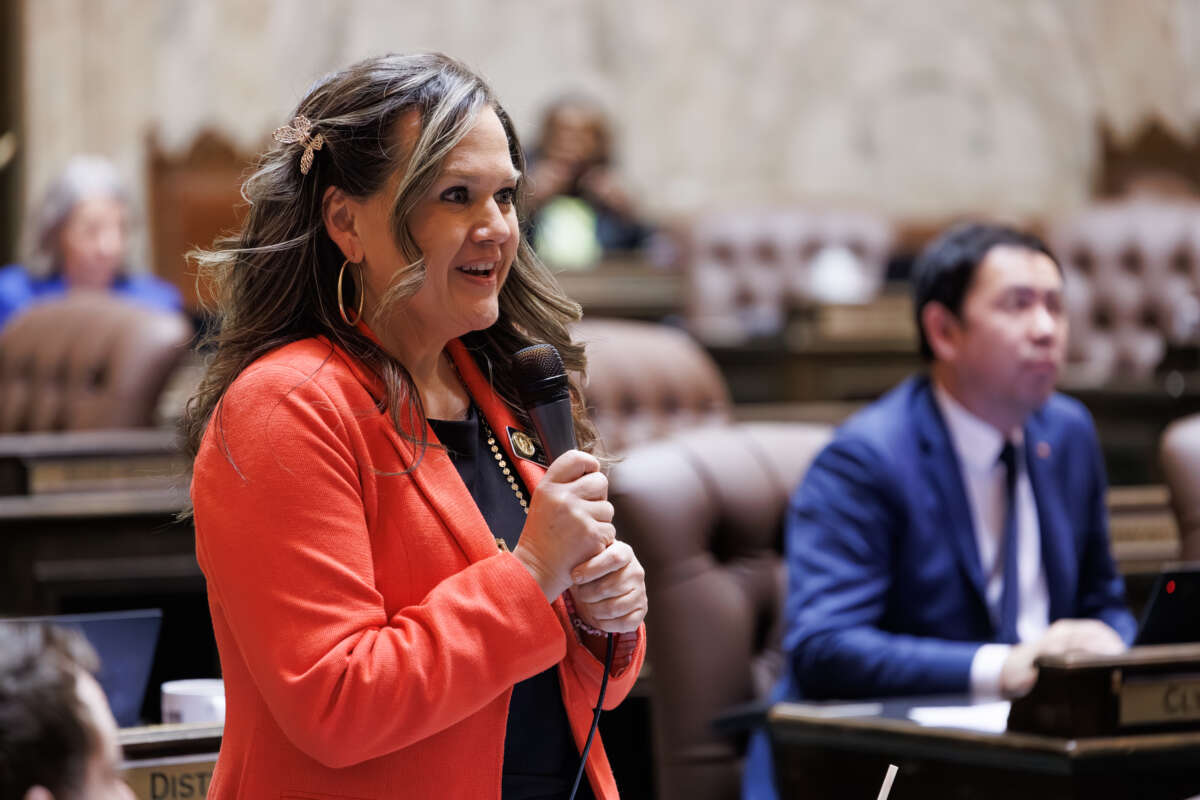
The first bill that Tarra Simmons passed restored voting rights to formerly incarcerated Washingtonians. That was in 2021, the year after she was elected Washington’s first formerly incarcerated state representative.
“That was my freshman bill,” she told Truthout.
The following year, the state passed her bill to expand housing assistance vouchers from three to six months for people released from prison. Days later, another of her bills passed, expanding free hospital care to people making up to 300 percent of the federal poverty level (or $40,770 for a single person in 2022/ $47,880.00 in 2026). The new law also allowed sliding-scale hospital care to those making up to 400 percent ($54,360 for a single person in 2022/ $63,840.00 in 2026).
“When we did the analysis, [we found that] 2 million people in our state would benefit,” Simmons told Truthout. “I’ve gotten texts and calls from people who have been able to utilize that charity care at hospitals now because of that change. That was one of my most impactful bills.”
Simmons is among a handful of formerly incarcerated women elected to public office. All are open about their past convictions and incarceration, and have used those experiences to challenge longstanding “tough-on-crime” policies as well as bolster social resources that best prevent social violence, harm, and poverty.
In 2026, she co-sponsored a bill requiring employers to notify workers about immigration-related audits or inspections. The bill passed both houses and is now awaiting the governor’s signature or veto.
In 2024, the Washington State Board of Nursing established a stipend program for nurses and nurse practitioners to defray costs of its approved substance use disorder program. Simmons’s 2026 bill expands the program to nursing assistants; it too has passed both houses and is on the governor’s desk.
Some of her other efforts, however, have been less successful. Drawing on her own experiences of making 42 cents an hour during her own incarceration, she attempted to raise prison wages to reflect the state’s minimum wage. The bill failed to pass. But Simmons doesn’t view it as a total loss. “My job is to shine a light on these injustices,” she said. That includes “educating my colleagues, getting them to care.”
In 2021, Simmons co-sponsored a bill allowing survivors of abuse and trafficking to petition for resentencing similar to New York’s 2019 Domestic Violence Survivors Justice Act. That, too, failed to pass.
Her most controversial bills address the lack of parole in Washington, which abolished the practice in 1984. More than 30 years later, the state now has an aging prison population — in 2025, nearly 23 percent were over age 50. Nearly half of all people in state prisons are serving sentences longer than 10 years, including life with the possibility of parole.
A handful of formerly incarcerated women elected to public office … are open about their past convictions and incarceration, and have used those experiences to challenge longstanding “tough-on-crime” policies.
Those with lengthy sentences have two avenues for earlier release. They can petition the governor to commute, or reduce, their sentences. Current Gov. Bob Ferguson has not granted any commutations.
They can also hope that their prosecutor will ask that their sentences be reduced. In 2020, the state passed a law allowing county prosecutors to petition the court for a sentence reduction “if the person’s sentence no longer advances the 8 interests of justice.” But outside the 30-day appeal window, incarcerated people, or their defense lawyers, remain barred from doing so.
For three years, Simmons sponsored bills to rectify that. Her bill is tiered: In its first year, the law limits resentencing to those with terminal illnesses or who were convicted as juveniles. Over the next three years, the bill expands to include adults who have served at least 20 years of their sentence.
Each year, however, the bill has failed to pass — a failure that Simmons blames on fearmongering.
“Letting prisoners out is always something that comes up in reelections,” she points out. Prosecutors’ associations and victims’ rights advocates have opposed her bills, claiming that those who are harmed are re-victimized if resentencing is allowed.
“That is one narrative of victims,” she said. “There’s a lot of other victims who believe in restorative justice and would actually like to hear why the person did what they did.”
She also noted that people change, especially over decades. “They go through their own coming to grips with why they did what they did. Some victims would like the opportunity for closure and to hear somebody take accountability for the harm that they caused their family and know that they have addressed the root causes and are not going to commit more crime.”
Her efforts, particularly around resentencing, have sparked backlash. In March 2025, between 20 to 25 people protested outside her home, carrying signs with her mugshot. She now faces ethics complaints about the use of surplus campaign funds and intimidating a possible election opponent.
“That’s another thing we have to face as formerly incarcerated women who are serving [in public office] is a lot of character assassinations,” she said. Both the complaint and ensuing publicity, she noted, “talks about my criminal record. [It] talks about Assembly Member Jovan Jackson’s [whose organization she donated surplus funds to] criminal record.”
2026 is an election year in Washington State and Simmons must contend with reelection. “There’s no guarantee that I’m coming back,” she said.
Bringing Second Chances to the Community
Kentucky has one of the nation’s highest incarceration rates — 889 of every 100,000 residents are incarcerated compared to 614 of every 100,000 U.S. residents in general. The Prison Policy Initiative calculates that 89,000 different people cycle through Kentucky’s county jails each year while 37,000 are locked in local jails, state prisons, federal prisons, and youth facilities.
Kentucky also has the nation’s fourth-highest women’s incarceration rate with 238 per 100,000 women behind bars.
Brittanie Bogard was one of those numbers. Bogard had spent her childhood in group homes and juvenile detention centers. As an adult, she spent three years in prison.
In 2024, more than a decade after her incarceration, Bogard connected with Goodwill Industries of Kentucky and learned about expungement, or erasing past criminal charges. She began the application process to expunge all 45 charges from her record. Then, she began helping others through the process.
“I started doing expungements for people in my community out of my kitchen table. I’ve done over 400 of them,” she told Truthout.
The following year, Bogard was elected to Hopkinsville City Council. Like Simmons in Washington, she is the first formerly incarcerated woman to hold that office.
Expungements continue to be her passion. In office, Bogard continues to host expungement clinics, estimating that she’s helped another 400-500 people beyond those she helped from her kitchen table.
“I’m watching them get jobs, I’m watching them qualify for housing,” she said, adding that one woman told her, “I’ve never been able to go to any of my child’s functions at school because of my charges. Now I’m able to do that.”
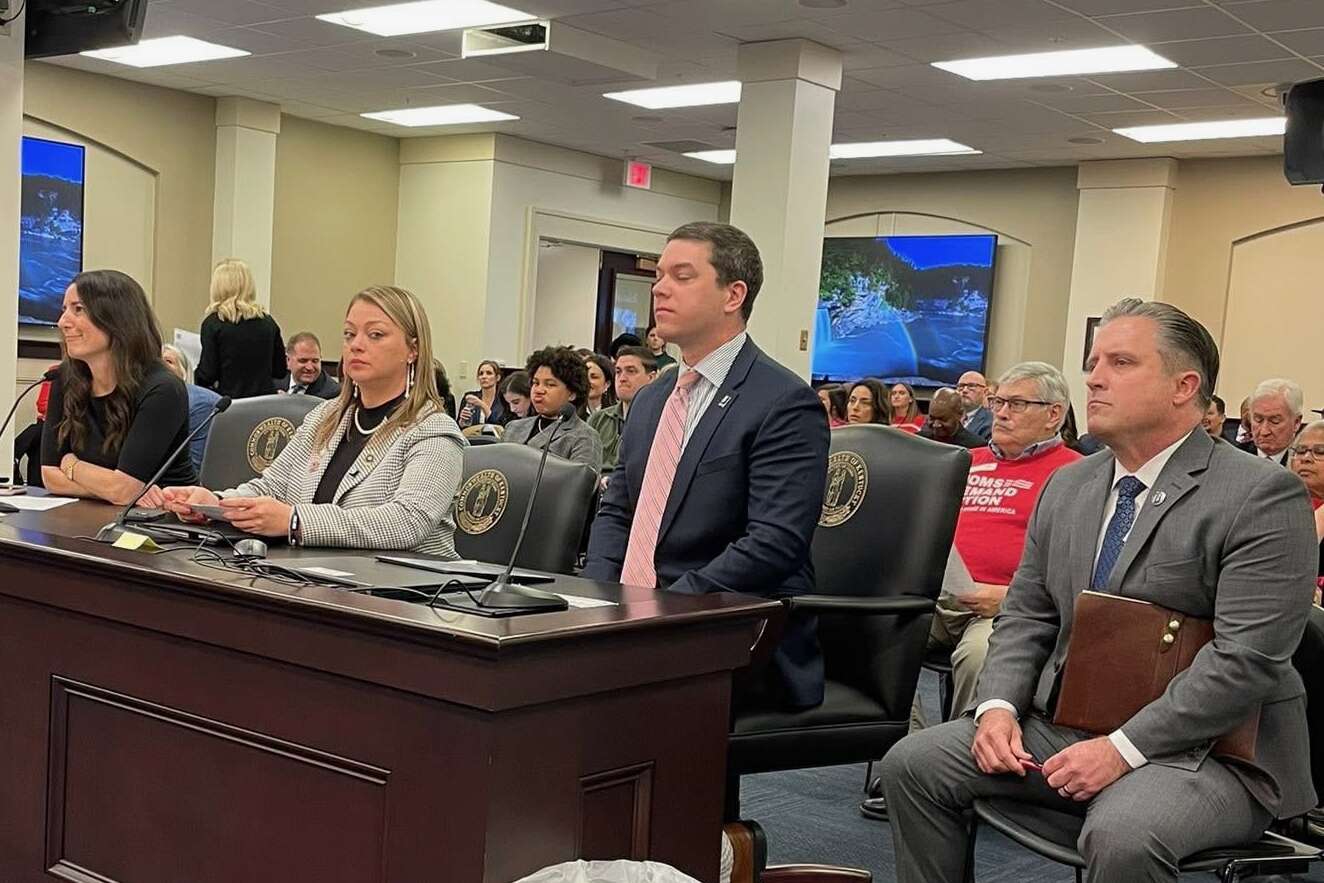
She has also pushed for statewide changes. In early March, Bogard traveled to Frankfort, the state capital, to advocate for Senate Bill 290, which would allow automatic expungement for certain misdemeanors and felonies. Currently, a person can apply to expunge their record five years after they have completed their entire sentence, including parole or probation, and paid off all associated fines.
“A lot of people get lost in that waiting process,” Bogard explained. “They have families, they have children, they have jobs, and they get lost [in the process]. This would automatically do it.”
The following week, Senator Craig Richardson told her the bill had moved to the Judiciary Committee and asked her to return to testify.
“There are 1.4 million people in the state of Kentucky who qualify for expungement and 500,000 qualify for automatic expungement,” she said. The bill, she continued, “is going to impact our workforce, our housing, our education. It’s going to put people into employment and [allow them to] take care of their families.
On March 19, Bogard returned to the capitol to testify. The committee passed the bill and it is now heading to the full Senate.
“We’ve been advocating for this legislation for several years, and it’s finally gaining momentum, in large part due to the media attention following my first testimony and my lived experience with the expungement process,” she said.
Even without automatic expungement, Bogard has approached companies about becoming “second chance” employers, or companies that intentionally hire people with felony records.
“We’ve been advocating for this legislation for several years, and it’s finally gaining momentum, in large part due to the media attention following my first testimony and my lived experience with the expungement process.”
“Because I’m on council, I’m able to have resources now that I can connect with and say, ‘Hey, can we get this company over here to get them to be a second chance?’ It makes it more feasible to get those things done versus not having the seat and not having that connection at a state level,” she said.
“When you have someone that has a lived experience, people tend more to listen to them. When they’re supporting clean slate opportunities, they can show that they can overcome things from their past,” Bogard reflected. “No one should be defined by their past. We all have the opportunity to move forward and contribute. My advocacy is rooted in the belief that redemption is real. Hopkinsville has always supported me, and it gives everyone else hope to follow behind me and my footsteps. When our city is strong, we make a room for every voice at the table.”
“I’m Most Proud of Voting Against the Establishment”
In Charlotte, North Carolina, Tiawana Brown was elected to city council in 2023. Like Simmons and Bogard, she was the first formerly incarcerated person in that position.
Charlotte, like cities across the United States, faces an affordability crisis. Drawing on a 2025 study by the National Low Income Housing Coalition, the Charlotte-Mecklenburg Housing & Homelessness Dashboard found that a person earning the state’s minimum wage of $7.25 per hour would need to work a weekly 131 hours (or 3.3 full-time jobs) to afford a one-bedroom rental.

Brown was already working on providing short-term housing and other reentry needs through her nonprofit Beauty After the Bars. Being a city councilmember enabled her to push for increased funding to organizations working with people who are at risk for becoming or already have been impacted by the criminal legal system.
Her focus on affordability wasn’t limited to those who had previously been incarcerated. She directed funding toward new housing projects, such as the South Barton Affordable Housing Initiative. She also supported airport workers’ efforts for better pay and improved working conditions, introducing an ordinance in the City Council. The council vote was tied, but the mayor’s tie-breaking vote killed the ordinance.
In 2025, the year she was up for reelection, Brown and her two adult daughters were indicted on allegations of COVID-era wire fraud. Brown lost the Democratic primary. In February 2026, she pled guilty to the charges in exchange for probation.
Because her sentencing date has not yet been set, Brown declined to talk about the charges. “The federal government can indict a duck walking across the street,” she told Truthout. She pled guilty, she said, “to bring closure to what could be years and years and years” of legal proceedings.
Still, she acknowledges that, for now, “the indictment is going to overshadow my work.”
Looking back at her time in office, Brown told Truthout, “I’m most proud of voting against the establishment.”
She was one of three councilmembers opposed to a proposal allowing police to arrest unhoused people for behaviors such as sleeping on a park bench or public urination. (Despite community opposition, the criminalization measure passed.)
In 2024, she was again one of three councilmembers who voted against allocating $650 million to renovate the stadium for the Carolina Panthers. (That vote also passed.)
“I’ve lived in Charlotte all my life. I’m a diehard Carolina Panthers fan, but [owner] David Tepper is a billionaire,” she elaborated. Although the money was specifically from funds earmarked for tourism, she said, “imagine trying to explain the specifics to people and organizations that need money to feed people, to stop young people from coming to jail or being killed, to stop people from sleeping outside, to help people get houses.”
Holding Trump accountable for his illegal war on Iran
The devastating American and Israeli attacks have killed hundreds of Iranians, and the death toll continues to rise.
As independent media, what we do next matters a lot. It’s up to us to report the truth, demand accountability, and reckon with the consequences of U.S. militarism at this cataclysmic historical moment.
Trump may be an authoritarian, but he is not entirely invulnerable, nor are the elected officials who have given him pass after pass. We cannot let him believe for a second longer that he can get away with something this wildly illegal or recklessly dangerous without accountability.
We ask for your support as we carry out our media resistance to unchecked militarism. Please make a tax-deductible one-time or monthly donation to Truthout.