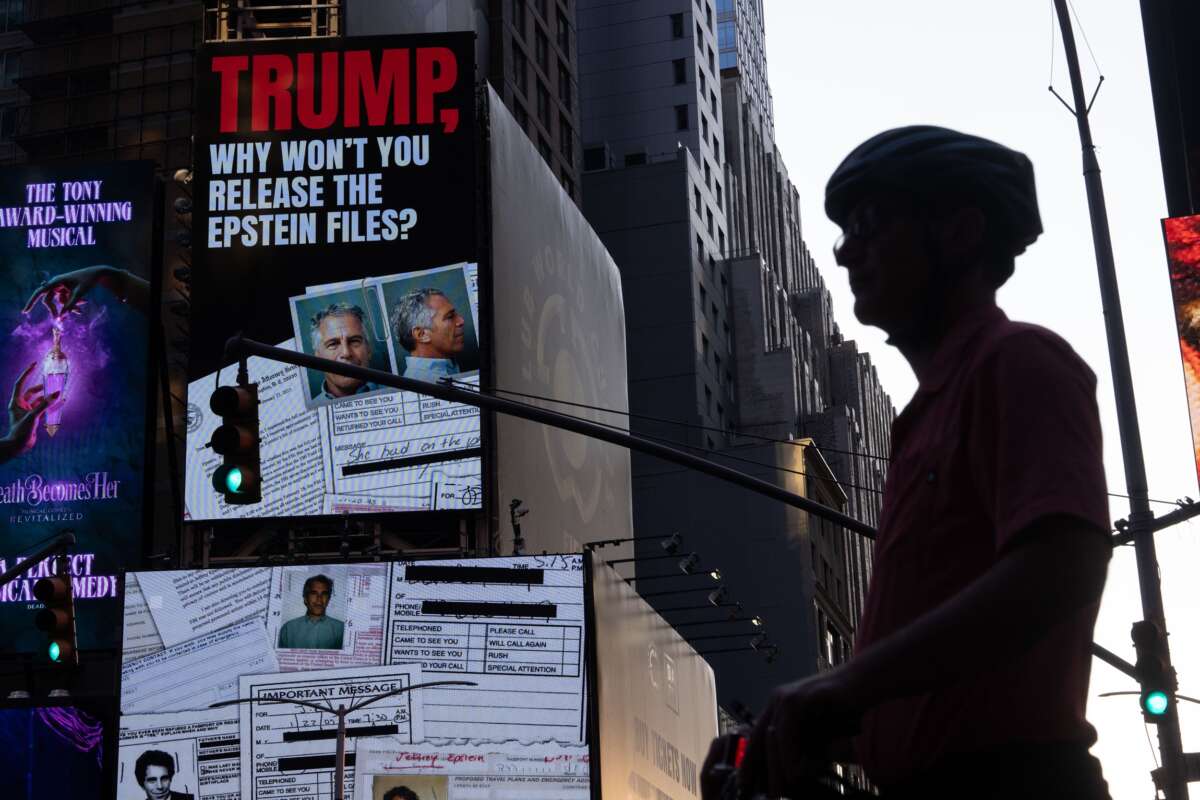
Over a dozen files on alleged child sex trafficker Jeffrey Epstein that were released by the Department of Justice last week have been removed from the department’s website.
In addition to removing the files, critics have alleged that the DOJ has not released the entirety of Epstein investigation materials that should have been made public. Authors of the bill that compelled the administration to release the files have suggested financial punishments against Trump administration officials if they fail to comply soon.
CBS News reports that at least 15 files that were included in the DOJ’s database of Epstein files are no longer available to view. The department has stated that some materials were taken down to protect the identities of Epstein’s victims, but it’s unclear why those specific files were removed.
“Photos and other materials will continue being reviewed and redacted consistent with the law in an abundance of caution as we receive additional information,” the DOJ said on social media.
One file has been restored — a photograph of framed pictures in an office, one of which included President Donald Trump, leading to speculation that the files were removed in order to protect him. The DOJ initially claimed the picture was taken down “out of an abundance of caution” to review whether potential victims were in the image.
“After the review, it was determined there is no evidence that any Epstein victims are depicted in the photograph, and it has been reposted without any alteration or redaction,” the DOJ said in a statement.
But the DOJ has heavily redacted hundreds of pages of material, possibly in violation of the legislation that prompted the release of the files in the first place. In the initial Epstein files release, at least 550 pages were entirely redacted.
The law forcing the release of the Epstein files requires, except in certain circumstances, the complete release of all files relating to numerous investigations into Epstein, including information about the many prominent figures who were connected to him. Victims’ names can be redacted or their faces covered, but for the most part, the information has to be made available to the public.
There are noticeable gaps in the files that have been released so far — information that is public knowledge, for example, hasn’t been made public, fueling speculation that more documents that aren’t publicly known are still being withheld.
“What else is being covered up? We need transparency for the American public,” the X account for Democrats on the House Oversight Committee said.
While the DOJ has suggested that information is being redacted to protect Epstein’s victims, many of them have expressed frustration with the government’s lack of transparency.
When the files came out, “we were just in shock, and we see that there is nothing there that is transparent,” said Epstein survivor Marina Lacerda. “It’s very sad, it’s very disappointing.”
“They are proving everything we have been saying about corruption and delayed justice. What are they protecting? The cover-up continues,” said another survivor, Jess Michaels.
The bipartisan authors of the law that required the files’ release have suggested legal ramifications for the DOJ’s failure to comply.
“The document dump on Friday “does not comply with…[the] Epstein Transparency Act,” Rep. Ro Khanna (D-California) said on X over the weekend, adding that “it is an incomplete release, with too many redactions.”
Rep. Thomas Massie (R-Kentucky), who co-authored the law with Khanna, agreed.
The DOJ’s file dump so far “grossly fails to comply with both the spirit and the letter of the law that @realDonaldTrump signed just 30 days ago. @RepRoKhannais is correct,” Massie wrote on X.
In an appearance on CBS News’s “Face the Nation” program on Sunday, Massie suggested that Attorney General Pam Bondi, who is responsible for making the files public, could face punishment from Congress for the DOJ’s failures.
“The quickest way, and I think most expeditious way, to get justice for these victims is to bring inherent contempt against Pam Bondi,” Massie said, indicating that he and Khanna were drafting such a resolution already.
If successful, after a 30-day grace period, Bondi could face daily fines if the DOJ still hasn’t released all of the files.
Despite noticeable gaps in the files that were made public, there are numerous materials that suggest prominent figures may have had knowledge of Epstein’s wrongdoings.
Multiple photos show former President Bill Clinton interacting with younger women, including an image of him in a hot tub with an individual whose face is redacted. Movie director Brett Ratner (who most recently directed Melania Trump’s newly released documentary) is also seen in photos that were part of the document dump. And the files detail an eyebrow-raising interaction between Epstein and Trump, in which the former introduced the latter to a 14-year-old girl, and “playfully” asked Trump, “This is a good one, right?” according to the document in question. Trump reportedly smiled at Epstein and said he agreed with his assessment.
Trump reluctantly signed the Epstein bill into law in November, after months of opposing the legislation and repeatedly calling it a “hoax” against him. His stance on the matter shifted only after it became clear that the bill would pass the House through the use of a bipartisan discharge petition.
Polling among the American public shows many are troubled by the president’s lack of transparency on the matter, especially given that he promised during the 2024 campaign to release the files, only to renege on that pledge after taking office. According to an Economist/YouGov poll last month, nearly half of all Americans (49 percent, and a plurality in the poll) believe Trump was trying to cover up Epstein’s crimes.
Press freedom is under attack
As Trump cracks down on political speech, independent media is increasingly necessary.
Truthout produces reporting you won’t see in the mainstream: journalism from the frontlines of global conflict, interviews with grassroots movement leaders, high-quality legal analysis and more.
Our work is possible thanks to reader support. Help Truthout catalyze change and social justice — make a tax-deductible monthly or one-time donation today.