Truthout is a vital news source and a living history of political struggle. If you think our work is valuable, support us with a donation of any size.
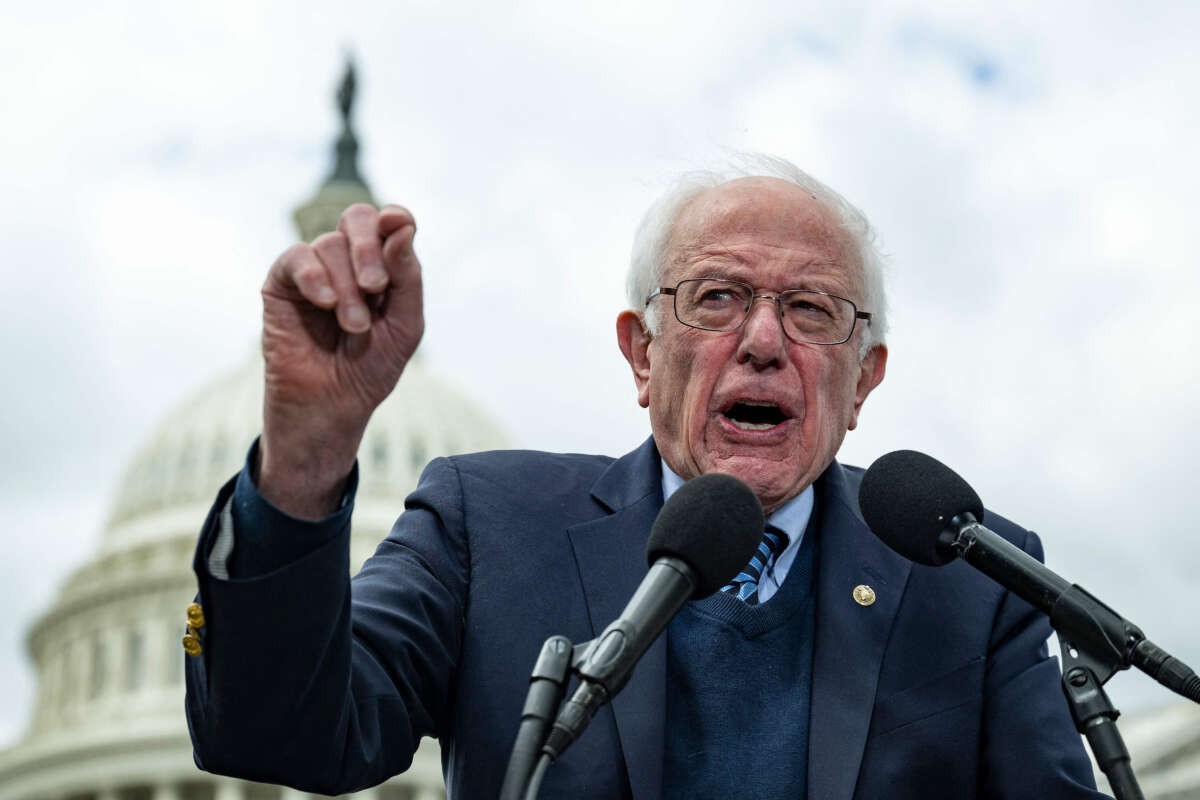
Sen. Bernie Sanders (I-Vermont) is launching a sweeping Senate investigation into Amazon’s “abysmal” unsafe warehouse labor practices after reports have found for years that the company is a uniquely dangerous place to work.
Sanders, the chair of the Senate Health, Education, Labor and Pensions (HELP) Committee, sent a letter to Amazon CEO Andy Jassy on Tuesday demanding that the company answer to its safety record and provide documents and data on the company’s labor conditions, worker turnover, use of certain equipment and extreme pace of work expectations, and how these factors have affected workers.
“The company’s quest for profits at all costs has led to unsafe physical environments, intense pressure to work at unsustainable rates, and inadequate medical attention for tens of thousands of Amazon workers every year,” the letter reads.
“Amazon is well aware of these dangerous conditions. … Yet the company has made a calculated decision not to implement adequate worker protections because Jeff Bezos, Amazon’s founder, and you, his successor as Chief Executive Officer, have created a corporate culture that treats workers as disposable,” the letter continues. “At every turn — from warehouse design and workstation setup, to pace of work requirements, to medical care for injuries and subsequent pressure to return to work — Amazon makes decisions that actively harm workers in the name of its bottom line.”
Sanders is also soliciting stories from past or present Amazon workers, supervisors or medical staff who can help inform the investigation.
The senator highlighted the story of one worker in DuPont, Washington, who started experiencing back pain after just six months of working at an Amazon facility and developed mid-spine degeneration after a year on the job. Mark Takakura, a former medic in the U.S. Army, received a warning from his supervisors after slowing down his pace of work to mitigate the pain, which has now become chronic and will likely have to be dealt with for the rest of his life.
“Me and my veteran buddies always say, the military was hard, but it was nothing compared to Amazon,” Takakura told Insider last year.
Amazon is the second largest employer in the U.S. and its warehouses are the number one source for warehouse worker injuries. Year after year, more than half of serious warehouse injuries reported to the Occupational Safety and Health Administration (OSHA) happen at Amazon warehouses, reports have revealed — despite the company only employing roughly a third of all warehouse workers nationwide.
According to the latest report by the Strategic Organizing Center from April, Amazon had a 70 percent higher injury rate than non-Amazon warehouses in 2022, while the company’s serious injury rate was more than double that of other warehouses, at 6.6 serious injuries per 100 workers.
The company’s injury record is a result of its unsafe work standards, workers have said, brought on by the company’s questionable standards for crises like fires and tornadoes and its intense work speed requirements. These working conditions have been cited as reasons for Amazon workers’ union drives and pushes for new labor regulations over the past years.
“Amazon sets an example for the rest of the country,” Sanders, who has frequently targeted Amazon for its working conditions and union busting efforts, recently told The Washington Post. “What Amazon does, their attitude, their lack of respect for workers, permeates the American corporate world.”
An urgent fundraising appeal: 10 Days to raise $50,000
Truthout is one of only a few platforms for justice-oriented, grassroots journalism. Today, we face an existential threat.
Due to Google’s launch of AI search, we’ve seen a drastic plunge in our site traffic and, as a result, our revenue. We lost 15 percent of our readership overnight. This was a readership we painstakingly built over decades, and it vanished because Google chose corporate greed over a healthy democracy.
We are fundraising right now to meet our basic operating expenses. If you can support Truthout with a one-time or monthly donation, you will make a significant impact on our work. Anything you can do makes a difference — we appreciate your support.