Did you know that Truthout is a nonprofit and independently funded by readers like you? If you value what we do, please support our work with a donation.
The U.S.’s political landscape — and our daily lives — are increasingly shaped by repression and violence, amplified by a media cycle designed to keep us fearful in the present, uncertain about the future, and depleted. Exhaustion is not a side effect of this system. It is one of its core tools.
Last year, I wrote that Donald Trump’s attacks were designed to exhaust us. Over the past year, I’ve watched communities build movements and adapt their organizing under this reality.
The Trump administration and the institutions aligned with it — including Project 2025’s policy influence — pushed that strategy to its limits. The chaos meant to break us instead revealed what it actually costs — mentally and physically — to live inside a system built on crisis and attrition.
Communities did not respond with better individual coping. They changed how resistance is carried — away from the myth of the solitary activist hero and toward shared capacity. As Grace Lee Boggs taught us, “Movements are born of critical connections rather than critical mass.”
Political exhaustion took on new meaning. It was no longer treated as a personal struggle, but as shared terrain — produced by oppressive systems and requiring collective response. The question shifted from How much more can we carry? to What needs to change so fewer people have to carry so much?
As adrienne maree brown reminds us, “What we practice at the small scale sets the pattern for the whole system.” Organizers and neighbors expanded strategies of care, political education, and collective action, rooted in lived experience and repeatedly rebuilt in response to escalating state violence and policy whiplash.
Learning circles emerged not as abstract study groups but as spaces of collective preparedness. Across communities, campuses, and movements — from Intro to Worldbuilding, an ongoing reflective learning space offered by the Resonance Network; to student-led teach-ins organized through Students for Justice in Palestine; to long-standing political education shaped by Critical Resistance and Interrupting Criminalization — these decentralized spaces became sites of local, and global political analysis. Participants examined U.S. complicity in international violence, tracked the repression of student dissent and protest movements, and situated present struggles within longer, transnational histories of resistance. More than information-sharing, they helped people think together and clarify what the coming years would demand. In moments designed to confuse and overwhelm, shared analysis and deliberate pace became forms of power — shaping collective responses to state violence.
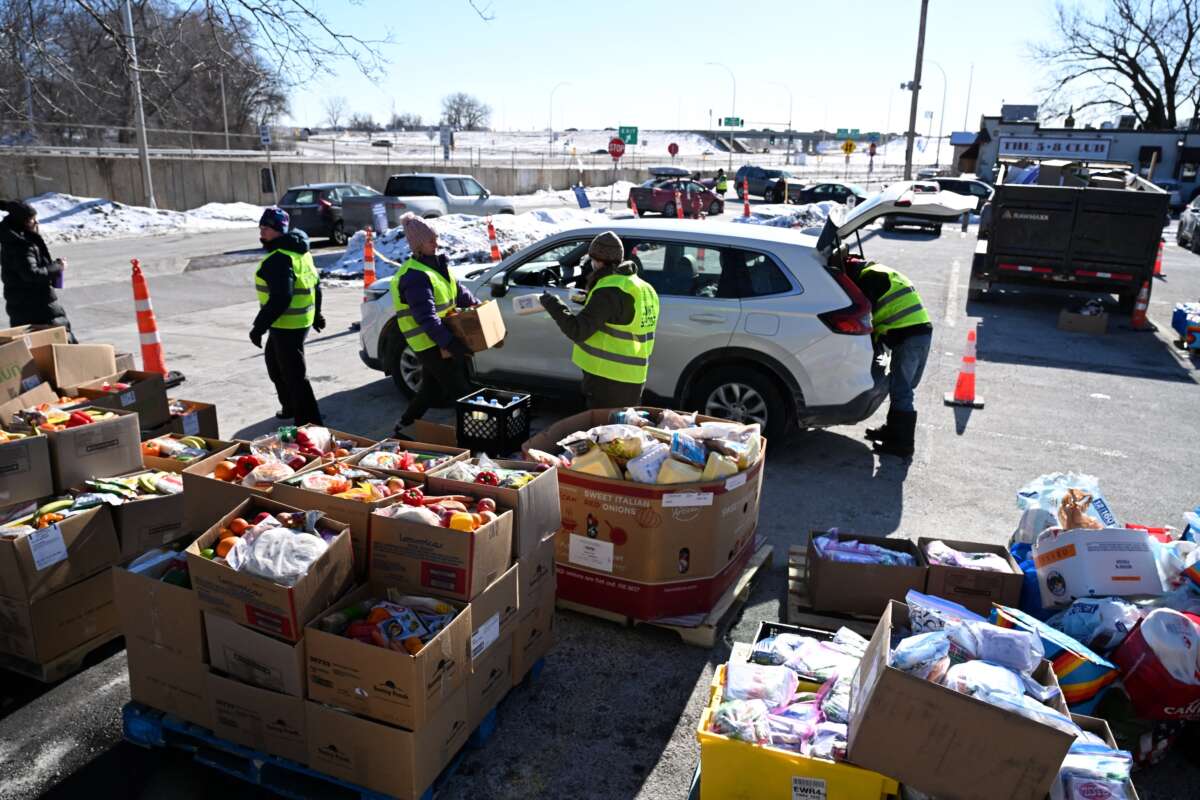
In cities facing intensified immigration crackdowns, communities and their allies built rapid-response networks to protect neighbors targeted by Immigration and Customs Enforcement (ICE). Hotlines tracked enforcement in real time. Volunteers organized court accompaniment and legal support, while mutual aid networks circulated know-your-rights materials and provided food, clothing, and other essentials.
These were not merely acts of charity. They were counter-institutions — infrastructure designed to keep people connected, informed, cared for, and protected in a system built to fragment and isolate them.
That same ecosystem extended into health care. As ICE activity near clinics and hospitals drove many people to delay surgeries, avoid urgent care, or forgo prenatal support, organizers, community members, and health workers stepped in. They coordinated clinic escorts, arranged discreet transportation, and connected patients to safe care settings, filling the gaps left by fear, criminalization, and state abandonment.
This is what the slow and uneven arc of justice demands: collectivity, coordination, and commitment to keeping one another safe.
I keep returning to images of college campuses across the nation, particularly amid sustained organizing for Palestinian liberation. Students began building care and rest into the architecture of their movements — not as an afterthought, but as strategy. Medical teams rotated shifts. Wellness and child care volunteers made broader participation possible. Organizers treated sleep, food, and emotional regulation not as luxuries deferred to some imagined future, but as conditions for protecting the fullness of our humanity and our ability to stay in the struggle.
The task now is not to burn brighter or faster, but to build the collective capacity to withstand what’s coming.
That same logic is visible beyond campus gates. In Minnesota, amid intensified federal immigration attacks, Stand With Minnesota has become a volunteer-led hub that organizes mutual aid, legal resources, and collective response — offering a clear point of access for those facing enforcement and for those seeking to support them. In Chicago, The Love Fridge Chicago, founded during the COVID-19 pandemic, continues to address food access and inequity through a citywide network of free community refrigerators, redirecting edible food away from landfills and into neighborhoods most impacted by food apartheid. What began as emergency response has endured as everyday infrastructure, linking survival, environmental harm, and collective responsibility in material ways. Across these contexts, care is not framed as charity or personal wellness, but as strategy — designed to reduce harm, sustain participation, and make endurance possible under sustained pressure.
Our resistance must be shaped by what lies ahead: a system sliding toward open authoritarianism, the normalization of mass violence, and repression that is no longer episodic but continuous. The task now is not to burn brighter or faster, but to build the collective capacity to withstand what’s coming.
This past year has made one thing unmistakably clear: This system is designed to wear us — and our movements — down. The most subversive thing we can do is refuse to disappear. Refuse to surrender our ability to imagine liberation. The question now is not how much more we can push ourselves, or how long we can survive in isolation, but whether we can build the capacity to hold on — to care for and protect one another — because everything ahead of us depends on it.
An urgent fundraising appeal: We still need to raise $9,000
Truthout is one of only a few platforms for justice-oriented, grassroots journalism. Today, we face an existential threat.
Due to Google’s launch of AI search, we’ve seen a drastic plunge in our site traffic and, as a result, our revenue. We lost 15 percent of our readership overnight. This was a readership we painstakingly built over decades, and it vanished because Google chose corporate greed over a healthy democracy.
We are fundraising right now to meet our basic operating expenses. If you can support Truthout with a one-time or monthly donation, you will make a significant impact on our work. Anything you can do makes a difference — we appreciate your support.