Support justice-driven, accurate and transparent news — make a quick donation to Truthout today!
Seven US soldiers were killed Saturday and Sunday in Afghanistan, in a violent weekend that deepened concerns about security ahead of September elections. A senior Afghan official also raised fresh questions about US strategy in defeating the insurgency.
Over the weekend, a candidate for parliament was killed by insurgents and the bodies of five campaign workers for a female parliamentary candidate were found. About eight civilians also died.
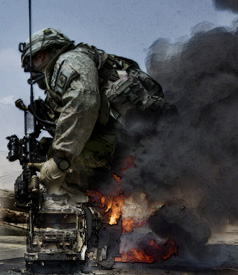
Violence has risen as more US troops arrive in Afghanistan, bringing the number to about 100,000. The troop increase is part of an attempt to bring the Taliban insurgency under control before July 2011, when President Obama has pledged US troops will begin to withdraw. NATO troops are also attempting to bring about stability before parliamentary elections are held on Sept. 18.
The Associated Press reports that two US soldiers were killed in bombings Sunday in southern Afghanistan, where NATO troops are waging a fierce campaign for control of the Taliban’s stronghold. Two more soldiers were killed in a separate bomb attack in southern Afghanistan, and three were killed in fighting in eastern regions.
Forty-two US soldiers have now died in Afghanistan this month.
Insurgents have targeted candidates and campaigners ahead of elections in Afghanistan, and on Saturday a man on a motorcycle shot and killed parliamentary candidate Abdul Manan in Herat. Agence France-Presse reports that officials blamed the Taliban, who they say have killed two other candidates since July.
On Sunday, Herat residents discovered the bodies of the five workers for parliamentary candidate Fawzya Galani, one of Afghanistan’s few female candidates. The campaign workers were kidnapped Wednesday while traveling in the countryside, according to the Associated Press.
Also in the wave of attacks this weekend, the Washington Post reports that NATO soldiers repelled attacks by Taliban insurgents wearing American uniforms on two bases in the southern Khost Province. One of the bases, Camp Chapman, is where a suicide bomber killed seven CIA employees in December. No US soldiers were killed in Saturday’s attacks, while 21 insurgents died. The AP reports that US officials blamed the Haqqani network for the attack, a Pakistan-based group with ties to Al Qaeda.
The Post reports that Afghan President Hamid Karzai’s chief of staff said over the weekend that he is not confident that Afghanistan is “on a path to success” in defeating the Taliban. He said the US needs to alter its strategy, and also said media reports of a faltering US-Afghan relationship are harming the war effort.
While stressing that the Karzai government is committed to a significant NATO troop presence, Daudzai called on the international forces to stop invasive night raids on residents’ homes and to distance their soldiers from “the daily life of the people,” a sharp divergence from Gen. David H. Petraeus’s strategy of having soldiers embedded in communities. The coalition policies have undermined Karzai’s authority and Afghan sovereignty, Daudzai said, and led to “blame games” between the two sides.
While Mr. Daudzai blamed US policy for hurting the effort to defeat the Taliban insurgency, US officials insist that government corruption is one of the largest impediments to success. NPR reports that a recent poll of Afghan men, conducted by the International Council on Security and Development, found that about three-quarters of the men surveyed said government officials in their areas were linked to the insurgency or drug traffickers. About the same percentage said they were opposed to working with foreign forces.
The Christian Science Monitor recently reported that starting from the ground up may be the best way to target corruption in Afghanistan. “Teaching ordinary Afghans how to resist the powerful” could have more impact than firing government officials, reports the Monitor.
A terrifying moment. We appeal for your support.
In the last weeks, we have witnessed an authoritarian assault on communities in Minnesota and across the nation.
The need for truthful, grassroots reporting is urgent at this cataclysmic historical moment. Yet, Trump-aligned billionaires and other allies have taken over many legacy media outlets — the culmination of a decades-long campaign to place control of the narrative into the hands of the political right.
We refuse to let Trump’s blatant propaganda machine go unchecked. Untethered to corporate ownership or advertisers, Truthout remains fearless in our reporting and our determination to use journalism as a tool for justice.
But we need your help just to fund our basic expenses. Over 80 percent of Truthout’s funding comes from small individual donations from our community of readers, and over a third of our total budget is supported by recurring monthly donors.
Truthout has launched a fundraiser to add 500 new monthly donors in the next 10 days. Whether you can make a small monthly donation or a larger one-time gift, Truthout only works with your support.