Did you know that Truthout is a nonprofit and independently funded by readers like you? If you value what we do, please support our work with a donation.
 (Image: The Source Project)Also see: Adolfo and the Essence of Food Diversification
Also see: A Natural System and an Agricultural Philosophy
Also see: Not a Very Green Revolution
The US patent act clause 102 says that nothing can be patented if it is prior public knowledge. If the public has been aware of the material and its benefits, then it is not possible to patent. Clause 102 then goes on to define “public knowledge” as only that of Americans’ and no one else. Not the billions of Indians, Native Americans or Africans, their knowledge. Their natural resources are not represented or protected by this act.
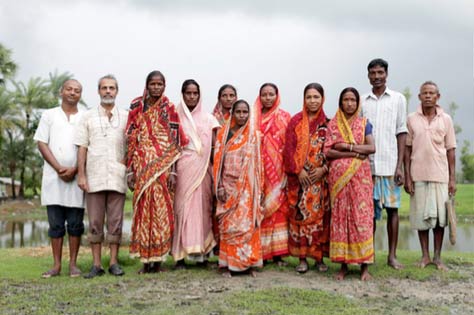 (Image: The Source Project)Dr. Debal Deb is possibly one of, if not, the most progressive scientists working in the field of agriculture. Having already saved over 1,200 varieties of indigenous rice, Dr. Deb continues to work, more or less unfunded. This film was a result of a speech he made in Kolkata on the opening of his new lab, enabling him to sequence plant DNA, publish it and therefore protect it for future generations. From water tolerant (rice that will grow in 10 feet of water), saline tolerant (rice that can grow in the sea), to drought tolerant rice varieties that can survive without irrigation, Dr. Deb not only conserves but also protects them from bio-piracy. His approach is a holistic one where he uses the field and the farmers to grow and protect these valuable varieties.
This is the fourth film in the 9×9 film festival. These films have been made for one reason: to help people understand the reality of what’s really happening to the world’s food and farming systems, and why.
A Commons Sense from The Source Project on Vimeo.
The Source Project was set up to work in a more holistic way within the development media as business interests transform the development sector into a business driven model. By changing the way we live and operate, we are able to use our limited funds to help subsidize films that we feel need to be made. We have created a short film format that can be easily watched and shared on various social media platforms. We feel that this way we are able to not only help counter an imbalance and misinformation within development media, but also stimulate consciousness on issues that otherwise would pass unnoticed. At the heart of The Source Project is agriculture, a system not only of food production, but also one that maintains our ecosystem, our cultures, our health and the very survival of humanity.
25 Years of Truthout: An important fundraising appeal
This September, Truthout is celebrating 25 years of publication. For over two decades, we have been a trusted source for fiercely independent journalism thanks to readers like you.
As we look to the next 25 years, we have launched a special fundraising campaign. Looking to a sustainable future for our publication, we have a fundraising goal of $92,000 in the next 8 days.
We are asking for your support at this juncture because we face greater threats than ever before in our organizational history. Trump and his MAGA allies are determined to control the information ecosystem, and movement-based organizations are subject to dangerous censorship and scrutiny.
If you can support Truthout with a one-time or monthly donation, you will make a significant impact on our work and our legacy. Anything you can do makes a difference!