Truthout
Capitalism

|
Who Can We Shoot?
We must see class as a group of human beings who share common interests because they experience common conditions at work.
David Cay Johnston on the Perils of Our Growing Inequality
David Cay Johnston stresses that inequality is primarily a result of political and economic arrangements, including anti-trust policy and how much investment society and parents make in their children's …
Finance Is Building the Architecture of Its Own Rules
Robert Johnson says the scale of the political investment of finance, six, seven hundred million dollars, is overwhelming; with the political power of finance, do we still have a …
The Private Equity Limited Partnership Agreement Release: The Industry’s Snowden Moment
The private equity industry kingpin, KKR, systematically took advantage of its credulous investors.

Rich Getting Richer as the Poor Crawl Slowly Out of Poverty
After winning the inequality championship for so long, Latin America could become a trendsetter when it comes to equality. Other changes will show whether it is just a passing …
|
Why Do Coal Mining Jobs Matter So Much More Than Jobs Lost to Trade?
While it is good to see the media paying attention to this job loss in the coal industry and its implications for families and communities, this concern is a …

The Specter of Authoritarianism and the Future of the Left: An Interview With Henry A. Giroux
The commanding institutions of society are now in the hands of powerful corporate interests whose strangulating control over politics renders democracy corrupt and dysfunctional, says Henry A. Giroux.

|
All Hail Piketty, But Props for Pickett, Too
Piketty's work demolishes the fairy-tales our top politicians tell about our economic system.

|
New Report Documents How Privatization Steals Wages, Harms Communities
A new report from the nonprofit research group In the Public Interest shows that outsourcing public services hurts middle and working class communities as well as workers.
|
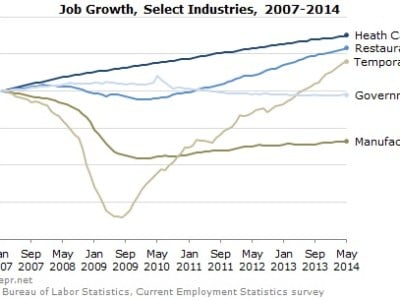
Economy Adds 217,000 Jobs in May; Unemployment Stable at 6.3 Percent
The index of hours worked past its pre-recession peak for the first time in May.