Truthout is an indispensable resource for activists, movement leaders and workers everywhere. Please make this work possible with a quick donation.
I grew up in a household of women and children that, as my sisters and I matured, eventually became a household of only women. My father was frequently gone on long overseas business trips before his untimely death when I was seven. I often wonder if this is the reason the expression “women and children” strikes me as essentially flawed: It suggests that women and children are the more vulnerable members of society, rather than its resilient survivors. It infantilizes women by grouping them with children, rather than adult men.
In the context of a national struggle, it strips women of agency, as if such agency can only manifest through armed revolt. In a military context, the expression “women and children” — or “womenandchildren,” to use the term coined by antimilitary feminist scholar Cynthia Enloe — presumes that women and children never take up arms or participate in resistance, even as we see such actions occurring in numerous struggles around the world. And in listing casualties, it implies that men’s deaths and injuries are less tragic, less mournable.
In the case of Palestine, women and youth have led, and continue to lead, some of the most transformative efforts and initiatives in our people’s quest for justice — that is, our resistance first to imperialism, then to settler colonialism and apartheid. They have not been spared Israel’s violence, just for being women, or children, and many have been and remain at the forefront of popular resistance to Zionism’s ultimate aim of eliminating all Palestinians. While this may have become more obvious during Israel’s accelerated genocidal assault on Gaza following Hamas’s October 7, 2023, attacks, it had always been clear to anyone not deliberately looking away.
From a number of uprisings over the past century in Palestine, it is obvious that youth, “the children,” are not just among the leaders; they are the more effective, more transformational leaders. Unfettered by traditions and social norms they do not relate to, they engage in novel forms of organizing, seeking the complete abolition of oppressive systems, rather than their reversal. And women, in their capacity as autonomous adults, rather than merely as wives and mothers, have consistently resisted both the imperial ideology targeting their country, and the military assaults that accompanied it. They did so while providing men, as well as the youth and children, the moral, emotional, and practical support the Palestinian people need in order to persist. This was perhaps most evident on a global scale during the 1987–93 Intifada, when women organized most of the popular committees tending to the educational, nutritional, and health needs of Palestinians resisting Israel’s clampdown, as youth took to the streets daily to express their rejection of Israel’s decades-long oppressive rule. These defenseless children hurled rocks at armored tanks, fully aware of the hefty price they would pay for their defiant act, because they knew that risking limb and life is preferable to living without freedom and dignity.
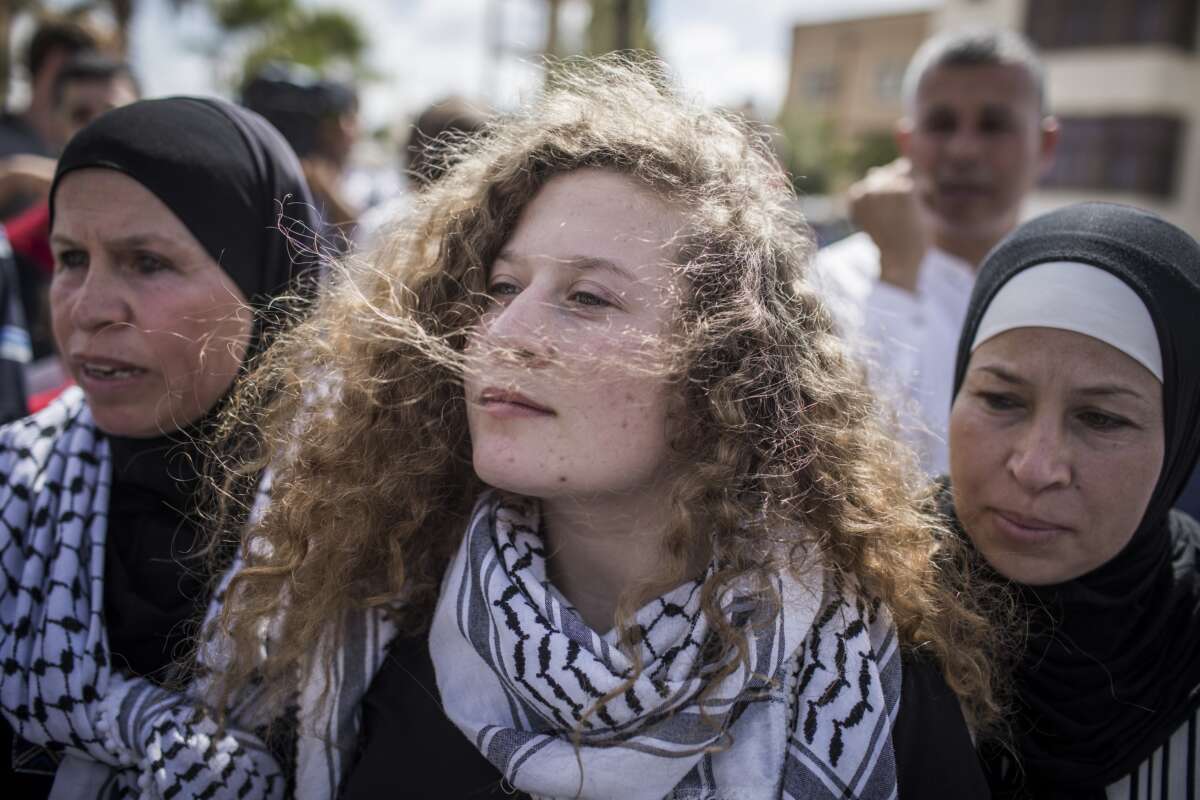
Women’s and children’s agency is enacted daily in the courage of girls such as Janna Jihad, who was dubbed “the world’s youngest journalist” when she started documenting Israel’s crimes at a mere seven years of age. Jihad started recording Israel’s attacks using her mother’s cell phone, posting her recordings far and wide on social media. She has repeatedly said that her camera is her weapon of choice. Jihad is the cousin of Ahed Tamimi, the “lioness” who has confronted heavily armed Israeli soldiers determined to take over her village lands since she was a toddler. Israel imprisoned Tamimi for eight months when she was sixteen; she used the time behind bars to read up on international law, later enrolling in college planning to go to law school, so as to hold Israel accountable for its violations. “I am a freedom fighter. So I will not be the victim,” she told journalists upon her release.
Palestinian children’s agency was also clear in the 2022 uprising of rebellious youth standing up to Israel’s might. Ibrahim al-Nabulsi, dubbed “the Lion of Nablus,” was eighteen when he was brutally assassinated by the Israeli Occupation Forces. Following his martyrdom, his mother, Huda al-Nabulsi, declared, “There are hundreds of Ibrahims now. You are all Ibrahim, you are all my children.” She did not mean that all young Palestinians will be martyred like her own son but, rather, that they will carry on the struggle she raised her son Ibrahim to fight.
Her statement recalls that of Fatima Breijeh, a decade earlier. Breijeh, who had lost one son to Israel’s violence, asserted: “I have decided to continue to resist until the last breath and to continue to urge people to resist and to teach my children to resist and to lay the foundation for this through their milk.”
Breijeh, al-Nabulsi, Tamimi, and Jihad are some of the more recent Palestinian women and children challenging Israel’s might, and its mighty oppression. They do not present a new social development but, rather, follow in the footsteps of generations of Palestinian women and children who have stood up to colonialism in the past century, deftly navigating their social and political circumstances as they have sought their liberation, and that of their people. And in the Diaspora, it is groups like the Palestine Youth Movement, the Palestinian Feminist Collective, and the youth-led Within Our Lifetime who are at the forefront of organizing for total liberation.
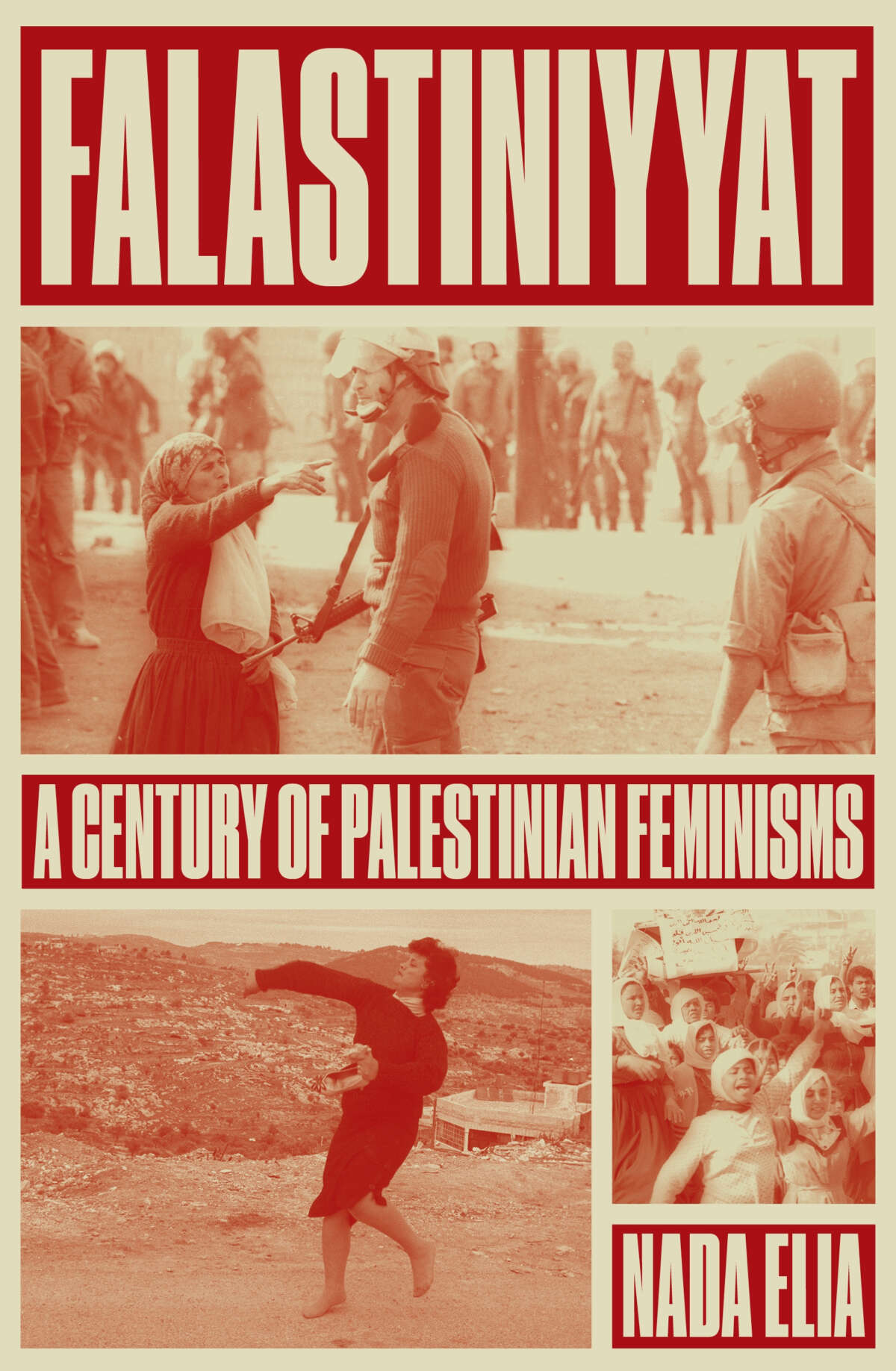
Since we are not yet a sovereign people, it is impossible to separate Palestinian women’s activism from the national struggle for liberation. However, there is no doubt that, while the struggles of Palestinian women in the opening decades of the twentieth century were inextricably connected to the broader national struggle for liberation, their activism also challenged the internal status quo of Palestinian society and should be understood as random acts of feminism, as it not only charted new paths for these women themselves but also sought to improve the circumstances of all women, whatever their social status.
We lost 15 percent of our traffic overnight.
We now have three full months of data since Google changed its search to feature AI results. The numbers are worse than we anticipated. Overall readership that comes to Truthout through Google is down 54 percent against last year. The number of new readers who discover Truthout via Google searches is down 49 percent, and returning users from Google are down 51 percent.
We lost 15 percent of our readership overnight. This was a readership we painstakingly built over decades, and it vanished because Google chose corporate greed over a healthy democracy.
We anticipate a loss of roughly $500,000 in online revenue as a result of this massive traffic plunge in the next year alone.
The only way we can keep publishing is with strong reader support. We are asking you to start a monthly donation to Truthout today — anything you can do, whether $5 or $25, makes a difference.