Part of the Series
Covering Climate Now
Did you know that Truthout is a nonprofit and independently funded by readers like you? If you value what we do, please support our work with a donation.
In the summer of 1969, the Young Lords declared a “garbage offensive” on the streets in New York City, blocking traffic with piles of garbage to demand better sanitation and public health services for Puerto Rican and Black neighborhoods in Harlem. Led by young radicals at the height of the civil rights movement, the Young Lords were determined to win a cleaner environment for their people, even taking brooms from the city to sweep the streets themselves.
At the time, the environmental crises were getting too big to ignore, even for people with the privilege of living in a clean neighborhood. Polluted rivers were catching on fire in the Rust Belt, and the bald eagle, the nation’s mascot, was facing extinction due to pesticide poisoning. For the first time, TV news broadcast heart-wrenching images of animals coated with a black slick after a massive oil spill off the coast of California in 1969.
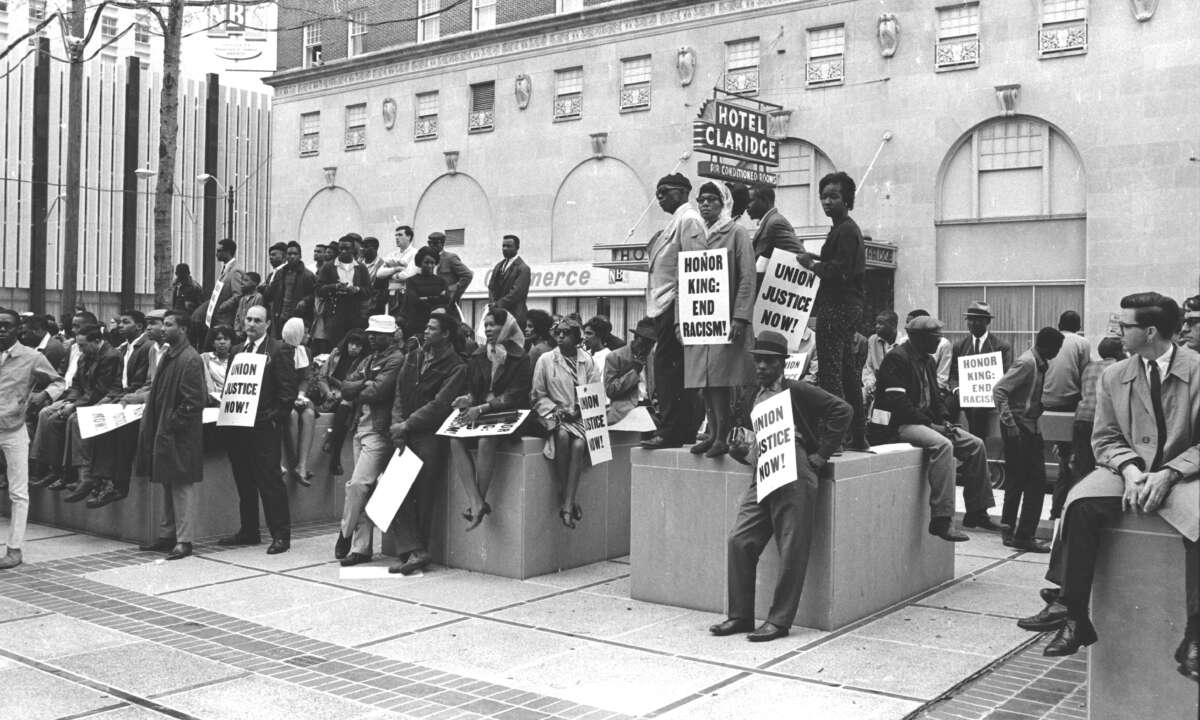
The term “environmental justice” would not be coined for at least a decade, but visionaries such as the Black Panthers and Martin Luther King Jr. were already confronting environmental racism in the streets. King famously rallied with striking sanitation workers in Memphis, Tennessee, before being assassinated in 1968 and spent years fighting for transportation justice. Public transportation (or lack thereof) and car culture remain major climate and public health issues today, especially where racist planners built busy roads and highways on top of Black neighborhoods, bringing heavy traffic and air pollution.
Months after the Young Lords took over the streets with their garbage strike, environmentalists organized the first nationwide Earth Day on April 22, 1970.
Millions of people protested nationwide on Earth Day 1970 demanding environmental protections, and the modern environmental movement was born — or so the story goes. However, environmental justice activists point out the Earth Day movement was largely led by white people focused on conserving wild areas and natural resources, while the civil rights movement had already confronted vast environmental disparities for years.
The roots of the modern environmental movement go much deeper than Earth Day, according to Elizabeth Yeampierre, executive director of UPROSE, an environmental justice group in Brooklyn, New York. As white people and wealthy conservation groups began waking up to the realities of pollution and climate change in the 1970s, Black and Brown people were already fighting for clean air, clean water, and basic environmental services such as trash disposal.
“It’s not been just 50 years,” Yeampierre told Truthout. “It’s been over 500 years of fossil fuel extraction, of colonialism, of basically putting all the polluting and extractive infrastructure next to Black and poor communities in the United States, and filling our lungs with nitrogen dioxide and filing our blood with dioxin.”
Even in 2023, Black communities are left without basic services: In Jackson, Mississippi, years of underinvestment and political neglect left thousands of mostly Black residents without clean water last year. After Hurricane Ida hit in 2021, some Black and working-class neighborhoods in New Orleans went a month without sanitation services, leaving enormous trash piles to fill the hot, humid air with a putrid stench. As climate change brings more frequent flooding and severe weather, other cities could soon face similar problems.
For the people behind the civil rights movement, environmental issues were never someone else’s problem. Today, Black people in the U.S. are still 75 percent more likely than white people to live in fence-line communities near industrial polluters, and Black children suffer from asthma at nearly twice the rate of white children, according to the Climate Action lab at Princeton University.
Earth Day takes a lot of flak for eroding into a festival of corporate greenwashing over the years, but Yeampierre said Earth Day could also present an opportunity to reflect on environmental racism and learn from communities that are organizing on the front lines of a crisis that faces all of us: climate change.
In Brooklyn, for example, UPROSE successfully opposed plans to build a fossil fuel power plant and pushed for renewable energy as part of a plan to decarbonize an entire urban community, a reminder that environmental issues do not stop at the edge of the woods. The climate crisis is global, but the necessary transformation away from fossil fuels is happening in local communities, where activists and residents demand cleaner energy and fight to stop the expansion of new oil and gas infrastructure.
“Earth Day is an opportunity to celebrate what is possible, but it’s also a day to recognize that there is a history that goes beyond the last 50 years, and that history is anchored in racial injustice,” Yeampierre said.
Press freedom is under attack
As Trump cracks down on political speech, independent media is increasingly necessary.
Truthout produces reporting you won’t see in the mainstream: journalism from the frontlines of global conflict, interviews with grassroots movement leaders, high-quality legal analysis and more.
Our work is possible thanks to reader support. Help Truthout catalyze change and social justice — make a tax-deductible monthly or one-time donation today.