Truthout is an indispensable resource for activists, movement leaders and workers everywhere. Please make this work possible with a quick donation.
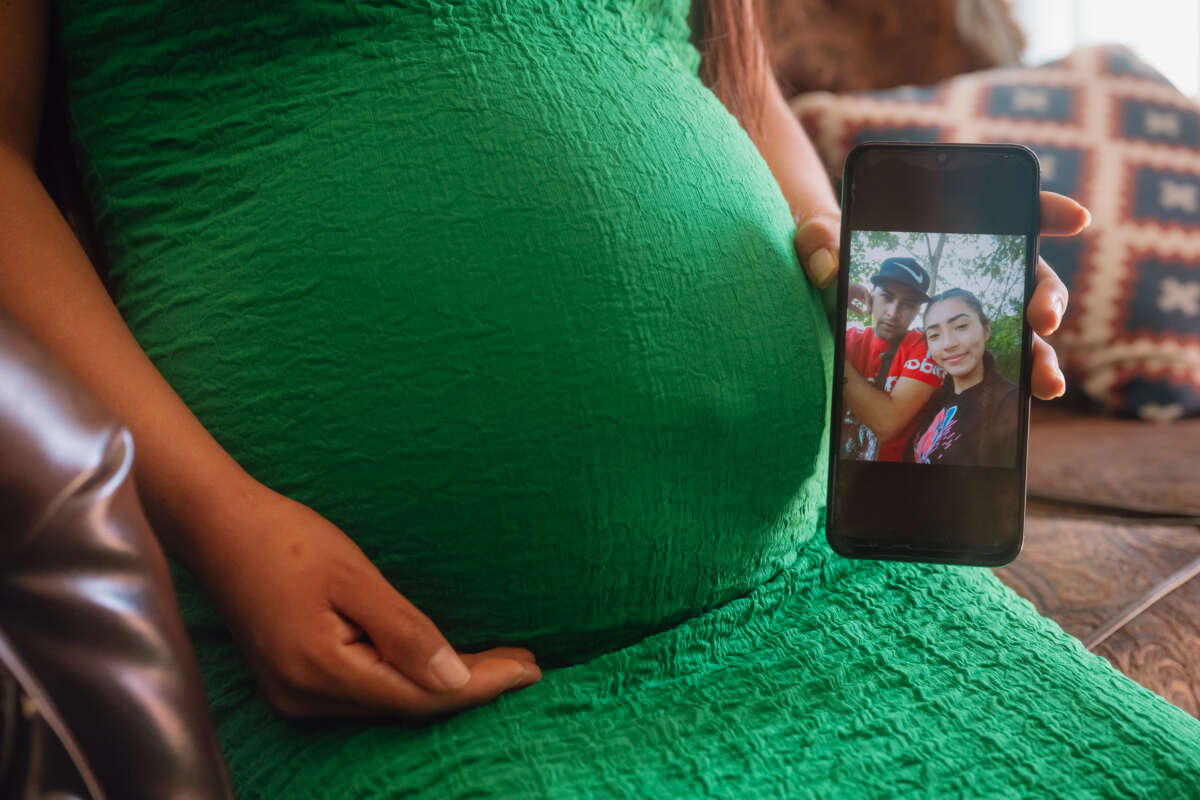
A 28-year-old woman, who was set to give birth in a matter of days, was detained by immigration authorities in California this summer amid the current presidential administration’s crackdown on immigrants, asylum seekers, and U.S. citizens. Her story is part of a disturbing rise in pregnant people suddenly being approached by border patrol officers or plain-clothed Immigration and Customs Enforcement (ICE) agents. As ICE raids have devastated more families in recent months, immigrant and reproductive rights advocates have raised concerns about the impact of the raids on the reproductive health of those arrested, detained, and forcibly separated from their families.
The harms inflicted on immigrants, especially the medical neglect and abuse of pregnant people, are not only an immigration justice crisis, they’re a reproductive justice crisis as well. Reproductive justice — a movement and framework created by Black women and other women of color — is defined as the human right to maintain personal bodily autonomy, have children or not have children, and parent children in safe and sustainable communities. The simultaneous withdrawal of abortion access and this country’s long-standing history of injustice against Black and Brown people has created near-dystopian conditions for immigrant communities, where access to both reproductive care and freedom from deportation are increasingly under attack.
Witnessing the Crisis From the Front Lines
In the past six months, Fund Texas Choice, a statewide abortion practical support organization that fills in gaps to accessing essential health care, has seen up close how immigrant justice and reproductive justice go hand in hand. We have supported more than 600 clients — purchasing plane tickets, arranging rides, and making sure folks have enough money to buy food while they travel an average of 1,400 miles to their appointments. Year after year, Texans continue seeking our help in high numbers, and we’ve seen an increase in support requests. We often hear from our clients that they have to decide between buying a plane ticket to access reproductive health care or paying their rent.
Amid the immigration crackdown nationally and in Texas, our clients are facing more barriers than ever before. To leave the Rio Grande Valley and head north, travelers are required to cross a border checkpoint, sometimes more than one. This is also the largest border checkpoint region in the U.S.
Latine people in Texas are living under one of the most restrictive abortion regimes in the country. According to the National Partnership for Women and Families, Latine people represent the largest group of people of color impacted by current abortion bans. Texas is home to more than 2.9 million Latine people of childbearing age, and of this number, 1.9 million are economically insecure. The average cost to travel out of state for abortion care can range anywhere from $500 to $1,000, which does not even include the cost of the procedure.
There are factors to consider that logistically put abortion care beyond reach for millions of people — things like child care, transportation, not having access to paid time off, and living in rural areas, to name a few.
For Latine communities, the compounded impact of anti-immigration laws, surveillance, and the threat of deportation, detention, or forced family separation often makes traveling for abortion care impossible.
Criminalization and Cultural Bias in the Shadow of the “Muslim Ban”
As workers for an abortion practical support fund, as well as members of these immigrant communities, we’ve witnessed the acceleration of abortion surveillance and criminalization up close. We’ve had family members, neighbors, and friends face insurmountable obstacles that stand in the way of their reproductive autonomy.
When seeking abortion care, Muslims not only face the abortion access crisis affecting all Texans but also often face increased risks of surveillance and religious-based discrimination. Since the overturning of Roe v. Wade, 17 states have total abortion bans or restricted access to the first six weeks of pregnancy, rendering abortion inaccessible for at least 824,000 Muslims across the U.S. Between racial profiling and anti-Muslim bias, many Muslims are afraid of interstate travel, especially those with complex immigration statuses. Muslim women face disparities in reproductive health care compared to other groups, especially visibly Muslim women who wear the hijab.
Latine Muslims, who represent 9 percent of the U.S. Muslim population, are on the front lines of navigating an increasingly hostile political landscape. Black Muslim immigrants in the U.S. face heightened state-sanctioned police violence and anti-Black racism, conditions that contribute to some of the worst childbirth outcomes in the country. Texas alone has one of the highest maternal mortality rates, and both Black and Latine mothers are disproportionately affected. Many overlapping obstacles underscore how immigration justice is inseparable from reproductive justice, including Muslim communities that tackle racial, religious, and immigration-based marginalization.
The post-Roe legal landscape has opened the door for law enforcement to exploit virtually any form of data — license plates, phone records, geolocation data — to pursue individuals across state lines. When seeking abortion care, immigrant communities are more likely to have a target on their back.
What Does This All Mean?
HB 7, which was signed into law by Gov. Greg Abbott earlier this month, is the fourth anti-abortion measure to exist in Texas. This law seeks to cut off access to medication abortion from inside and outside of Texas, and create a chilling effect beyond Texas borders, which is why it’s more important than ever to tap into organizations who’ve been championing abortion rights in the state for over a decade. Supporting your local abortion fund is one of the most direct ways to ensure that the people most harmed by the anti-abortion and anti-immigrant landscape in the South still have options for care.
Bodily autonomy is threatened in clinics, at the borders, at the hands of oppressive laws, and at every checkpoint. As abortion practical support organizers, we understand the strain of layered oppressive systems that work to weaken options for immigrants and other marginalized people. The U.S. immigration system is replete with measures that violently strip immigrants of their reproductive freedom. These conversations must be had in tandem.
We go back to the words of Audre Lorde often: “There is no such thing as a single-issue struggle because we do not live single-issue lives.”
An urgent appeal for your support: 10 Days to raise $50,000
Truthout relies on individual donations to publish independent journalism, free from political and corporate influence. In fact, we’re almost entirely funded by readers like you.
Unfortunately, donations are down. At a moment when independent journalism is urgently needed, we are struggling to meet our operational costs due to increasing political censorship.
Truthout may end this month in the red without additional help, so we’ve launched a fundraiser. We have 10 days to hit our $50,000 goal. Please make a tax-deductible one-time or monthly donation if you can.