Truthout is an indispensable resource for activists, movement leaders and workers everywhere. Please make this work possible with a quick donation.
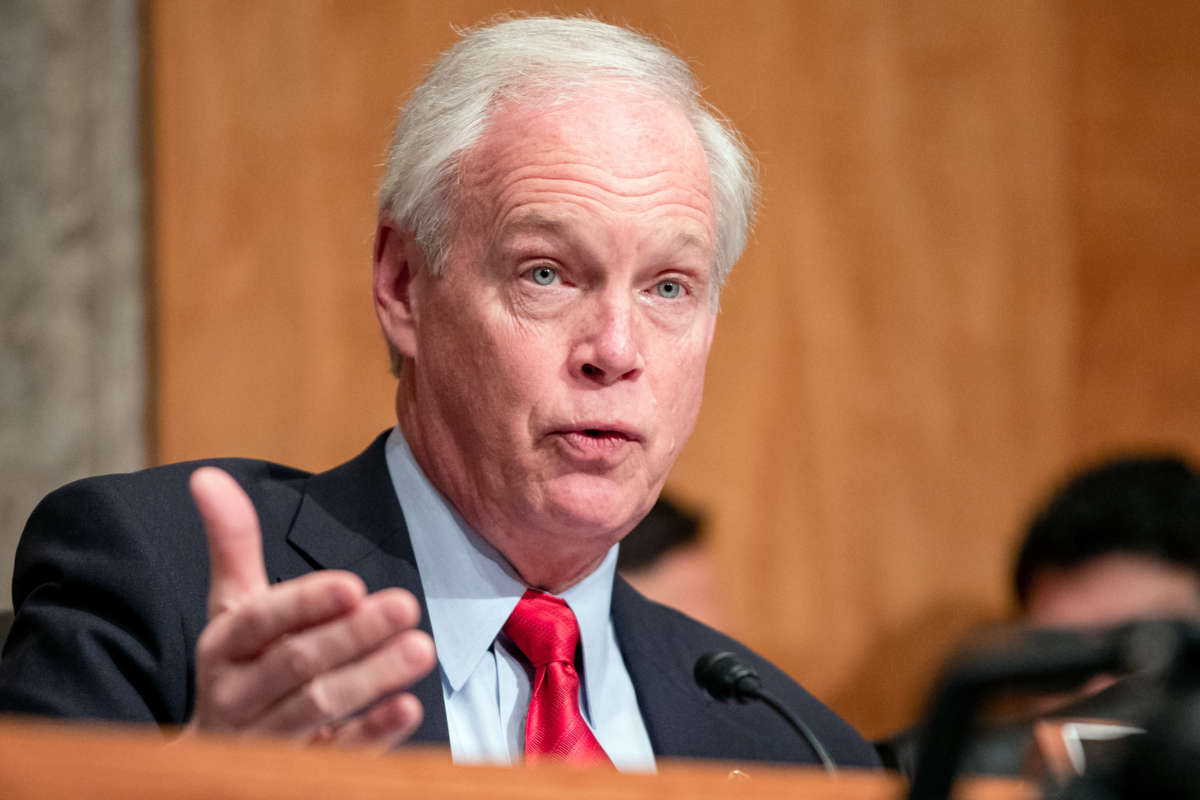
During a town hall meeting last week, Sen. Ron Johnson (R-Wisconsin) told listeners that coaxing retired Americans back to work with tax incentives could be an “innovative” way to deal with so-called “labor shortages.”
Johnson is currently seeking a third Senate term in this year’s midterm races despite promising to retire after two terms. According to The Wisconsin State Journal, he has proposed the idea for seniors to reenter the workforce numerous times over the past few months, and reiterated the call during a recent event in Neenah, Wisconsin, claiming it could be a solution for businesses that are struggling to hire and retain workers.
“We could encourage seniors to get back in the workforce, those who are able to, by just saying, ‘We’re not going to charge you payroll tax. You’re not paying it now. Come back into the workforce, and we’ll waive the payroll tax,'” Johnson said during the town hall.
Economists largely agree that providing better working conditions and higher incomes to workers is the best way to address the issue — not coaxing seniors back to the workforce by telling them they can return to work without paying income taxes.
Untaxed payroll wages would reduce payments to Social Security and Medicare, programs that millions of retirees in the U.S. depend on to stay afloat.
“I can see Sen. Johnson’s plan as having a small, positive benefit toward the goal of encouraging older adults to reenter the workforce,” Cal Halvorsen, an assistant professor at the Boston College School of Social Work, said to The State Journal. “Yet, I also worry about the effect on the federal budget overall and, in particular, the Social Security retirement program, which would lose money at a point when Congress still hasn’t fixed the projected budget shortfall in 2035.”
Democrats panned the idea, pointing out that the policy would be exploitative and harmful to seniors. Lauren Chou, a spokesperson for Democratic Senate nominee Mandela Barnes, who is running against Johnson this fall, said the proposal by the GOP lawmaker would be tantamount to “hanging seniors out to dry.”
Barnes has also criticized Johnson over his anti-senior stances.
“Why is Ron Johnson waging a war on our seniors and the benefits they’ve worked towards their entire lives?” Barnes asked in a recent tweet.
Johnson’s proposal comes weeks after he suggested that Medicare and Social Security budgets should be up for yearly votes in Congress instead of being automatic, a move that could potentially disrupt benefits for retirees due to the high likelihood of partisan battles over the amounts that should be allocated to the programs.
The White House condemned Johnson’s idea in August, saying that it would put programs that help millions of Americans “on the chopping block.” Senate Majority Leader Chuck Schumer (D-New York) also blasted Johnson’s proposal, noting that he and other Republicans were “saying the quiet part out loud” when it comes to their plans to dismantle social spending programs that many retirees depend on.
We lost 15 percent of our traffic overnight.
We now have three full months of data since Google changed its search to feature AI results. The numbers are worse than we anticipated. Overall readership that comes to Truthout through Google is down 54 percent against last year. The number of new readers who discover Truthout via Google searches is down 49 percent, and returning users from Google are down 51 percent.
We lost 15 percent of our readership overnight. This was a readership we painstakingly built over decades, and it vanished because Google chose corporate greed over a healthy democracy.
We anticipate a loss of roughly $500,000 in online revenue as a result of this massive traffic plunge in the next year alone.
The only way we can keep publishing is with strong reader support. We are asking you to start a monthly donation to Truthout today — anything you can do, whether $5 or $25, makes a difference.