Did you know that Truthout is a nonprofit and independently funded by readers like you? If you value what we do, please support our work with a donation.
Washington – Congress was warned Tuesday that the failure to build the planned Yucca Mountain nuclear waste repository in Nevada could delay licensing of the country’s first new nuclear power plants in a generation.
“Without a solution to the storage of spent nuclear fuel — meaning a permanent repository — state regulators may be hesitant to approve the construction of new nuclear units,” David Wright, the head of the Nuclear Waste Strategy Coalition, a group of regulators, attorneys general and electric utilities from 32 states, told the House Budget Committee. “And utilities may be hesitant to construct new nuclear units even if the (federal) Nuclear Regulatory Commission approves the license.”
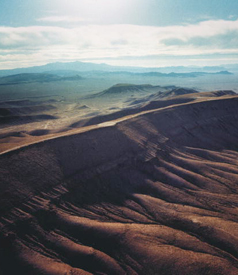
Rep. John Spratt, D-S.C., the House panel’s chairman, criticized President Barack Obama’s decision last year to halt plans to start building the nuclear waste dump beneath Yucca Mountain, about 90 miles northwest of Las Vegas.
“I am doubtful that there are easy alternatives to the Yucca Mountain site,” Spratt said. “If we abandon Yucca Mountain, where are we going to find a suitable alternative?”
Spratt released a new report by the nonpartisan Congressional Budget Office finding that the federal government faces more than $13 billion in potential liabilities from dozens of lawsuits filed by states over nuclear waste storage.
The 1982 Nuclear Waste Policy Act required the government to establish a single repository for toxic materials from nuclear weapons production and maintenance at the Hanford nuclear reservation in Washington state, the Savannah River Site in South Carolina, the Idaho National Laboratory, the Oak Ridge National Laboratory in Tennessee and similar complexes in other states.
The central repository, which Congress decreed in 1987 would be under Yucca Mountain, is also designed to accept waste from 104 commercial nuclear reactors across the country.
Utilities and states have filed 72 lawsuits over the federal government’s failure to meet the law’s 1998 deadline to start collecting nuclear waste at the Yucca site. Congress later changed the deadline to 2017.
A panel of Nuclear Regulatory Commission administrative law judges last month rejected Energy Secretary Steven Chu’s attempt to withdraw the application that President George W. Bush had submitted to the NRC to start building the Yucca repository.
The full commission is reviewing the judges’ ruling on whether the Obama administration has the authority to pull out of a congressionally mandated project on which the government has spent $10 billion in environmental and design studies.
Busy schedule? Click here to keep up with Truthout with free email updates.
Kristina Johnson, the U.S. energy undersecretary, predicted Tuesday that the administration will prevail in the NRC case.
“The (Energy) Department remains confident in its legal authority to withdraw the application,” Johnson told the budget panel.
In a separate action, South Carolina, Washington state and Idaho have a case challenging Obama’s Yucca reversal before the U.S. Court of Appeals in the District of Columbia.
At Obama’s direction, Chu set up the Blue Ribbon Commission on America’s Energy Future in January. The panel, led by former Indiana Rep. Lee Hamilton and former national security adviser Brent Scowcroft, will seek alternatives to Yucca Mountain for nuclear waste disposal.
Republican Rep. Jim Sensenbrenner of Wisconsin, the senior Republican on the House Select Committee on Energy and Global Warming, accused Obama of playing politics.
“Obama is seeking to kill Yucca Mountain before it opens not because it is good for the American people, but because it is good for Senate Majority Leader Harry Reid, who is engaged in a tough re-election campaign in Nevada,” he said.
Reid and most other Nevada leaders maintain that storing the nation’s most toxic nuclear waste under a mountain within 100 miles of Las Vegas would threaten the city’s $28 billion gambling and tourism industry.
Important Message: Please Read
For 25 years, Truthout has survived by publishing impactful investigative journalism and analysis; distributing full editions 365 days a year; and building a community of readers who support us with small, hard-earned donations.
Eighty percent of our $3 million yearly budget comes from small donors alone. Of those, 8,000 readers support us with monthly donations. Back in 2018, when Facebook decided to suppress the circulation of posts made by organizations, thereby cutting readers off from seeing many articles shared by the news organizations they had intentionally decided to follow, Truthout’s total traffic declined by 40 percent, as nearly all of our traffic from that platform disappeared.
Now, Google has recently rolled out its AI search bar, providing AI summaries instead of directing readers to our site. Google Search is our single largest source of traffic; it’s the route by which nearly one third of our readers find us. Much like in 2018, a shocking 40 percent of our Google traffic has disappeared overnight.
It will not be easy for Truthout to shoulder this blow. Nor will it be easy for our peers and collaborators — news sites that depend on traffic and aren’t bankrolled by large corporations.
If you can support Truthout with a donation today, you can help us resist the AI onslaught. Please give today.