Truthout is a vital news source and a living history of political struggle. If you think our work is valuable, support us with a donation of any size.
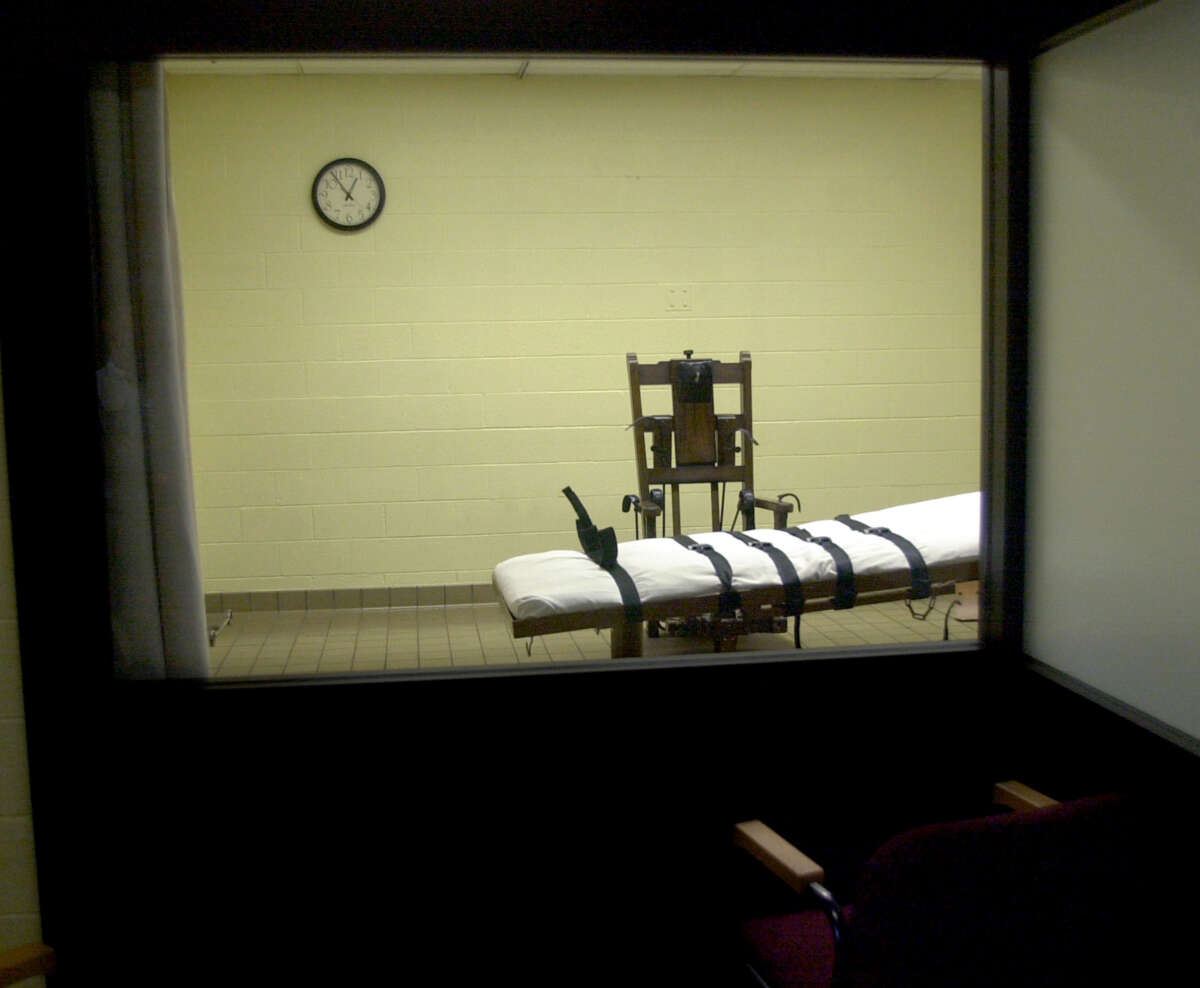
Early this year, and seemingly out of the blue, a group of Republican lawmakers in the North Carolina House introduced an alarming new bill. “Revise the Law on the Death Penalty,” otherwise known as HB 270, proposes bringing back the electric chair and implementing a firing squad as a means of forcing incarcerated people to choose their own ghastly method of execution. Should the person not want to choose, the chair — often called “death by lightning” — would be the state’s default method of execution.
A North Carolina House committee advanced HB 270 in April, and despite missing a key deadline in May, there is still a chance the bill could pass the legislature and get signed into law. The bill is making incarcerated people quite nervous — myself included.
Since my incarceration at the age of 19 in 1997, I’ve lived through 33 executions. Growing up on North Carolina’s death row has meant that when the state sentences new men to death, I get to know them better than most people know their own family members. Many of us have spent over two decades together, since the state placed a moratorium on executions in 2006. If this bill moves forward, the result would be particularly horrific because of the 136 people on death row, more than 30 of them have exhausted their appeals aside from the Racial Justice Act, a law that is the subject of ongoing litigation after it “exposed an epidemic of race discrimination in capital cases,” according to the Center for Death Penalty Litigation.
Even one execution would be devastating. But more than 30 in rapid succession?
Torture is too trite a word.
Capital punishment cannot simultaneously be a form of retributive justice and allowed to be weaponized by the state and lawmakers to remove and erode constitutional protections. “Justice” and “public safety” are only pretenses. With so many ignorant of how the criminal legal system actually operates, anything lawmakers and law enforcement mete out against U.S. residents is largely accepted. They must deserve it, the thinking goes.
But you must first devalue certain human lives enough to justify strapping another human being in the chair and throwing the switch.
Investing in Torture and Cruelty
No credible evidence exists that the death penalty is more effective than life imprisonment, though it is known to have a “brutalizing effect” that increases violent crime. The state is a role model, and when it carries out executions, it shows that taking another’s life is the way to solve problems.
North Carolina took over the administration of the death penalty — away from individualized counties — and centralized the punishment in 1910, the same year the state transitioned from public hangings to the use of the state’s first, newly installed electric chair at Central Prison.
As associate professor and director of the Southern Oral History Program, Seth Kotch, wrote, “Mob lynchings and state-sanctioned executions were mutually reinforcing systems of racialized violence against the recently freed Black people” of North Carolina.
And the chair proved particularly brutal.
According to news reports at the time, the 1921 execution of a Black man named William Frazier “sickened” the crowd in attendance because the electric chair significantly burned Frazier’s flesh, the smell of which emanated throughout the execution and viewing chambers, Koch wrote.
Historically, the electric chair was referred to as “torture” even as part of some of the earliest executions. Physician and North Carolina Rep. Charles A. Peterson introduced a bill in 1935 to change the state’s method of execution from electrocution to asphyxiation by gas, believing it “more humane for witnesses.” As the bill worked through the legislature, Peterson attended the execution of a man named Sidney Etheridge, who caught fire due to an electric chair malfunction. A local newspaper noted that “modern North Carolina” hadn’t moved away from “torture and cruelty.”
It seems that the North Carolina of 2025 is still quite invested in torture and cruelty.
A primary sponsor of HB 270, Republican Rep. David Willis, said during a committee hearing in May that the North Carolina bill is modeled after one in South Carolina, where lawmakers’ authorization of “alternative execution methods” such as the firing squad enabled the state to end its own 13-year pause on executions.
“It’s not something that’s used every single day, obviously, but I think our [district attorneys] and our courts need to have this option on the table to combat some of the heinous crimes and murders and things that we’re seeing,” Willis told the News & Observer in May.
South Carolina law now requires people on death row to “elect” how the state will kill them. Their choices are lethal injection, electrocution, or firing squad, with electrocution being the default if no method of execution is chosen. But what does this choice look like in practice?
After South Carolina lawmakers passed their version of HB 270, three men on death row “chose” lethal injection. But because of the state’s “shield law” passed in 2023, South Carolina does not provide any specific information regarding execution drugs and the individuals involved in carrying out the execution, meaning that the men who opted for lethal injection had no information about the lethal injection drug’s creation, quality, or reliability, according to the Death Penalty Information Center. Each took more than 20 minutes to die, and autopsy results found the men died with fluid in their lungs, indicating a slow and painful death.
The issues with the state’s lethal injection protocol led South Carolina’s Brad Sigmon to opt for the firing squad for his March 2025 execution. In an op-ed, Sigmon’s attorney, Gerald “Bo” King, recounted the experience of watching his client get shot to death by the state. King is also chief of the Capital Habeas Unit for the 4th Circuit, which is part of the Federal Public Defender’s Office for the Western District of North Carolina. He noted that Sigmon was tied down to a chair with a hood placed over his head. A white square with a red bull’s-eye was affixed to his chest. Sigmon was made to wear black to hide the appearance of blood.
“A wound opens on his chest before the sound reaches us,” wrote King after the shots were fired. “The target is gone. Maybe the bullets vaporized it. Maybe they pushed it into the fist-sized hole streaming blood over Brad’s stomach and into his lap. Blood flows from Brad’s dying heart steadily, with occasional spills. Like someone tipped a glass behind his broken ribs, sloshing onto his black shirt, which conceals red very well.”
This disturbing scene is hard to justify, but laws create justifications for all kinds of horrors.
When asked about HB 270 in May, North Carolina House Speaker Destin Hall wasn’t even familiar with the specifics of the bill, but he told reporters that there needs to be a resolution to the moratorium on executions.
“The law is the law and our law — as it has for a long time — allows the death penalty in North Carolina,” Hall said. “And I think that when a jury decides something, that the will of that jury ought to be carried out.”
Hall should know that juries often get it wrong. Detectives also get tunnel vision or in some cases fabricate evidence, coerce false confessions, and rely on faulty eyewitness testimony.
Prosecutors then rely on a singular theory of a crime, regardless of the case flaws or exculpatory evidence disproving the theory — and they put the full weight of the state’s resources into gaining a conviction. This is especially true for Black men.
Hall need only recall Anthony Carey, Samuel Poole, Christopher Spicer, John Alford, Alfred Rivera, Alan Gell, Jonathan Hoffman, Glen Chapman, Levon Jones, Henry McCollum, Leon Brown, and Charles Finch. These 12 innocent men, a majority of whom are Black, were wrongfully prosecuted, convicted, and sentenced to death by North Carolina juries before they were ultimately exonerated.
According to a 2017 national study, when exonerees were Black, their cases were 22% more likely to include police misconduct than the cases of white exonerees. In the cases of Jones, Hoffman, Chapman, Poole, Carey, Alford, and Spicer, all were convicted of crimes with white victims. Racist Roots, a project of the Center for Death Penalty Litigation that details the origins of North Carolina’s death penalty, reported that in 2006, “three psychologists found that in cases where the victim is white, Black defendants are more likely to be sentenced to death the more they have stereotypically Black features. Essentially, when charged with the death of a white person, Black men look more ‘death-worthy.’”
Compartmentalizing Brutality
Hovering in the background of HB 270 is HB 64, a proposed constitutional amendment that would limit the North Carolina governor’s power to grant clemency and instead, transfer this power to the legislature, making it nearly impossible for people on death row to receive a commuted sentence or pardon.
The top Republican in the upper chamber, North Carolina Senate leader Phil Berger, maintains that taking legislative action to lift the pause on executions is somehow related to giving North Carolinians what they want.
“I agree with the sentiment that for way too long, the judicial branch has found ways to frustrate the will of the legislature, and the will of the people of North Carolina,” Berger told reporters in May.
However, in recent years, support for the death penalty in North Carolina plummeted, with nearly three quarters of North Carolina voters rejecting capital punishment for people convicted of murder.
The Republican legislature also aims to end the North Carolina Innocence Inquiry Commission, an agency with the sole mission of investigating claims of innocence and freeing wrongly convicted North Carolinians. And under the auspices of “public safety,” Republicans in the state also seek to defund North Carolina Indigent Defense Services (IDS), an already underfunded agency that directs and pays public defenders. By taking more money away from the cash-strapped IDS, the poor are more likely to receive inadequate legal representation, which means more innocent people will be convicted of crimes they did not commit and more people will get funneled to prison.
Bringing back the electric chair, adding the firing squad, undermining public defense, eliminating the Innocence Inquiry Commission, taking away clemency — is this the will of the people, or is something else at play?
The real answer came from White House Deputy Chief of Staff Stephen Miller. Earlier this year, Miller — the architect of the Trump administration’s anti-immigrant policies — revealed that the Trump administration is “actively looking” at suspending habeas corpus, the legal principle that allows a person to challenge their arrest and confinement.
Also known as the Great Writ of Liberty, the habeas corpus petition protects U.S. residents from unlawful arrest and detention by the government and can only be suspended by Congress if there is a national emergency, such as an invasion or rebellion. The last time the federal habeas was suspended occurred during World War II, leading to the internment and asset seizure of tens of thousands of Japanese Americans. Miller has referred to the legal principle as a “privilege” — and one that he would like to suspend to make it easier to detain and deport immigrants. While Congress did limit habeas petitions with the 1996 Antiterrorism and Effective Death Penalty Act, suspending it entirely would be the death knell of American democracy.
And North Carolina Republican legislators appear more than willing to clear the way.
While the fate of HB 270 is uncertain, it’s clear Willis is determined to move the bill forward in the 2025 legislative session, possibly by attaching it to the budget along with the Senate’s other proposals. According to the representative, HB 270 is not about any one particular method of execution, but rather about “moving the death penalty itself forward.”
It’s important to consider exactly what Republicans are moving forward. In April, Mikal Mahdi became the second man in South Carolina to be executed by firing squad. And like others, Mahdi’s execution was botched. According to his attorneys, he was only struck by two of the bullets, and these bullets largely missed his heart, leading him to suffer unnecessarily, a violation of the constitutional law against cruel and unusual punishment.
This is the reality that Republicans are pushing forward, leading advocates such as the Catholic Mobilizing Network’s Krisanne Vaillancourt Murphy to wonder: How did we get here, and how does our society think this inhumanity is somehow acceptable?
“This is a reminder that every execution — regardless of the method or the procedures that take place — is a violent act that disregards the dignity of life,” Vaillancourt Murphy said after Mahdi’s execution. “The outrage we feel toward these execution methods is a reminder that over time, the system of capital punishment has become all the more deceptive to make executions appear more palatable, sterile, and ‘humane.’ But executions are never any of these things.”
Like racial segregation, marginalizing the poor, and criminalizing immigrants, American society is particularly good at compartmentalizing brutality and injustice against their neighbors. Many attend church on Sunday to hear the teachings of Jesus, and on Monday, they demand that elected officials deport women and children refugees in their community. They sit down for dinner, complain about the price of groceries, count their blessings, and then scoff at calls to end the genocide and blockade in Gaza. They greet people in their neighborhoods and ask after their health, only to perform their civic duty later in the week by sentencing someone from across town to death. As someone on death row, I’ve often wondered if they can even see their own hypocrisy, or if it’s so common it’s simply normalized.
And if Republican lawmakers are — as they say — acting on behalf of their constituents, then it is the will of the people, who elected unqualified public officials, who completely disregard constitutional rights, human dignity, and mercy.
In doing so, “the people” should remember this:
While you may think capital punishment is a “necessary evil,” like ordinary traffic stops by law enforcement or immigration raids that end in the deaths of innocents, do not be surprised when state violence is turned on you — and it won’t matter that you are a citizen.
Prism is an independent and nonprofit newsroom led by journalists of color. We report from the ground up and at the intersections of injustice.
Press freedom is under attack
As Trump cracks down on political speech, independent media is increasingly necessary.
Truthout produces reporting you won’t see in the mainstream: journalism from the frontlines of global conflict, interviews with grassroots movement leaders, high-quality legal analysis and more.
Our work is possible thanks to reader support. Help Truthout catalyze change and social justice — make a tax-deductible monthly or one-time donation today.