Support justice-driven, accurate and transparent news — make a quick donation to Truthout today!
It is important to understand that decolonization is a physical action and that since the creation of the United Nations, more than 80 countries have decolonized; which is to say, in over 80 nations, oppressive domination has been dismantled — colonial rule has left the building.
I try to imagine that kind of dismantling happening here in our homeland. I imagine a Handmaid’s Tale scenario where power is drastically overturned by Indigenous brethren. I see fire and destruction. I see the worst kind of Mad Max or zombie apocalypse that climaxes with 90 percent of our current population gone. The cost of this shift would be so devastating and tragic, it seems anti-American to even imagine it.
But the truth is it’s already been actualized; and it happened here — on this soil, to my people. For some, it was only four generations ago that more than 90 percent of our relatives experienced that kind of genocide.
Native America might always feel the grief from that loss because colonial disruption is still here and its violence permeates every aspect of American culture and politics. Every aspect of our lives suffers from this violent structure.
Sometimes I sit in modern spaces and try to imagine a “United States of Tribal Nations.” I imagine that the music overhead would be by a well-known Native hip-hop artist, and I’d shake my head because it lacks the substance of my generation, but at least it would be relevant. I try to imagine what it would be like to grow up in a modern longhouse surrounded by my closest friends and relatives at every meal. I wonder if our people would be less lonely. Maybe I would have had the opportunity to know my own “coming of age” ceremony, and at a very young age I’d have purpose and meaning instead of adolescent rage. Maybe we would be driving hydro-powered cars. Maybe corporations wouldn’t have human rights. Maybe ownership of land would look different. Maybe shoe stands would be at airports to clean my moccasins. There definitely wouldn’t be a blood quantum; we’d all belong. I imagine that 95 percent of the population would look like me. I imagine walking into spaces where I’m not the only Indian. Maybe our people would be healthier. Maybe I wouldn’t have known alcoholism or trauma or abuse. Maybe there would still be a thousand variations of grasses on the prairie, and buffalo would still have space to roam. Maybe we would have intricate trading systems between the Anishinaabe, Haudenosaunee, Pomo, and Miccosukee. Maybe the fish wouldn’t be dying from agricultural runoff. Maybe our children would grow up with fathers.
But these maybes aren’t enough.
So I focus on what I can do.
I become an Indigenous mental abolitionist.
And you can, too.
That begins by imagining that our Indigenous ancestors’ belief systems are worthy of saving. Michael Yellow Bird and Waziyatawin in For Indigenous Minds Only: A Decolonization Handbook say, “Only then will we be positioned to take action that reflects a rejection of the programming of self-hatred with which we have been indoctrinated. We will also learn to assess the claims of colonizer society regarding its justification for colonization and its sense of superiority. When we regain a belief in the wisdom and beauty of our traditional ways of being and reject the colonial lies that have inundated us, we will release the pent-up dreams of liberation and again realize the need for resistance to colonization.”
I keep having these recurring dreams where I’m on a plane or train and all the people around me, Native and non-Native, are speaking different Indigenous languages. I hear Paiute, Lashootseed, Diné, Catawba, and they’re feeding their babies wild rice and smoked fish. I’m dreaming about a modern world that doesn’t erase its Indigenous intelligence, but rather embraces the rich complexity of Indigenous culture.
This can be actualized if we all bring our hearts and minds together. The land we walk on is Indian Land, whether it be suburban cul-de-sacs or city streets. Echoes of Indian existence are all around us. It’s up to us to listen.
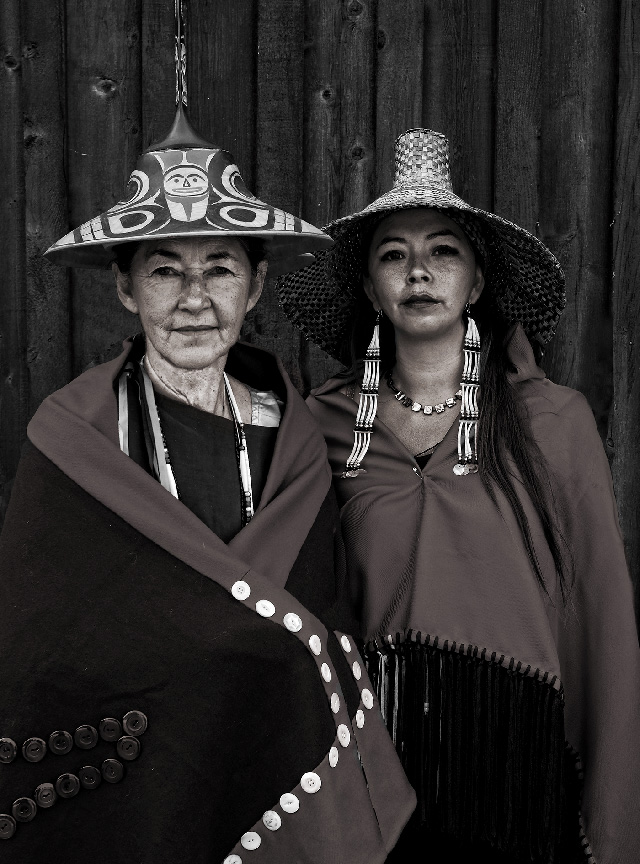 Matika Wilbur, right, and her mother, Nancy, from the Swinomish tribe.
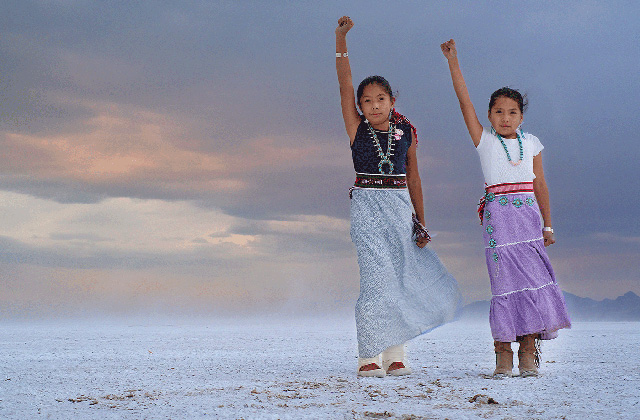 Isabella and Alyssa Klain (Diné)
we will not rest
hoping is not enough
our resilience shall prevail
together we rise
our ancestors always behind us
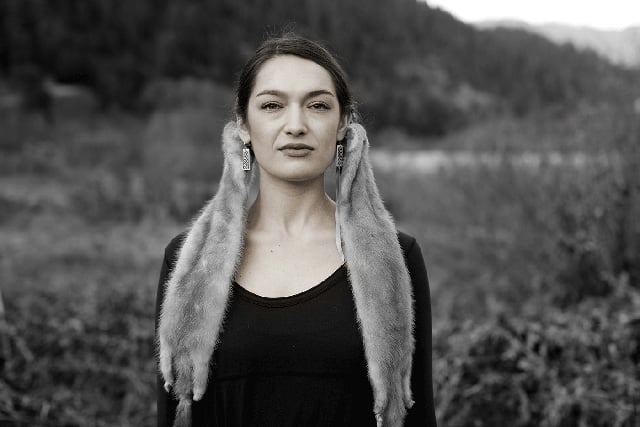 Sinéad Talley (Karuk and Yurok)
“It’s taken a long time for me to get outside of the blood quantum construct of thinking. I’m low blood quantum, and my family was disconnected for a while before we came back to the river. It’s been a returning process. Learning more about history and the fact that blood quantum is a European concept and that’s not how Native people determined who was a community member and who was not helped. When it comes down to it, blood quantum doesn’t mean anything. It’s your connection to place, it’s your kinship ties and how involved you are in the community. It has a lot to do with a lot of things, but indigeneity doesn’t have to do with blood quantum. You can know that and you can feel that, but they’re two different things. For me it’s taken a long time to feel that.”
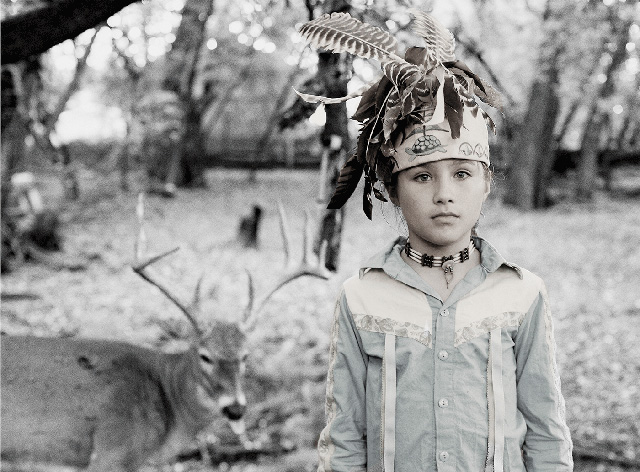 Wahatalihate (He Made it Warm) Daniel Clay Stevens (Oneida)
Oskʌnu·tú (deer) is considered the leader of the animal kingdom. Wahatalihate’s mom, Stephanie, explains: “Shukwayatisu gave us the deer for sustenance. Oneida people used all parts of the deer. The deer are peaceful animals, and it is understood to have peace in our hearts and minds when we eat venison.”
Important Message: Please Read
For 25 years, Truthout has survived by publishing impactful investigative journalism and analysis; distributing full editions 365 days a year; and building a community of readers who support us with small, hard-earned donations.
Eighty percent of our $3 million yearly budget comes from small donors alone. Of those, 8,000 readers support us with monthly donations. Back in 2018, when Facebook decided to suppress the circulation of posts made by organizations, thereby cutting readers off from seeing many articles shared by the news organizations they had intentionally decided to follow, Truthout’s total traffic declined by 40 percent, as nearly all of our traffic from that platform disappeared.
Now, Google has recently rolled out its AI search bar, providing AI summaries instead of directing readers to our site. Google Search is our single largest source of traffic; it’s the route by which nearly one third of our readers find us. Much like in 2018, a shocking 40 percent of our Google traffic has disappeared overnight.
It will not be easy for Truthout to shoulder this blow. Nor will it be easy for our peers and collaborators — news sites that depend on traffic and aren’t bankrolled by large corporations.
If you can support Truthout with a donation today, you can help us resist the AI onslaught. Please give today.