Truthout is a vital news source and a living history of political struggle. If you think our work is valuable, support us with a donation of any size.
The 2018 midterms are shaping up to be a historic moment in electoral history. As the GOP tries to maintain its majority, numerous people who never expected to run for office are plunging into politics. Meanwhile, a number of states are pushing through discriminatory voter suppression laws.
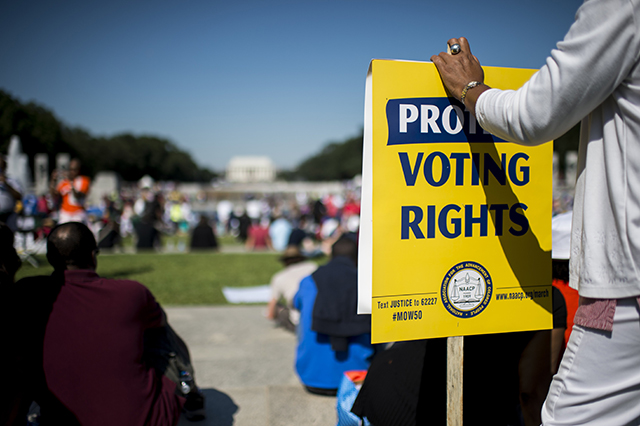
In the US, where theoretically every person has a vote, it’s critical to defend that right. Are you ready?
What to Know
While every person of legal age in the United States is supposed to be able to vote, each state administers elections slightly differently. Broad legislation and caselaw sets out some standards, but the rest remains up to the states. That’s why, for example, ex-cons who have served their time can vote in some states, but not others.
Throughout US history, a widespread pattern of voter suppression has been used to disenfranchise marginalized groups. Initially, white women and all people of color couldn’t vote, along with white men who didn’t own property. Over time, the nation extended voting rights to more individuals, but some states used tactics like poll taxes and literacy taxes to keep people of color and other disadvantaged groups out of the polls.
Today, those tactics are — in theory — illegal. But gerrymandering remains widespread, and states can still require voter identification, move polling places or change hours abruptly and engage in other activities that suppress the vote. There’s an ongoing battle over how far states can take these activities, and voter suppression tends to favor Republicans.
How to Take Action
One of the easiest ways to defend voting rights is by contacting your federal officials and asking them to work with the ACLU and other organizations to restore the Voting Rights Act, which protects minority voters. A 2013 Supreme Court decision changed the way the Department of Justice interprets the law — and not for the better. You can also ask them to proactively work on legislation that clarifies and streamlines voting rights from a federal perspective.
You can contact your state legislators, as well. If your state has voter ID laws, ask for them to be struck down. If it doesn’t, ask your legislators how they plan to keep it that way. If your state presents other hardships for voters, such as not allowing no-excuse absentee ballots or refusing to hold early polling, ask your legislators to address these barriers.
On a state level, consider getting involved with party officials — no matter what your political party may be — and talking to them about how they administer elections. Do they require a long lead time for people to declare their party affiliation before participating in primaries? Do they still hold caucuses? How are candidates selected for the ballot? Don’t be afraid to ask a lot of questions: It’s your party, and they work for you!
On a local level, the person with the power is the county clerk, registrar of voters, municipal clerk or similar official. Depending on where you live, you may have the right to inspect voting machines and ask for information about how elections are conducted. You can also volunteer as a poll worker — a great way to defend voting rights is to be the one helping people vote!
And speaking of helping people vote: You can volunteer with local political party offices, as well as organizations that promote voting rights to help with voter registration drives, outreach, education, rides to the polls and more.
You can also contribute to the heavy-hitters: the organizations working hard to defend voting rights. These include the ACLU, the Southern Poverty Law Center, the Lawyers’ Committee for Civil Rights Under Law, the Brennan Center for Justice and numerous others.
Want to take the next step? Consider running for office and becoming one of the people making — or dismantling — the law to improve voting access and equity across the United States. Organizations like Run for Something, She Should Run, and Run for Office are here to help you!
Press freedom is under attack
As Trump cracks down on political speech, independent media is increasingly necessary.
Truthout produces reporting you won’t see in the mainstream: journalism from the frontlines of global conflict, interviews with grassroots movement leaders, high-quality legal analysis and more.
Our work is possible thanks to reader support. Help Truthout catalyze change and social justice — make a tax-deductible monthly or one-time donation today.