Did you know that Truthout is a nonprofit and independently funded by readers like you? If you value what we do, please support our work with a donation.
Republican lawmakers in Florida are advancing a bill that would rescind protections for teenage workers, a move that critics say will allow employers to exploit children.
The legislation was crafted to address worker shortages, which have come about due to Florida’s harsh laws targeting immigrant workers. In part because of those laws, there are currently only 53 workers available for every 100 job vacancies in the Sunshine State.
A Senate committee passed Senate Bill 918 on Tuesday in a 5-4 vote, with all but one Republican on the panel supporting the measure.
Current state law requires children under the age of 16 to end their work shifts no later than 11 pm and to start no earlier than 6:30 am on school days. The proposed legislation would remove those restrictions, allowing employers to schedule 14 and 15 year olds to work overnight shifts. The bill would also allow 16 and 17 year olds to be scheduled on overnight shifts lasting over eight hours on school days, and rescind the current restriction on working more than 30 hours per week when school is in session. The bill also does away with the lunch break requirement for older teens.
A separate proposal regarding student workers is being considered in the state House of Representatives. That bill would allow businesses to pay teenagers at rates below the state’s minimum wage.
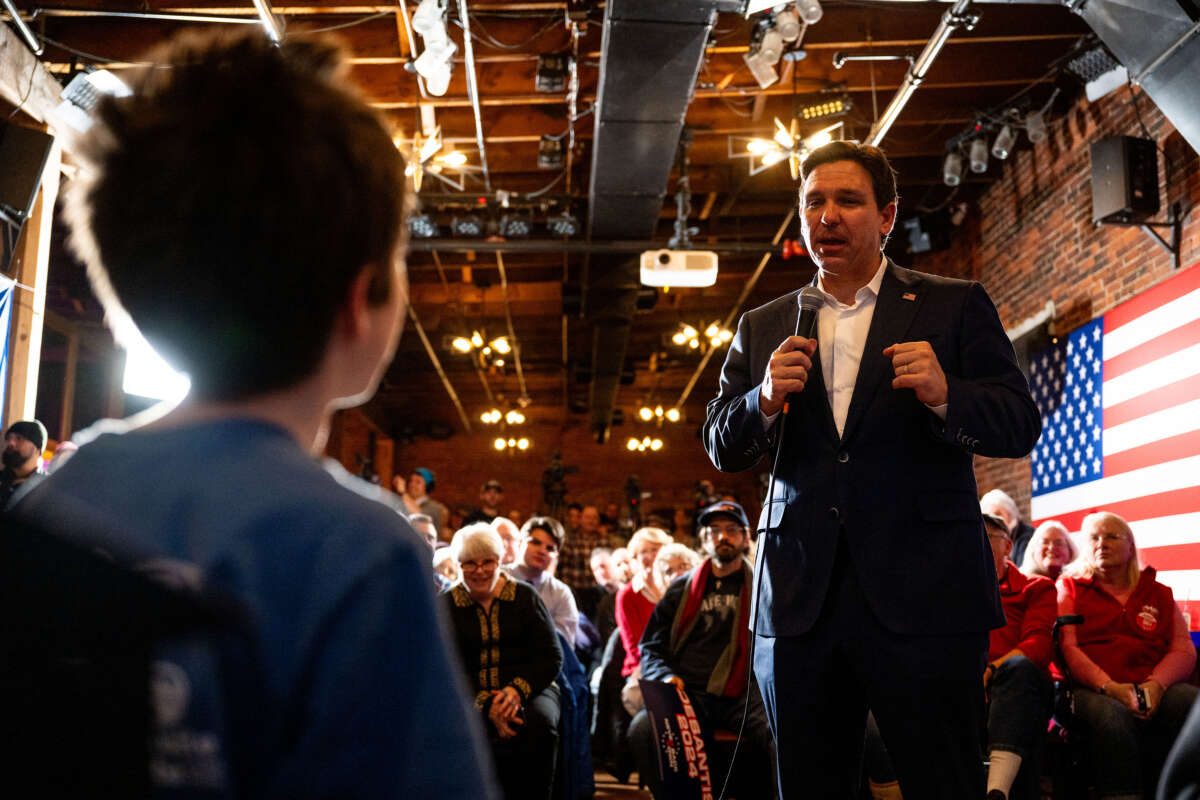
Florida Gov. Ron DeSantis (R) celebrated the proposed changes as a way to address the worker shortage that was caused by draconian anti-immigration bills he signed into law.
“Why do we say we need to import foreigners, even import them illegally, when you know, teenagers used to work at these resorts, college students should be able to do this stuff?” DeSantis said earlier this week, saying that it was “how it used to be when I was growing up.”
Critics pushed back against Republicans’ claim that the proposal would somehow empower teen workers, noting that students can already apply for waivers to work longer or later hours under the current law. The new bill would instead empower employers to coerce and intimidate young workers into working longer shifts, they said.
“Right now parents and students have the flexibility. They have the flexibility because of the waiver program. This bill takes that flexibility away and gives it to the employer,” said Rich Templin, director of public policy with the Florida AFL-CIO.
Republican State Sen. Joe Gruters, the lone GOP voice against the bill in the committee vote, explained that he didn’t believe the measure would yield a net positive.
“We need to let kids be kids. I just think it sends a bad message and I think we should allow kids to work the hours they’re allowed now under the waiver system,” Gruters said.
Democrats in the state legislature denounced the bill as harmful to child workers’ rights.
“So we’re going to make children work long hours and they’re going to opt out of the minimum wage? What kind of future are we creating for them?” asked state Sen. Kristen Arrington (D).
“This bill is going to lead to exploitation of minors, exploitation of children,” state Sen. Carlos Guillermo Smith (D) added.
Media that fights fascism
Truthout is funded almost entirely by readers — that’s why we can speak truth to power and cut against the mainstream narrative. But independent journalists at Truthout face mounting political repression under Trump.
We rely on your support to survive McCarthyist censorship. Please make a tax-deductible one-time or monthly donation.