Truthout is a vital news source and a living history of political struggle. If you think our work is valuable, support us with a donation of any size.
A federal appeals court just made it a lot harder for West Virginians to access abortion and in the process may have given abortion opponents a new path to banning abortion through the courts. And the Food and Drug Administration (FDA) and federal agencies may have taken a serious blow.
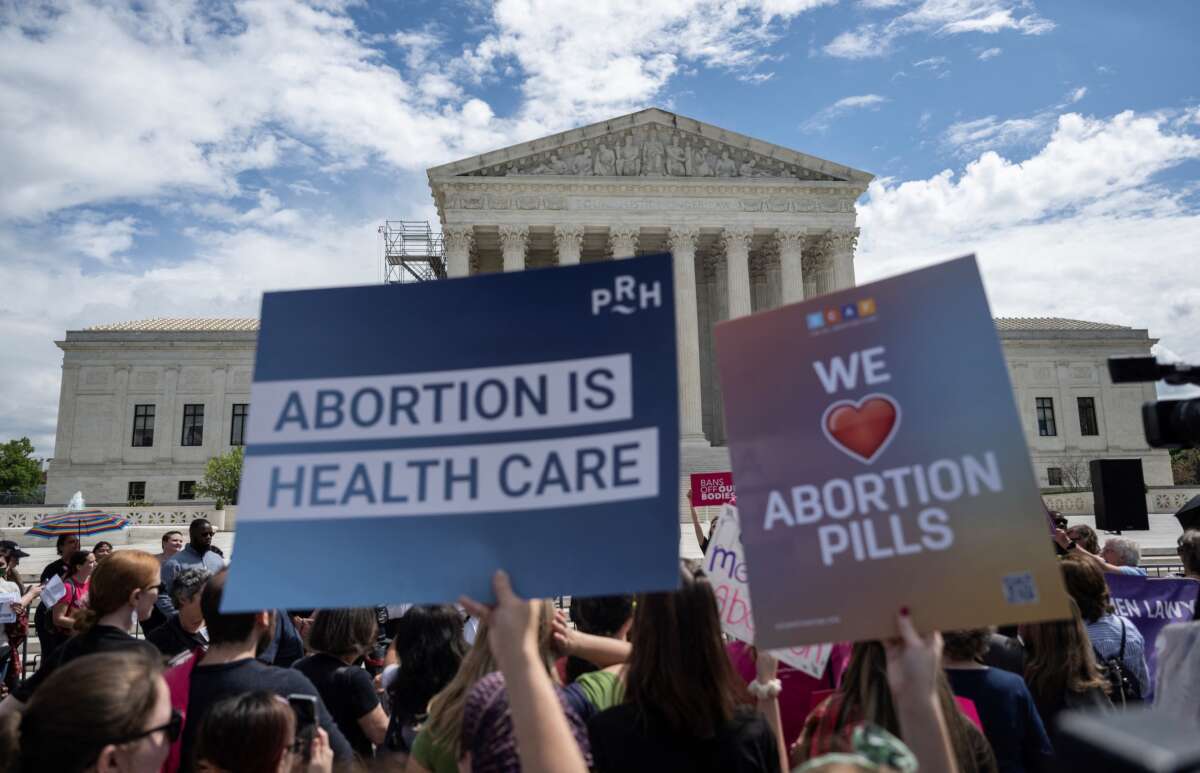
The Fourth Circuit Court of Appeals, in a divided decision among a three-judge panel, upheld West Virginia’s draconian law that bans FDA-approved medication abortion. This marks the first time a federal court has allowed a ban on medication abortion to remain in effect, outright sanctioning a ban on the most common form of abortion care in the U.S. Not only that, but it undermines the FDA’s authority and ability to regulate medication nationwide.
Medication abortion — a regimen of mifepristone and misoprostol — accounted for 63 percent of all abortions in the U.S. as of 2023. Mifepristone has been approved by the FDA for a quarter of a century, and it’s extremely safe, with fewer complications than Viagra and penicillin. It’s become even more popular as a means of pregnancy termination since the Dobbs decision in 2022. In 2020, medication abortion accounted for just over half — 53 percent — of abortions. Now that some states, like New York, have instituted shield laws to protect abortion providers from out-of-state litigation, telehealth providers in protected states have been able to prescribe medication abortion to patients in banned states. As abortion bans have spread, shield laws have become a critical tool to protect abortion providers, funders, and support volunteers in protected states from being criminalized in states with bans. And, with the proliferation of online medication abortion providers like Aid Access and Plan C, folks in states with abortion bans have still been able to covertly access medication abortion and have it shipped directly to their homes.
Of course, that’s not without risk to abortion seekers. Bans like West Virginia’s, which explicitly targets medication abortion, increase the risk of criminalization. Law enforcement in states with abortion bans, like Texas, have gone to extreme lengths to target and criminalize abortion seekers. Even though the risk of complications from medication abortion is extremely low, if people do have complications and seek care in one of the 16 states with a total or near-total abortion ban, they could be risking criminalization.
If the full Fourth Circuit overturns the medication abortion ban, West Virginia could very likely appeal it to the Supreme Court, one stacked with a majority of abortion opponents.
That’s why West Virginia’s medication abortion ban is so insidious, and the implications of this ruling are so wide-reaching. The plaintiffs — GenBioPro, the manufacturers of mifepristone — haven’t yet said what they plan to do next. They can ask for en banc review by the full Fourth Circuit Court, of which Democratic nominees have a majority. If they do, it’s possible that the full appeals court could overturn the ban.
But that comes with its own risks, even if it seems likely that the Fourth Circuit would rule in the plaintiffs’ favor. If the full Fourth Circuit overturns the medication abortion ban, West Virginia could very likely appeal it to the Supreme Court, one stacked with a majority of abortion opponents who overturned Roe v. Wade a mere three years ago and unleashed this crisis. The Supreme Court could side with the state of West Virginia, establishing precedent that affirms a state’s ability to ban a medication approved by the FDA.
Such a ruling could affect medication well beyond abortion, including gender-affirming care or other kinds of medications that are politicized and demonized. And it could further undermine the FDA and the federal government more broadly; if the Supreme Court allows states to simply decide to ignore the regulations of a federal agency, what independent power will federal agencies really have?
Attacks on abortion access and rights can serve as a means of undermining trust in the institutions that in the past have helped shield us from hostile legislators. As the United States continues to veer ever closer toward authoritarianism, rulings like the Fourth Circuit’s should serve as a very clear warning sign. Your body, your autonomy, and your independent ability to move freely in this country are all eroding as we speak. And the very mechanisms meant to affirm and uphold your constitutional rights are the avenue by which they are now eroded.
It’s time to think beyond the courts; not to abandon the judiciary as a tool, but instead to reframe what justice looks like, and how we can create it for ourselves and our communities. Abortion bans are insidious and target the most marginalized among us, but there is also a vast network of support to help folks access abortion care, regardless of where you live. Abortion funds can help you pay for your abortion, and practical support organizations handle logistics like travel, lodging, and even child care. Even if you aren’t currently pregnant, you can purchase medication abortion. In fact, you should. Mifepristone has a five-year shelf life, and misoprostol a four-year shelf life. If you can’t afford the cost of medication abortion, Aid Access will help you financially.
We can’t trust the courts to protect our most basic and sacred rights. Instead, we’re going to have to do that for ourselves.
Press freedom is under attack
As Trump cracks down on political speech, independent media is increasingly necessary.
Truthout produces reporting you won’t see in the mainstream: journalism from the frontlines of global conflict, interviews with grassroots movement leaders, high-quality legal analysis and more.
Our work is possible thanks to reader support. Help Truthout catalyze change and social justice — make a tax-deductible monthly or one-time donation today.