Truthout is a vital news source and a living history of political struggle. If you think our work is valuable, support us with a donation of any size.
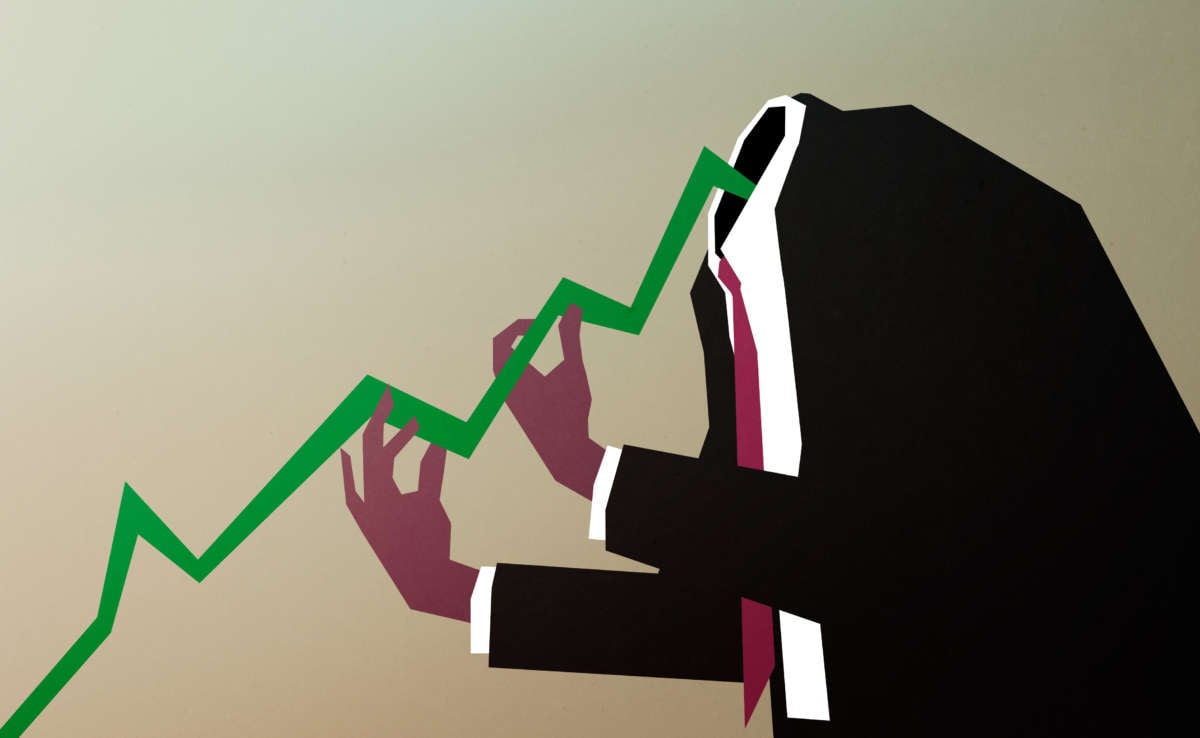
As working-class Americans struggled with high inflation, corporate profits soared to a record high in 2021, reaching nearly $3 trillion.
Data from the Department of Commerce’s Bureau of Economic Analysis shows that pre-tax profits over the whole year increased by a whopping 25 percent, reaching $2.8 trillion. The annualized rate of profit from the fourth quarter was even higher, at $2.94 trillion.
The boost in profits exceeds the 7 percent inflation for consumer prices, bolstering arguments that companies are raising prices beyond inflation rates in order to pad their profits. Meanwhile, hourly wages for U.S. workers increased by about 4.7 percent last year, which is equivalent to a pay cut of about 2.4 percent.
Experts say that the record profits are evidence that inflation isn’t a concern for corporations.
“Clearly, mega-corporations could easily absorb the higher costs of goods and services right now,” wrote Robert Reich, former labor secretary and economics professor at University of California, Berkeley. “They’re not raising prices because they have to. They’re doing it because – with so few competitors – they can. The problem, at its core, is corporate greed.”
Indeed, corporate executives have admitted on earnings calls with shareholders that they’re not afraid to exploit inflation and current crises like the pandemic and the Russian invasion of Ukraine in order to increase their profits.
“Our business operates the best when inflation is about 3 percent to 4 percent,” Kroger CEO Rodney McMullen told investors last June. “A little bit of inflation is always good in our business.”
Other corporate executives have lied about their reasons for raising prices. As CBS reported, Tyson’s CEO told shareholders that the company it’s only raising prices on meat products in order to cover inflation costs for the company. However, it posted profits of $1 billion in the first quarter of 2022, a 48 percent raise over the same period last year.
Lawmakers have proposed legislation to reign in runaway profits. Last year, Sen. Elizabeth Warren (D-Massachusetts) introduced a bill that would have created a minimum tax rate of 15 percent in order to prevent companies from paying $0 in taxes or a negative tax rate, thanks to corporate subsidies.
Other recent proposals have been aimed directly at current profits. Last week, Sen. Bernie Sanders (I-Vermont) unveiled his corporate windfall profits tax, which would levy a 95 percent tax on corporate profits that exceed pre-pandemic levels for companies that make more than $500 million in profits yearly. The tax resembles policies that the U.S. put in place during World Wars I and II and the Korean War to discourage companies from profiteering from the conflicts.
“We cannot allow big oil companies and other large, profitable corporations to continue to use the war in Ukraine, the COVID-19 pandemic, and the specter of inflation to make obscene profits by price gouging Americans at the gas pump, the grocery store, or any other sector of our economy,” Sanders said in a press release on the bill. “During these troubling times, the working class cannot bear the brunt of this economic crisis, while corporate CEOs, wealthy shareholders, and the billionaire class make out like bandits.”
An urgent fundraising appeal: We still need to raise $12,000
Truthout is one of only a few platforms for justice-oriented, grassroots journalism. Today, we face an existential threat.
Due to Google’s launch of AI search, we’ve seen a drastic plunge in our site traffic and, as a result, our revenue. We lost 15 percent of our readership overnight. This was a readership we painstakingly built over decades, and it vanished because Google chose corporate greed over a healthy democracy.
We are fundraising right now to meet our basic operating expenses. If you can support Truthout with a one-time or monthly donation, you will make a significant impact on our work. Anything you can do makes a difference — we appreciate your support.