Did you know that Truthout is a nonprofit and independently funded by readers like you? If you value what we do, please support our work with a donation.
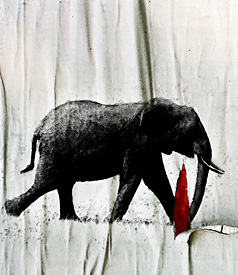
In the wake the election of President Obama a number of analysts and pundits have been calling the 2010 midterm elections the “year of the black Republican.” According to The New York Times, “… at least 32 African-Americans are running for Congress this year as Republicans,” and they “… are running with a confidence they have never had before.”
Many of them, such as Congressional candidates Vernon Parker in Arizona and Princella Smith in Arkansas, feel that President Obama’s victory has made it possible for them to run in their respective districts, but they disagree with his politics. Ideologically, many are Christian conservatives calling for smaller government, less spending and stronger national security. According to Smith, “Aside from the fact that I disagree fundamentally with all his views, I am proud of my nation for proving that we have the ability to do something like that …”
These candidates feel empowered by the success of President Obama. The historic symbolism of his election is resonating across various strata of this country. The practical viability of their candidacies has more to do with their politics than symbolism. As black Republicans, what policy initiatives are they championing within the party that will improve the lives of African-American people?
The last question would not normally be an issue except for the fact that many of these individuals label themselves as “black Republicans” as an inducement to raise funds and fill a specific niche within the Republican Party, while deracializing their politics when they are asked to be accountable to the African-American community for the ultra-conservative ideology they espouse. For example, on the web site of a prominent black Republican, The Frederick Douglas Foundation, the core pillars of the foundation as stated are “We are Devoted Christians – Proud Black Americans – Active Republicans.” They obviously don’t understand the substantive differences between a Lincoln Republican and a Reagan Republican, “actionary” vs. reactionary.
So far, 2010 has turned out like 1994 and 2000, the other years of the “black Republican,” not so well. Princella Smith lost her bid for the Republican nomination in Arkansas with only 32 percent of the vote. In Alabama, Les Phillip lost his bid, getting 16 percent of the vote. In North Carolina, both black conservatives Jerry Grimes and Lou Huddleston were also soundly defeated.
All too often pundits and politicians demonstrate their ignorance of the African-American experience by trying to assign simplistic answers to very complex problems, events and circumstances. This usually results in African-Americans and their politics being viewed as devoid of substance, myopic, shallow and emotional, when, in fact, black politics is policy focused and born out of a people’s historical experience. For example, the RNC believed that significant numbers of African-Americans would register as Republicans if the party chair were African-American.
During his acceptance speech as RNC Chairman, Michael Steele promised, “it’s time for something completely different, and we’re gonna’ bring it to them.” Well Chairman Steele, what substantive policy initiatives have you and most of your cadre of conservatives brought to the African-American community?
The party offers less government to a constituency that needed its government to help end slavery, Jim Crow, desegregate schools, integrate the armed services and pass civil rights legislation. In a time of record unemployment in the African-American community, disproportionate incarceration rates, predatory lending and racial profiling, the African-American community needs more affirmative action by its government, not less.
The party offers less government spending to a constituency that needed its government to invest in Head Start, Medicare, Medicaid, and other social programs. In these stark economic times, this country needs an increase in government spending for more SBA loans, access to capital, extensions of unemployment benefits, PELL grants and job training.
The party proposes more government spending on defense than social programs. Dr. King once said, “A nation that continues year after year to spend more money on military defense than on programs of social uplift is approaching spiritual doom.”
According to The New York Times, Allen West, a black Republican candidate for Congress in Florida, said, “I ran in 2008 and raised half a million dollars, and the state party didn’t support me and the national party didn’t support me …” Today he says that things look great.
Many black Republicans continue to fail like their predecessors in 1994 and 2000. Today, more of them are being supported by the party, but still fall short at the polls. They can’t sell the message in the African-American community because it’s antithetical to the African-American experience, and too many white conservatives like the message, but won’t buy the messenger.
It is imperative that African-Americans wield power in both parties, but power is demonstrated by substantive policy output. These candidates need to move away from rhetoric and symbolism to practical substantive politics and policy.
Important Message: Please Read
For 25 years, Truthout has survived by publishing impactful investigative journalism and analysis; distributing full editions 365 days a year; and building a community of readers who support us with small, hard-earned donations.
Eighty percent of our $3 million yearly budget comes from small donors alone. Of those, 8,000 readers support us with monthly donations. Back in 2018, when Facebook decided to suppress the circulation of posts made by organizations, thereby cutting readers off from seeing many articles shared by the news organizations they had intentionally decided to follow, Truthout’s total traffic declined by 40 percent, as nearly all of our traffic from that platform disappeared.
Now, Google has recently rolled out its AI search bar, providing AI summaries instead of directing readers to our site. Google Search is our single largest source of traffic; it’s the route by which nearly one third of our readers find us. Much like in 2018, a shocking 40 percent of our Google traffic has disappeared overnight.
It will not be easy for Truthout to shoulder this blow. Nor will it be easy for our peers and collaborators — news sites that depend on traffic and aren’t bankrolled by large corporations.
If you can support Truthout with a donation today, you can help us resist the AI onslaught. Please give today.