Truthout is an indispensable resource for activists, movement leaders and workers everywhere. Please make this work possible with a quick donation.
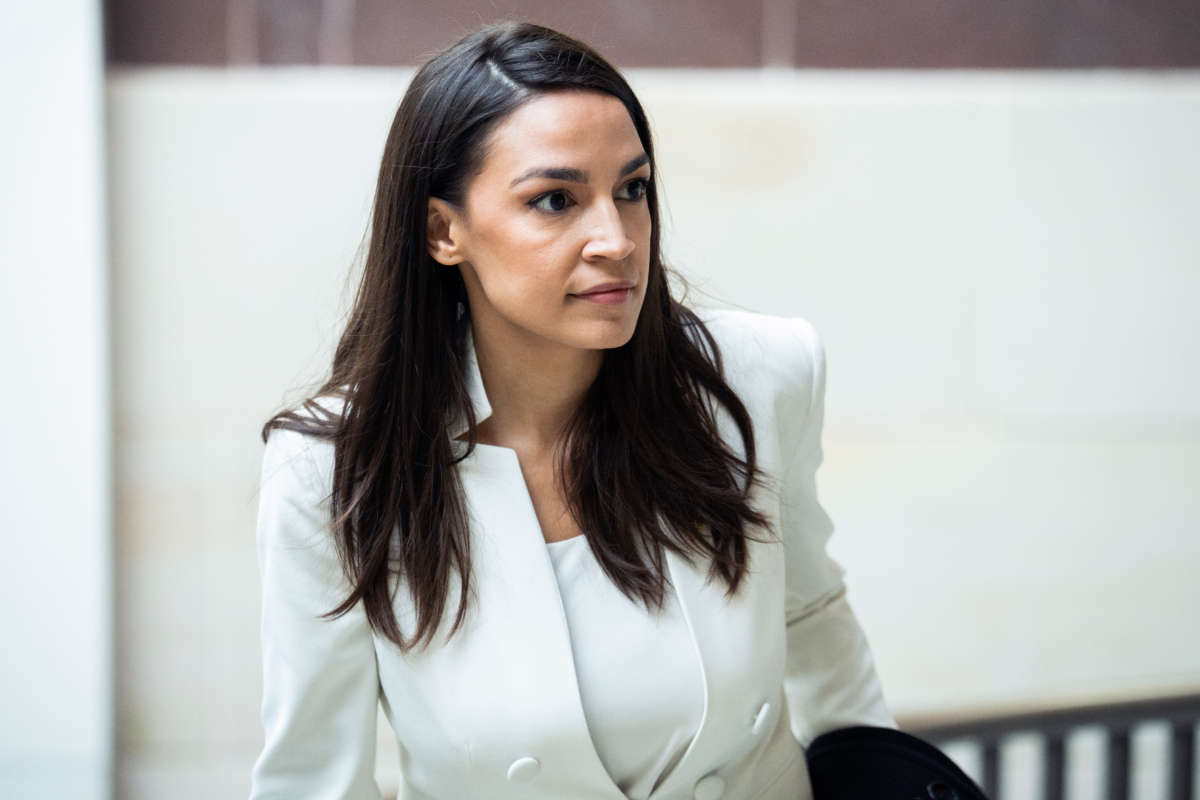
Rep. Alexandria Ocasio-Cortez (D-New York) said that the power outages in Puerto Rico due to Hurricane Fiona was “tragically predictable” and could have been mitigated with sustainability measures that she and climate advocates have promoted.
High winds knocked out the entire electrical grid for over 1.4 million customers in the U.S. territory on Sunday before the hurricane made landfall, five years after Hurricane Maria similarly caused an island-wide blackout that took nearly a year to fix. However, the system was plagued with constant blackouts. Luma Energy, the private company that took over transmission and distribution of power in Puerto Rico last year, says that it may take several days for power to be fully restored.
The island’s energy grid has gone through many changes over the past years, with the Puerto Rico Electric Power Authority (PREPA), which oversaw the energy grid before Luma took over, running into $9 billion of debt.
The Federal Emergency Management Agency (FEMA) has injected funds into programs to restore the energy projects, but lawmakers — including Ocasio-Cortez — criticized that funding in a letter last year, saying that PREPA’s restoration plans would only entrench fossil fuels and the problems that the island’s energy grid have already faced for years.
Ocasio-Cortez highlighted the letter on Tuesday, saying that lawmakers’ prediction has now come true.
“More than 4 years after Maria and Irma wiped out power for 70 percent of the Island, the grid was still extremely vulnerable to natural disasters. This weekend’s infrastructure failure was tragically predictable,” she wrote on Twitter.
“We now have the chance to do something different,” Ocasio-Cortez continued. “We can help Puerto Rico’s economy and vulnerability to climate change by building a reliable, sustainable grid that will create thousands of jobs. We must break the vicious cycle of rebuilding vulnerable fossil fuel infrastructure.”
The island’s power grid is almost entirely powered by fossil fuels, and FEMA’s $9.4 billion funding plan for the island is earmarked nearly entirely for more fossil fuel infrastructure. Despite the fossil fuel industry’s long-running campaign to paint fossil fuels as reliable, power on the island is intermittent and even small storms can knock out power to thousands.
In their letter, lawmakers said that using these funds to transition the island to a higher renewable energy mix would “break the vicious cycle” of extreme weather damage and the further entrenchment of fossil fuels.
Ocasio-Cortez added in an interview on Monday with Latino Rebels that, as Congress considers plans to respond to the current crisis, it is an opportunity to fund a “just transition” to renewable energies and resilience efforts like building power cables underground.
She also echoed calls from labor unions and community activists who have long called for the Puerto Rico government to cancel its contract with Luma.
Though the power grid’s reliability has not seen significant improvements under Luma — and while thousands of unionized PREPA workers lost their jobs in the transition to the company — customers are now paying double the rate for electricity than they were before Luma took over. According to the Institute for Energy Economics and Financial Analysis, Puerto Ricans now pay 8 percent of their incomes for electricity, compared to 2.4 percent on average across the U.S.
Press freedom is under attack
As Trump cracks down on political speech, independent media is increasingly necessary.
Truthout produces reporting you won’t see in the mainstream: journalism from the frontlines of global conflict, interviews with grassroots movement leaders, high-quality legal analysis and more.
Our work is possible thanks to reader support. Help Truthout catalyze change and social justice — make a tax-deductible monthly or one-time donation today.