Part of the Series
Struggle and Solidarity: Writing Toward Palestinian Liberation
Did you know that Truthout is a nonprofit and independently funded by readers like you? If you value what we do, please support our work with a donation.
Mu’arrajat is one of the many Palestinian communities in the occupied West Bank that have been demolished or forcibly displaced by Israeli settlers in the last year. Aliya Milhat, a Palestinian journalist and activist, lived in Mu’arrajat with her family until they were forcibly displaced in March.
“My family and I were forced out under gun threats [sic], along with all the families of the village,” Milhat told Truthout. “We cried over our beautiful days there, and we are still crying. We are in shock because we never deserved this. We are peaceful people who love life, simple and educated people, and we never imagined leaving our home this way.”
Residents attempted to return to the village last week, after Israel’s High Court ruled that the Israeli military must facilitate their return, but they were repelled by Israeli settlers who set fire to one of the remaining homes.
The expulsion in March was the culmination of years of violence by Israeli settlers and the Israeli military, working in tandem to ensure that life in Mu’arrajat was all but impossible for its residents until they were forcibly expelled. Milhat told Truthout that the primary cause of their displacement was the Zohar Tzafon outpost, a type of illegal Israeli settlement typically built on a hilltop in the West Bank, with another satellite outpost built just outside the village last year. Oftentimes a distinction is drawn between Israeli settlers committing acts of violence in the West Bank and official Israeli policy, but without the financial support of the Israeli government, the expansion of settlements and outposts in the West Bank over the last decade would not have been possible, as Haaretz concluded in an investigation last year.

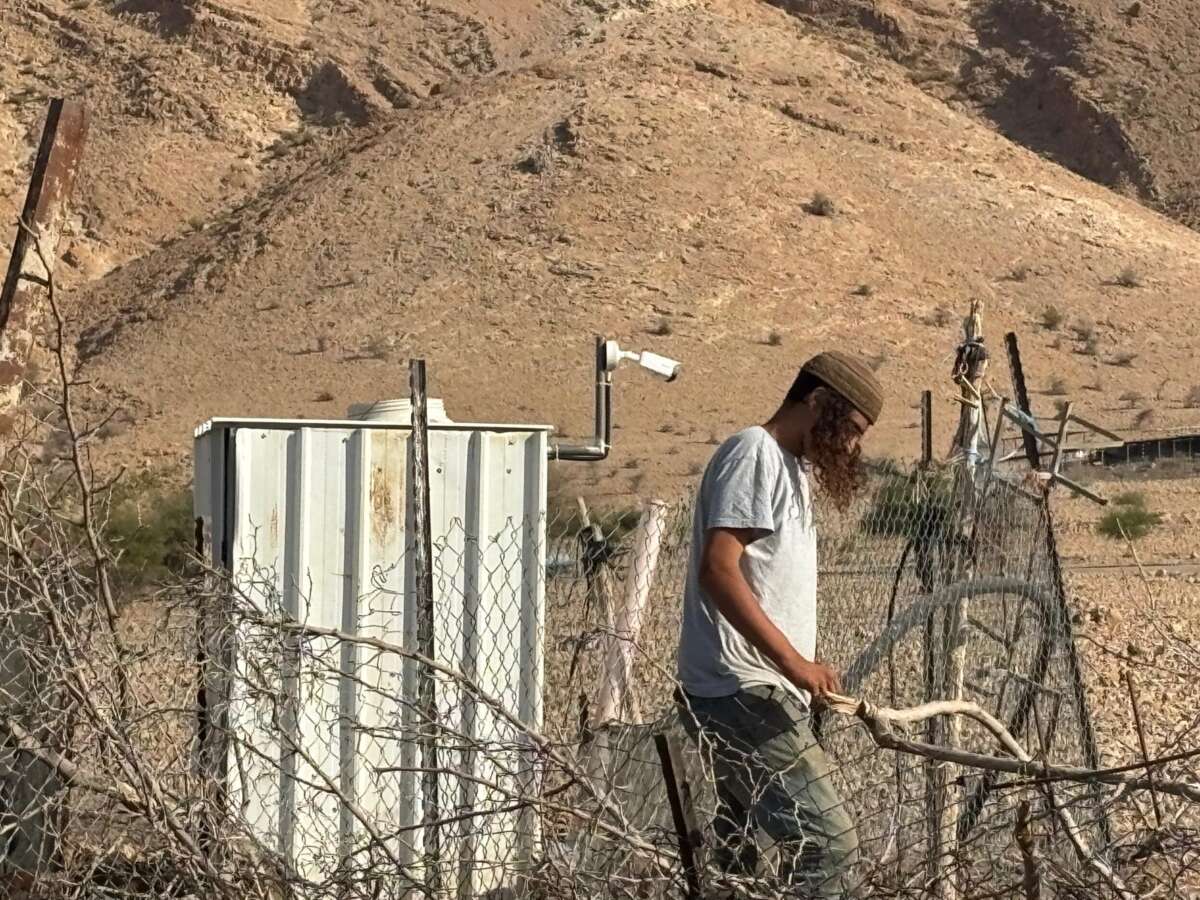
Israeli settlers would often invade the village under the protection of the Israeli military, set fire to residents’ homes, block access to their water source, and attack their livestock. “Imagine a settler living in the yard of your house, while the army protects them, and we are left alone with no one to stand with us. Families were forced to leave because settlers were even walking around naked in front of women,” Milhat said.
Residents of Mu’arrajat depended on their livestock for their livelihoods. When access to their land was closed by Israeli settlers, they were forced to buy expensive feed, which put a financial strain on the families living in the village. All the while, settlers from Zohar Tzafon, a “grazing outpost,” as Milhat described it, would freely graze their livestock on Palestinian land, “with their sheep inside the village, in front of our homes, while dozens of them attacked under the protection of the army and Israeli police,” Milhat added.
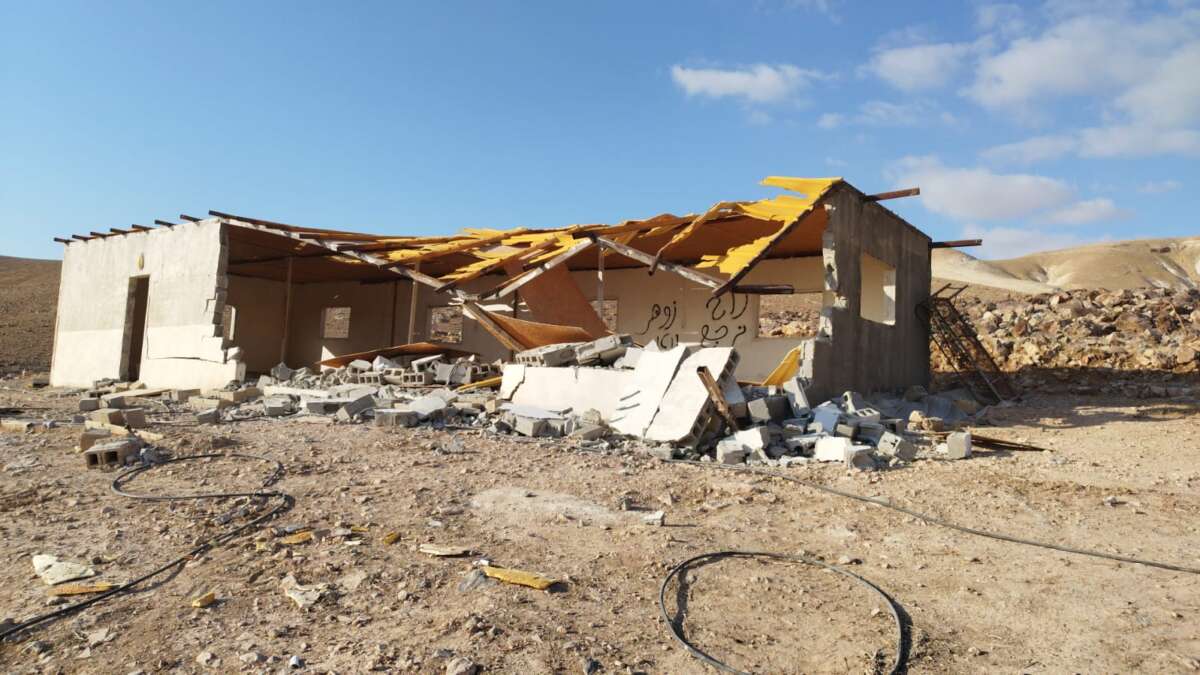
I visited Mu’arrajat at the end of July to witness the destruction for myself. It was clear that those who lived in Mu’arrajat had been forced to flee under duress. Israeli settlers had kicked in the walls of buildings, set fire to any belongings that were left behind, and created a path of destruction through the village.
Both international and Israeli protective presence activists had been in the village in the weeks leading up to the forced displacement. Mu’arrajat had long been a site of some of the worst violence by Israeli settlers, and while not unique in the West Bank, it is now among at least 46 Palestinian Bedouin communities in the West Bank that have been forcibly evacuated in the wake of October 7.
Whether Israeli settlers set fire to residents’ homes or cars, kill their livestock, or poison their wells, any and every attack is intended to make life more difficult in the hopes that Palestinians flee.
The Jordan Valley, which is located between the highlands of the central West Bank and the Jordan River, and Masafer Yatta, which is located south of Hebron, are two primary sites in the West Bank where Israeli outposts and settlements have continued to encroach on Palestinian land. Masafer Yatta has become increasingly dangerous to both visit and live in since October 7, 2023, as Israel continues to chart a path toward formal annexation of the West Bank, which the Israeli Knesset symbolically voted in favor of doing in July.
And when Israeli settlers do invade, they are almost always accompanied by the Israeli military or police, leaving Palestinians and their fellow activists with few options besides filming the takeover and hoping the world keeps watching. Footage on Instagram of Israeli settlers attacking Palestinians and international protective presence activists has become ubiquitous. Whether Israeli settlers set fire to residents’ homes or cars, kill their livestock, or poison their wells, any and every attack is intended to make life more difficult in the hopes that Palestinians flee.
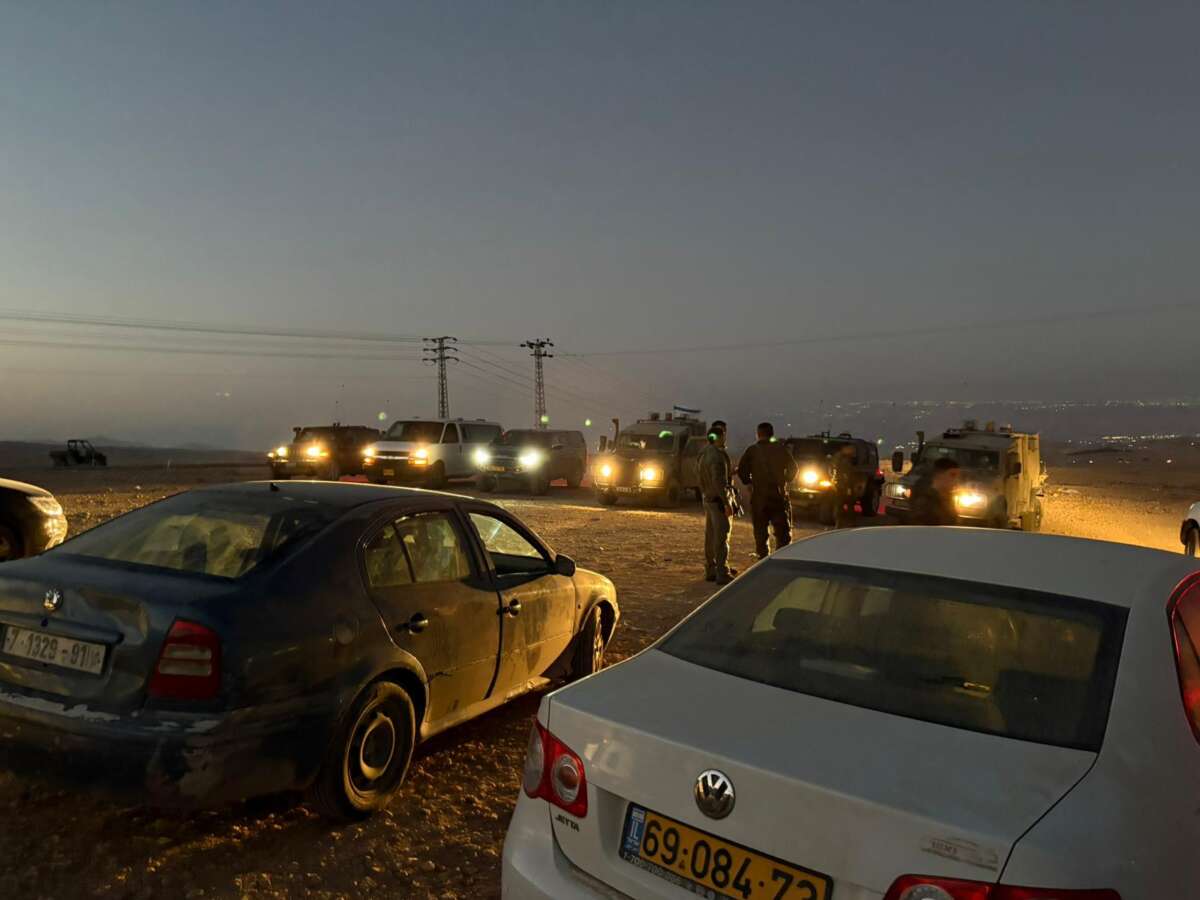
However, for those who were left with no other option except to flee, life continues just as it did before, with violence from Israeli settlers and little support from the Palestinian Authority. In Milhat’s case, she said, “We fled to a small village north of Jericho called Al-Awsaj, a remote area with no water, no electricity, and not even proper shelter. All the displaced families are living there now, and the Palestinian Authority wants to evict us because the land is Islamic Waqf property. Where can these families go?”
International and Israeli protective presence activists have also faced violence from Israeli settlers and the Israeli military, and as Israel steps up its efforts to identify and deport international activists volunteering in the West Bank, there will be fewer and fewer internationals putting themselves in the way of continually escalating settler violence. Andrey X, an Israeli journalist and activist who has gained a following for his work in the occupied West Bank, published a video on Instagram of an activist’s car set on fire by Israeli settlers.
In a stark example of the impunity with which Israeli settlers operate in the West Bank, Palestinian activist Awdah Hathaleen was killed by Israeli settler Yinon Levi on July 28. Hathaleen was involved in the production of the Oscar-winning Israeli-Palestinian documentary, No Other Land. Israeli forces held Hathaleen’s body for 10 days, telling residents they would not allow him to be buried in his village of Umm al-Kheir. After 60 women in the village went on a hunger strike demanding the release of his body, Israeli forces relented but added additional checkpoints in and out of the village during his funeral.
Israel’s Civil Administration intends to demolish 12 villages in Masafer Yatta under the declaration that they were built in an Israeli “firing zone.”
The situation has only grown more dire since his death, according to Andrey X. “Two days after his murder, there has been a lot of pressure on the village, and most prominently, the army conducted two night raids and kidnapped 16 family members,” he said. “Each of them had to pay a 500-shekel fine, just for existing as Palestinians. And they’re banned from talking to each other about the incident for 60 days, and they’re banned from approaching the settlement of Carmel for 60 days.”
Carmel is located almost on top of Umm al-Kheir, and it is impossible for Palestinians to both live in the village and comply with the order, indicating that Israeli authorities wish for residents to flee. This appears to be the endgame for Israeli authorities — as was reported by +972 Magazine in June, Israel’s Civil Administration intends to demolish 12 villages in Masafer Yatta under the declaration that they were built in an Israeli “firing zone.” As Andrey X told Truthout, “This is kind of a statement that I make in every interview once every few weeks. The situation is bad, and it has been getting worse, and it will continue to get worse.”
Media that fights fascism
Truthout is funded almost entirely by readers — that’s why we can speak truth to power and cut against the mainstream narrative. But independent journalists at Truthout face mounting political repression under Trump.
We rely on your support to survive McCarthyist censorship. Please make a tax-deductible one-time or monthly donation.