
Support justice-driven, accurate and transparent news — make a quick donation to Truthout today!
The Supreme Court was asked to settle disputes over the legality of contract terms that bar employees from filing class action lawsuits, in petitions filed by opposing parties.
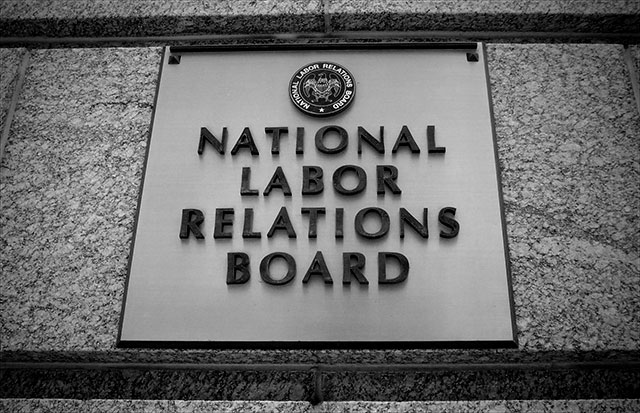
The National Labor Relations Board (NLRB), accounting conglomerate Ernst & Young, and medical software company Epic Systems have all asked Justices to rule on the issue, according to a Politico article published on Monday.
Appellate courts have recently issued decisions both in favor and against the NLRB, which is seeking to have class action waivers declared illegal under the National Labor Relations Act.
The split circuit makes it more likely that the Supreme Court will want to weigh in to settle the matter.
Earlier this year, the Ninth and Seventh Circuits ruled against the terms of employment, in the cases involving Ernst & Young and Epic Systems. The Fifth Circuit Court of Appeals, meanwhile, sided against the NLRB in recent litigation involving energy exploration company Murphy Oil.
As Reuters noted, the NLRB has declared class action waivers illegal, in cases involving American Express, Citigroup and Domino’s Pizza.
The Supreme Court, however, will be less likely to issue a decision that would set a precedent, if it takes up the matter before Antonin Scalia’s successor is approved by the Senate. A deadlocked 4-4 ruling would see appellate circuit decisions hold sway.
Scalia was a huge champion of class action defendants, which are often massive corporations.
In 2011, he wrote the majority opinion in a 5-4 ruling against 1.5 million women that had sued Walmart for discrimination. Two weeks after Scalia’s death, Dow Chemical settled a class action antitrust lawsuit for $835 million, noting there was an “increased likelihood for unfavorable outcomes.”
If the Senate were to confirm Merrick Garland and the Supreme Court were to take up class action waivers, it’s likely that Garland would rule with the labor regulators.
As member of the DC Circuit Court of Appeals, Garland has ruled in 21 cases involving the NLRB. He has sided with the board 17 times.
An important fundraising appeal: 24 Hours to raise $18,000
Truthout is one of only a few platforms for justice-oriented, grassroots journalism. Today, as political censorship from the right intensifies, we have no choice but to ask for your help.
We are fundraising right now to cover our basic operating expenses. If you can support Truthout with a one-time or monthly donation, you will make a significant impact on our work. Anything you can do makes a difference — we appreciate your support.