Support justice-driven, accurate and transparent news — make a quick donation to Truthout today!
San Francisco – As the 2012 Farm Bill continues to take shape in the halls of the United States Congress, the immense influence of corporate interests is on display.
On June 21 the United States Senate voted overwhelmingly against the Sanders Amendment that would have allowed states to pass legislation that required food and beverage products to label whether or not they contain genetically engineered ingredients.
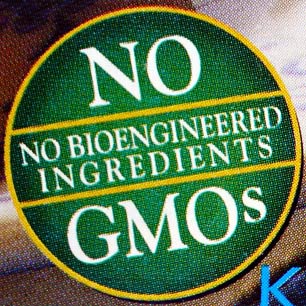
The amendment, proposed by Independent Senator from Vermont, Bernie Sanders, is particularly relevant as many states prepare to vote on a ballot initiatives that would require such labelling of genetically modified (GM) foods.
Lobbyists from the biotech industry have ardently opposed GMO labelling. These opponents argue that because food labelling has historically been handled by the Food and Drug Association (FDA), it is a federal issue and, therefore, individual states do not have the right to implement such legislation. Indeed, in the case of Vermont, Sanders’ home state, Monsanto successfully intimidated the state legislature from voting on a bill that would have required GMO labelling.
Patty Lovera, the assistant director of Food and Water Watch, explained that states planning to vote on GM labelling in November could face a legal fight to defend their right to enact such laws.
“However, this amendment would have taken this threat away,” Lovera told IPS.
In a move heralded by food advocates, Sanders introduced amendment 2310 on June 14 this year, after his own state legislature backed out of voting on the popular bill, H.722, also known as the Vermont Right to Know Genetically Engineered Food Act.
Vermont lawmakers allowed the bill to stall – and ultimately die – in the Vermont House Agriculture Committee in April, after a representative from biotech giant, Monsanto, threatened to sue the state if the bill passed.
Significantly, the Senate vote, 73-26, did not fall along partisan lines, with 28 Democrats voting against the Sanders Amendment.
Lovera emphasised that the powerful biotech lobby informs how politicians vote. “This doesn’t happen overnight, this is a result of years and years of lobbying and pressure from the biotech industry,” she said.
In a report published in November 2010, Food and Water Watch revealed that the largest food and agricultural biotechnology firms and trade associations spent a total of 572 million dollars on campaign contributions and lobbying over the course of ten years.
Importance of Labelling
The Senate vote comes amidst near global agreement that there is a need for GMO labelling.
Codex Alimentarius, the food safety arm of the United Nations, concluded last year after nearly 18 years of debate, that countries were free to label goods as containing genetically engineered ingredients and that labelling of genetically-modified organisms would indeed help inform consumers’ choices.
“GMO labels are a risk management measure to deal with any scientific uncertainty,” said Dr. Michael Hansen, a senior scientist with the Consumers Union, who has been a long-time advocate for mandatory testing and labelling of genetically engineered (GE) foods.
“Labelling is the only way to track unintended effects,” Hansen said. “How can you know what you are allergic to if you do not know you are eating GMO’s?”
In fact, the U.S. Food and Drug Association’s hands-off approach to regulating genetically engineered foodstuffs runs contrary to international standards. Currently the U.S. is the only developed country that does not require safety testing for GE plants. However, the Codex Alimentarius instructs countries to conduct safety assessments of all GE plants.
According to testimony written by Dr. Hansen, “This means the U.S. cannot meet the global standards for safety assessment of GE foods. Consequently, countries that require food safety assessments for GE foods could block shipment of such GE foods from the U.S.”
Recent polls conducted by MSNBC and Thompson Reuters found that between 93 and 96 percent of the American public believe genetically engineered foods should be labeled as such.
California’s GMO labelling initiative collected close to one million signatures, doubling over the requisite 500,000 signatures to secure a place on the November ballot, and the FDA received over 850,000 letters in support of labelling GE food.
Voting as they did, the U.S. Senate did not in any way reflect the desires of their constituents or reflect the guidance of food experts.
Press freedom is under attack
As Trump cracks down on political speech, independent media is increasingly necessary.
Truthout produces reporting you won’t see in the mainstream: journalism from the frontlines of global conflict, interviews with grassroots movement leaders, high-quality legal analysis and more.
Our work is possible thanks to reader support. Help Truthout catalyze change and social justice — make a tax-deductible monthly or one-time donation today.