Did you know that Truthout is a nonprofit and independently funded by readers like you? If you value what we do, please support our work with a donation.
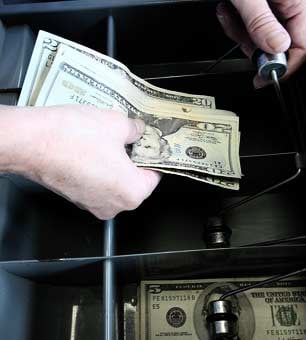
The federal minimum wage is just $7.25 an hour and hasn’t been raised in three years. But a raise is much more overdue than that. If we look at the minimum wage 44 years ago, and simply adjust it for inflation, it would be more than $10 today.
This is another ugly symptom of what has gone wrong in America over the past 35-40 years. From 1979-2007 about 60 percent of the income gains have gone to the now infamous 1 percent at the top, with the majority of those gains going to the top 0.1 percent – people who made, on average, $5.6 million per year.
But some of the worst effects of giving more to those who have most have affected people toward the bottom of the income ladder, and there is no excuse for it. Productivity – the amount that a worker produces in an hour has more than doubled over the past 44 years. When the minimum wage doesn’t rise, or falls in terms of its purchasing power, it means that these millions of low-income workers are not sharing in the gains from improved technology, knowledge and organization.
There is currently legislation before Congress to raise the federal minimum wage from its current $7.25 an hour to $9.80, over three years. After that it would be indexed to inflation.
Contrary to prevailing myths about who would benefit from a proposed increase in the minimum wage, 88 percent of the 28 million workers affected are not teenagers. As the Economic Policy Institute has shown, the majority are full-time workers, and on average they earn about half of their families’ income. And 28 percent of the nation’s 76 million children would have a parent who would benefit from the raise.
Another oversized myth promoted by the fast-food industry and other low-wage employers is that raising the minimum wage hurts workers by increasing unemployment. Although it is theoretically possible to raise minimum wages enough to cause employers to hire fewer workers, there is hardly any indication from economic research that the proposed increase in the minimum wage would have this effect. Employment in the overall economy depends on aggregate demand or spending, which is determined – especially in our currently weak economy – by macroeconomic policy (including the Federal Reserve, and fiscal policy).
And raising the minimum wage doesn’t only cut into profits, it also increases demand in the economy by moving income to workers who spend more than those who receive profit. The Economic Policy Institute estimated that the proposed increase in the minimum wage would actually increase employment.
In Brazil, the minimum wage was raised by 60 percent in real terms by the country’s most popular president, Lula da Silva – a former metal worker and union leader – as Brazil’s economy moved toward record-low levels of unemployment. Across South America, other left governments including Argentina, Ecuador, Bolivia, Venezuela and more have significantly reduced inequality while increasing economic growth.
What a shame that the hemisphere’s richest country, where it would be so much easier to lift up the working poor, has moved in the opposite direction. It means that the U.S. political system is actually more corrupt and less democratic in very important ways than those of our developing country neighbors to the south. The vast majority of Americans would favor an increase in the minimum wage, as well as restoring the rights of labor to organize unions. But our financial elite have a veto over what we want to vote for, in large part because of our system of legalized bribery – i.e. the financing of political candidates’ elections.
Raising the minimum wage is about the minimum that we could do to reverse America’s retreat from civilization at home.
We lost 15 percent of our traffic overnight.
We now have three full months of data since Google changed its search to feature AI results. The numbers are worse than we anticipated. Overall readership that comes to Truthout through Google is down 54 percent against last year. The number of new readers who discover Truthout via Google searches is down 49 percent, and returning users from Google are down 51 percent.
We lost 15 percent of our readership overnight. This was a readership we painstakingly built over decades, and it vanished because Google chose corporate greed over a healthy democracy.
We anticipate a loss of roughly $500,000 in online revenue as a result of this massive traffic plunge in the next year alone.
The only way we can keep publishing is with strong reader support. We are asking you to start a monthly donation to Truthout today — anything you can do, whether $5 or $25, makes a difference.