Truthout is a vital news source and a living history of political struggle. If you think our work is valuable, support us with a donation of any size.
As the climate crisis fuels flooding in Michigan and record high temperatures in the Pacific Northwest, Republicans and centrist Democrats in Congress are fighting to exclude climate provisions and other vital measures from President Joe Biden’s infrastructure bill.
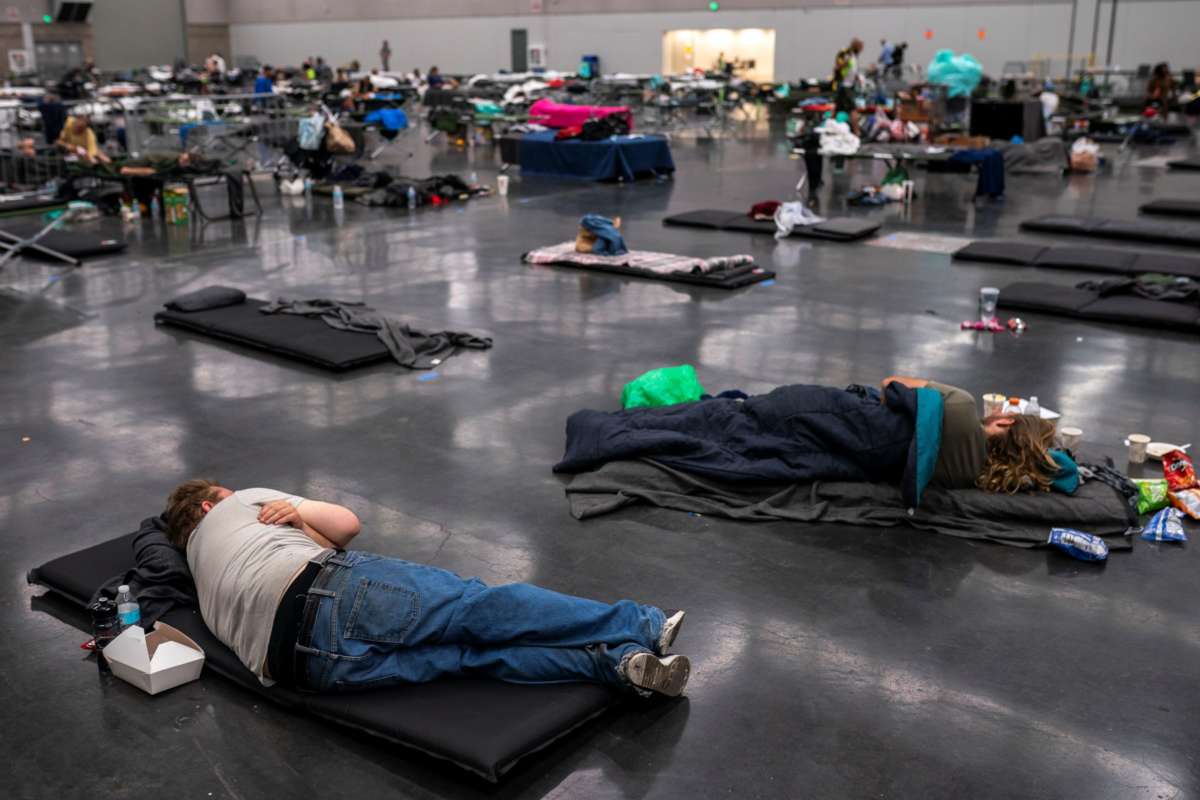
Oregon, Washington and Idaho roasted under oppressive heat over the weekend, with temperatures in Portland, reaching a record high of 108 degrees Fahrenheit on Saturday — and then another record high of 112 degrees Fahrenheit on Sunday. Experts have said that the region, which has a high proportion of housing without air conditioning, isn’t prepared for such abnormally high temperatures.
Meanwhile, in Michigan, a downpour of rain caused major flooding in Detroit, which is similarly unprepared for extreme weather, experts say. Gov. Gretchen Whitmer (D-Michigan) declared a state of emergency over the weekend for the state.
Both extreme weather events are almost certainly due to or intensified by the climate crisis, which is creating increasingly inhospitable conditions for people in the U.S. This is the second year in a row that Michigan has experienced abnormal flooding, and the National Weather Service has called the heat wave sweeping the Northwest unprecedented and dangerous.
They’re the sorts of weather events that climate scientists have been warning about for decades and continue to raise alarm about today as the climate crisis only worsens, largely unmitigated. As researchers have pointed out, the record high temperatures in the Northwest aren’t just the highest temperatures to date — they’re likely some of the lowest highs that the U.S. will experience in the years to come.
Climate advocates have been warning that Biden’s infrastructure bill could be the president’s last best hope to enact major climate-related proposals to hit his goal of 50 percent emissions reduction by 2030. But in May, Biden offered to cut his infrastructure bill from $2.25 trillion to $1.7 trillion, and, this past week, agreed to further reduce it to a paltry $579 billion, with many of its most ambitious climate measures cut out.
The elimination of climate proposals largely seems to be the product of a group of bipartisan senators who negotiated the most recent deal with Biden. A previous Republican-only proposal eliminated climate spending almost entirely; the centrists’ plan includes some money for energy grid updates, but still eliminates large swaths of climate spending for things like renewable energy tax credits.
Progressives like Senators Bernie Sanders (I-Vermont) and Ed Markey (D-Washington) have decried these cuts, with Markey calling the move “climate denial masquerading as bipartisanship.” Climate advocates like the Sunrise Movement, meanwhile, are fed up with politicians promising action, only to have those promises yanked out from under them when congressional Republicans — and other fossil-fuel-funded politicians — get involved.
Meanwhile, the GOP continues to be almost completely uninterested in mitigating the climate crisis. People like Sen. Mitt Romney (R-Utah), who is a member of the bipartisan group, said earlier this month that “the Democrats’ agenda on climate change is probably something they’re going to pursue, by and large, outside of an infrastructure bill.” But, as Romney undoubtedly knows full well, most legislation that Democrats pursue on their own will immediately be blocked by Republicans with the filibuster.
Sanders has recently taken up an effort to incorporate climate action into legislation in the form of a $6 trillion reconciliation bill that will include everything that’s been cut from Biden’s infrastructure proposal plus items like expanding Medicare.
Democratic leadership has vowed to block the watered down infrastructure bill without the concurrent passage of the reconciliation bill. But a scuffle between Republicans and the White House over the weekend has left the pairing’s future in limbo as Biden walked back a promise to veto the infrastructure bill without the $6 billion package.
Sanders made it clear on Sunday that separating the two bills wouldn’t be acceptable to him, saying on Twitter that “There will not be a bipartisan infrastructure deal without a reconciliation bill that substantially improves the lives of working families and combats the existential threat of climate change. No reconciliation bill, no deal.”
Indeed, without drastic and decisive action, researchers with the Intergovernmental Panel on Climate Change warned recently in a draft report that the climate crisis will only worsen flooding, heat waves, diseases and other climate events. They also warn that the world may be approaching — or have already hit — tipping points for the climate, after which the crisis will worsen even faster.
Preventing the worst of the climate crisis will require near-immediate social upheaval, which activists have been advocating for and some progressives have been fighting for in Congress. The political conversation around the climate has evolved rapidly over the past few years, but progress may not be coming soon enough.
Media that fights fascism
Truthout is funded almost entirely by readers — that’s why we can speak truth to power and cut against the mainstream narrative. But independent journalists at Truthout face mounting political repression under Trump.
We rely on your support to survive McCarthyist censorship. Please make a tax-deductible one-time or monthly donation.