Truthout is a vital news source and a living history of political struggle. If you think our work is valuable, support us with a donation of any size.
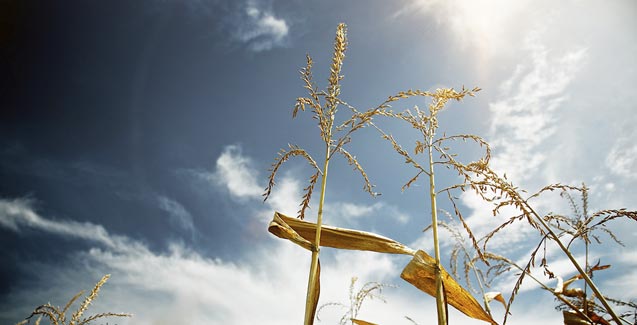
The industrial agribusiness has embraced GMOs in the United States, but it’s having a serious effect on farmers. Most recently, China began rejecting a variety of genetically modified US corn, and the rejection is reportedly costing American farmers upwards of $3 billion, according to the National Feed and Grain Association.
The genetically engineered corn in question is one invented by the seed company Syngenta. The new gene has yet to be approved in China — in fact, it has been waiting for approval for four years. Since November, China has rejected more than 1.45 million metric tons. The corn was diverted to other buyers, but as the NFGA stated, it “almost assuredly would have negotiated a discount,” which means fewer dollars for American farmers.
A rejection of US grain in China has serious consequences here on home turf, as the country is one of the top importers of US corn, and its demand is projected to grow. But not if GMOs are involved.
GMOs have become an increasing concern in China. This spring, the Chinese Army banned all GMO grains and oil from its military supply stations. As the Wall Street Journal reports, “because of public concern over health risks and high-level discomfort with China becoming overly reliant on GMO strains developed by foreign companies, China has stopped short of allowing commercial distribution of GMO grains.”
China isn’t the only one. Russia has now announced that it won’t import GMO products, and the United States is having a hard time reaching a trade deal with the European Union because of GMOs.
Who should the farmers blame? The governments that don’t want the grain or the companies making them? They’re unsure.
According to NPR:
A few days ago, the US Grains Council wrote a letter to Secretary of Agriculture Tom Vilsack, urging his “immediate, direct, and personal intervention” with Chinese officials “to halt this current regulatory sabotage of the DDGS trade with China.”
The NGFA and the North American Export Grain Association, on the other hand, have called on Syngenta to stop selling the offending corn varieties until those varieties can be sold in major export markets.
“They’re being a bad actor here,” says Max Fisher of NGFA, referring to Syngenta. “They’re making $40 million” selling the new corn varieties, “but it’s costing U.S. farmers $1 billion.”
While companies will certainly find other channels for their grain, there’s no denying that the economic blow to farmers may fuel the conversation on GMOs moving forward.
We lost 15 percent of our traffic overnight.
We now have three full months of data since Google changed its search to feature AI results. The numbers are worse than we anticipated. Overall readership that comes to Truthout through Google is down 54 percent against last year. The number of new readers who discover Truthout via Google searches is down 49 percent, and returning users from Google are down 51 percent.
We lost 15 percent of our readership overnight. This was a readership we painstakingly built over decades, and it vanished because Google chose corporate greed over a healthy democracy.
We anticipate a loss of roughly $500,000 in online revenue as a result of this massive traffic plunge in the next year alone.
The only way we can keep publishing is with strong reader support. We are asking you to start a monthly donation to Truthout today — anything you can do, whether $5 or $25, makes a difference.