Did you know that Truthout is a nonprofit and independently funded by readers like you? If you value what we do, please support our work with a donation.
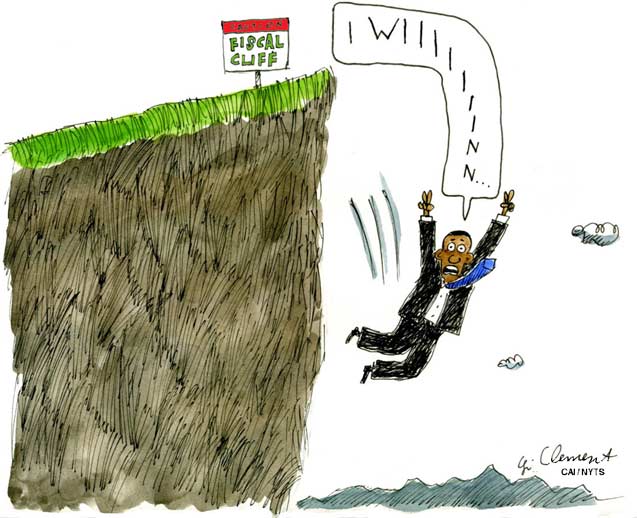
Brian Beutler of Talking Points Memo seems to have been the first to use the phrase “austerity bomb” to describe what’s scheduled to happen in the United States at the end of the year. It’s a much better term than “fiscal cliff.”
The cliff stuff makes people imagine that it’s a problem of excessive deficits when it’s actually about the risk that the deficit will be too small; also and relatedly, the fiscal cliff stuff enables a bait-and-switch in which people say “So, this means that we need to enact Bowles-Simpson and raise the retirement age!” — both of which have nothing at all to do with it.
And it can’t be emphasized enough that everyone who shrieks about the dangers of the austerity bomb is in effect acknowledging that Keynesian economists were right all along — that slashing spending and raising taxes on ordinary workers is destructive in a depressed economy, and that we should actually be doing the opposite.
Meanwhile, Europe, which has had much more austerity in aggregate than we have, is seeing grim new industrial production numbers and a worsening unemployment crisis.
By the way, some readers have asked me what is happening to Ireland, which has seen an especially sharp fall in industrial production. The answer appears, in part, to be Lipitor. That is, expiring patents on some important drugs have created a cliff for Ireland’s pharmaceutical exports. I don’t want to overstate the real impact on Irish citizens: The pharmaceuticals industry looms large in Irish gross domestic product but not so much in employment because it’s highly capital-intensive and much of the value-added accrues to foreign multinationals.
Still, not what Ireland needed. Trans-Atlantic Divergence Pursuing the theme that the United States is doing the least worst among the major economies, here’s a chart that I find illuminating. In the early stages of the crisis, unemployment rose more rapidly in the United States than in Europe. This mainly reflected differences in institutions: it’s much easier to fire people in the United States. From some point in 2010 onward, however, the situation in the United States gradually improved; initially some of the drop in unemployment was basically people leaving the labor force, but more recently there have been solid though modest gains in the ratio of employment to the relevant population (you have to adjust for aging).
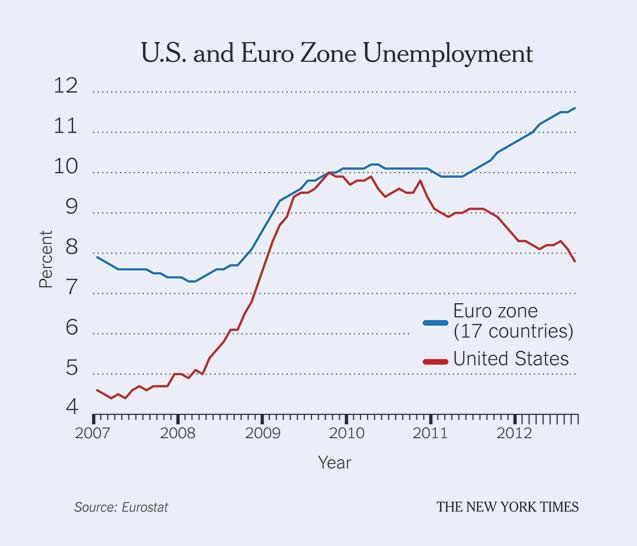
Meanwhile, Europe, now formally in recession, has gotten much worse, but the truth is that it has been going downhill all along. Why the divergence? The obvious answer is that the austerity stuff broke out in 2010, and the austerians took over policy much more completely in Europe than in the United States.
Fundraiser Deadline: Missed
Truthout is one of only a few platforms for justice-oriented, grassroots journalism. Today, as political censorship from the right intensifies, we have no choice but to ask for your help.
We missed our fundraising deadline, but there’s still time to help us meet our basic operating expenses before the end of the month. If you can support Truthout with a one-time or monthly donation, you will make a significant impact on our work. Anything you can do makes a difference — we appreciate your support.