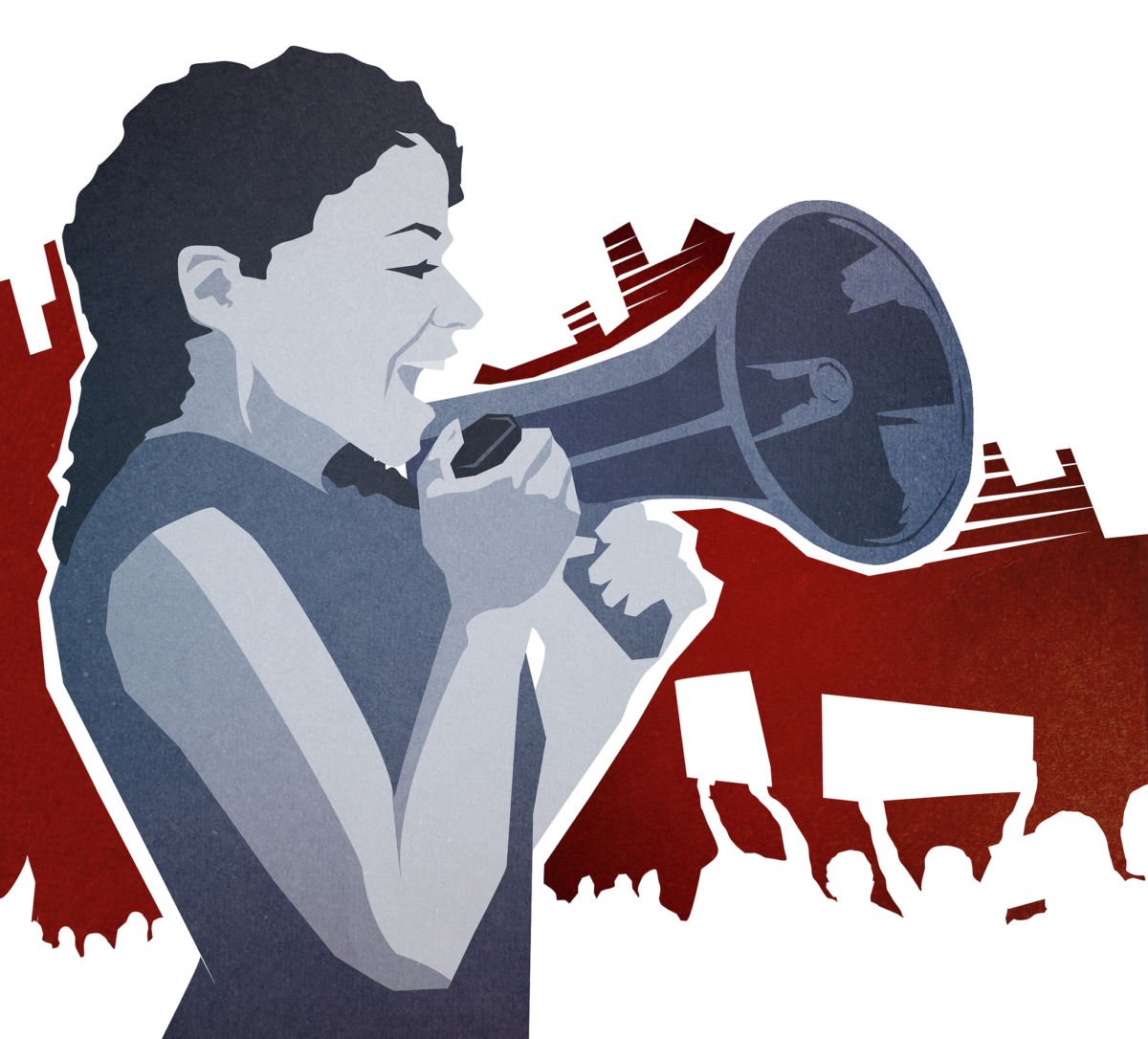
As people around the country are celebrating Thanksgiving, and the manic day of discount shopping that follows, one network of activists has already been celebrating a different kind of Black Friday for the past two months. This initiative, connected by the Twitter hashtag #BlackFridays, has resulted in a number of symbolic walkouts across the country led by a network of women of color.
Spurred into action by the Kavanaugh hearings, #BlackFridays began when a group of “womxn” – acknowledging the historic exclusion of gender expressions – signed a public letter urging people to wear black and disrupt “business as usual.” Their aim was to express rage and resistance against the “places that gave us the Kavanaughs, the Trumps and the CEOs who harm us.”
In practice, this meant groups across the country took weekly actions each Friday, starting on October 5, in which they would “walk out” in a variety of ways. Whether walking out of school or work, or walking out to the polls to vote, these actions were tied together by a weekly theme across the country.
On November 2, people “walked out” to a woman-owned local business. In the week before the election, people “walked out” to prepare for Election Day by voting early, making a video to share on social networks, and bringing information to other community members to make sure they were prepared to vote.
The last week of #BlackFridays actions are geared toward supporting the #WeKeepUsSafe campaign with Million Hoodies for Justice. All of these actions have emphasized the importance of listening to impacted communities, people of color and local organizers — not only to raise the visibility of certain issues, but to create connection and community between the people taking part in the actions.
Long-term organizer and author L.A. Kauffman, a signatory to the #BlackFridays launch letter, described these actions as a “hybrid” between a strike and a more traditional get-out-the-vote effort. This has led to a unique emphasis on both noncompliance with existing systems of oppression and electoral mobilization geared toward changing the system from within.
According to organizer Angela Peoples, the concept for #BlackFridays emerged from the collective trauma and rage many women of color felt as the Kavanaugh confirmation process unfolded.
“For many of us, Christine Blasey Ford’s testimony felt like a trip down memory lane,” said Peoples, who helped establish the group No Justice, No Pride and is involved in efforts to decriminalize sex work in Washington, D.C. “For women of color, this violence has been systematic against our communities and our bodies since this country’s inception.”
Rather than sit with their collective rage, Peoples and other activists in her network decided to let it “grow into whatever is needed by survivors.”
This emphasizes perhaps the most important aspect of the #BlackFridays actions: They have helped a vast network of women — particularly women of color, trans women and immigrants who have experienced state-sanctioned violence — forge stronger bonds and connections.
“We had folks from all cross-sections of our community and our country taking action, walking out of their jobs and homes, and walking into connection with each other,” Peoples said.
After the #BlackFridays actions end this week, organizers will be encouraging people to connect with local movements in their communities, lift up local activists and take direction from people of color leading those initiatives.
What’s more, Peoples hopes the #BlackFridays walkouts send a broader message to those who identify as being part of “the resistance.” It is important, she said, for people with privilege to increase the sacrifices they are willing to make. “If your actions feel comfortable, you’re not doing it right.”
Our most important fundraising appeal of the year
December is the most critical time of year for Truthout, because our nonprofit news is funded almost entirely by individual donations from readers like you. So before you navigate away, we ask that you take just a second to support Truthout with a tax-deductible donation.
This year is a little different. We are up against a far-reaching, wide-scale attack on press freedom coming from the Trump administration. 2025 was a year of frightening censorship, news industry corporate consolidation, and worsening financial conditions for progressive nonprofits across the board.
We can only resist Trump’s agenda by cultivating a strong base of support. The right-wing mediasphere is funded comfortably by billionaire owners and venture capitalist philanthropists. At Truthout, we have you.
We’ve set an ambitious target for our year-end campaign — a goal of $211,000 to keep up our fight against authoritarianism in 2026. Please take a meaningful action in this fight: make a one-time or monthly donation to Truthout before December 31. If you have the means, please dig deep.