Part of the Series
The Struggle for Caregiving Equity
Support justice-driven, accurate and transparent news — make a quick donation to Truthout today!
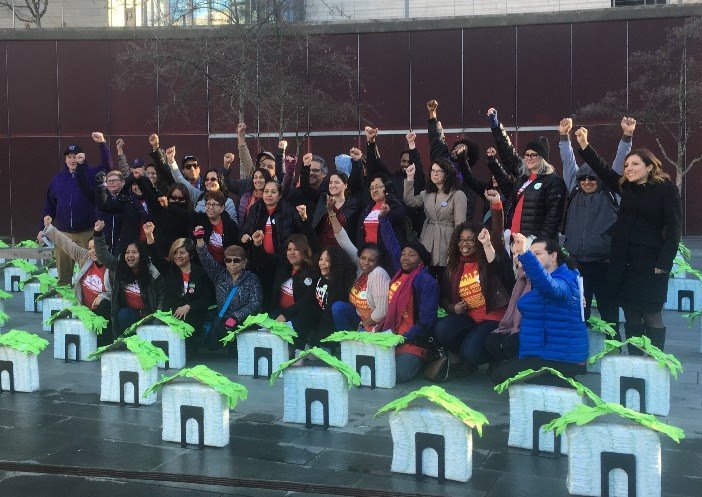
On July 27, Seattle Mayor Jenny Durkan signed into law the city’s domestic workers’ bill of rights. The ordinance, which passed the Seattle City Council unanimously on Monday, establishes protections for the city’s more than 30,000 nannies, caregivers and housekeepers, who have historically been excluded from labor laws. Seattle is now the only city in the United States with a comprehensive domestic workers’ bill of rights. The city joins eight states that have adopted a domestic workers’ bill of rights.
Against a grim national backdrop in which traditional labor unions are being drained of any remaining power, the persistence of the domestic workers’ movement throughout the country is indicative of how labor organizing may continue to evolve, incorporating workers’ efforts to exert pressure directly on local policymaking bodies.
Seattle City Councilmember Teresa Mosqueda, who was just elected to her position in November, was instrumental to the ordinance’s passage.
“As a woman, as a person of color, as a third generation Chicana, I know that many of our issues have been on the back burner historically,” Mosqueda told Truthout. “When I got into office, this was the first legislation I was committed to passing.”
Councilmember Mosqueda and her colleagues were moved by the advocacy of domestic workers like Etelbina Hauser. Hauser, 57, was born in Honduras and spent many years as a domestic worker in Seattle. In the past, Hauser had suffered harassment and abuse at the hands of her employers.
Hauser is now an organizer with the National Domestic Workers Alliance. The Seattle ordinance was the first legislative campaign she worked on, and she was present at Monday’s unanimous City Council vote.
“When we heard the vote announced, one city council member after another, everyone started cheering,” Hauser told Truthout. “I immediately shared the news with my daughters when I saw the outpouring of support on social media. For me personally, this is a feeling of triumph and recognition for us as domestic workers.”
Seattle’s new domestic workers’ ordinance, which takes effect in 2019, applies to nannies, house cleaners, home care workers, gardeners and cooks who are employed by individuals or private residences. The bill also covers live-in workers who sleep or reside at their place of employment.
The law now entitles domestic workers to Seattle’s minimum wage, and also grants them meal and rest breaks. Workers who live with their employers are entitled to overtime pay and one day off per week.
Seattle’s ordinance also includes a first-of-its-kind provision: the creation of a Domestic Worker Standards Board. The standards board will be a forum for workers and employers to dialogue and identify proposals and recommendations that will raise standards for the sector. The Seattle City Council must act on the standards board’s recommendations within 120 days after they’re made.However, the law does not apply to workers who are paid through state Medicaid dollars, which the city does not have the authority to alter. According to the National Domestic Workers Alliance, workers paid through Medicaid have generally achieved higher wages through their ability to bargain with the State of Washington.
“The creation of this Board helps ensure that labor standards can change and improve over time without local activists having to mount a legislative campaign,” said Marzena Zukowska, a representative for the National Domestic Workers Alliance. “The standards board will make our organizing so much easier.”
Thanks to the creation of the standards board, Seattle’s domestic workers’ bill of rights is one of the most robust and innovative in the country. (By contrast, some domestic workers’ laws have been streamlined through legislative processes to simply guarantee overtime or other basic protections.)
Domestic workers’ advocacy is helping empower the sector as a whole. There are approximately 30,000 domestic workers employed in Seattle, and a March 2018 National Domestic Workers Alliance survey of 174 Seattle domestic workers revealed that their wages vary widely. Seventy-seven percent of surveyed workers said they have difficulty making ends meet.
Most domestic workers in the US cannot afford to take days off when they are sick or pregnant. Planning for educational expenses or retirement becomes nearly impossible for many domestic workers. Globally, the vast majority of domestic workers are women — and they are also caregivers within their own families. Such working conditions throughout the world keep women in poverty.
Worker-advocates toiled for just one year in Seattle to secure the new city ordinance, whereas other local and state domestic workers bills of rights have taken several years and multiple failures before finally passing. Employers of domestic workers as well as traditional labor unions like the SEIU in Seattle threw their support behind the law.
The broad-based support in Seattle is not surprising, given the city’s record on economic justice issues — including efforts to secure higher wages for Uber drivers. Seattle also has one of the highest minimum wages in the country.
Now, domestic worker-advocates like Hauser and Gilda Blanco are energized by the victory in Seattle — and they have their sights set higher.
Blanco, 47, worked as a housecleaner for 14 years in Detroit before becoming an organizer with the National Domestic Workers Alliance. She is a Black immigrant from Guatemala, and has played a central role in organizing Black domestic workers in Seattle.
“The worker testimony at the Seattle City Council meeting about the abuse, discrimination and harassment they’ve faced was so powerful,” Blanco said. “And it’s powerful not just for the 30,000 workers in Seattle, but for workers all over the country.”
As a domestic worker, Blanco said she was isolated. “I had no idea there were so many domestic workers around me,” she said. “And as an immigrant I didn’t know I had rights.”
The isolation that Blanco describes is a common experience for domestic workers, who generally labor in private homes with little ability to connect with other workers — a set of conditions that have historically made organizing that much more challenging for them.
But now, Blanco’s life experience as a domestic worker motivates her to fight for better wages and working conditions for the entire sector.
Domestic workers’ advocacy will continue at the local and state levels. Depending on how the November elections go, a federal domestic workers’ bill of rights may be something the domestic workers’ movement fights for as well.
“We have to follow up this Seattle bill with a federal law. This win gives us strength, strength to keep fighting,” Blanco said. “We are strong. We never give up. This is a new phase of democracy in the United States.”
An important fundraising appeal: 7 Days to raise $42,000
Truthout is one of only a few platforms for justice-oriented, grassroots journalism. Today, as political censorship from the right intensifies, we have no choice but to ask for your help.
We are fundraising right now to cover our basic operating expenses. If you can support Truthout with a one-time or monthly donation, you will make a significant impact on our work. Anything you can do makes a difference — we appreciate your support.