Honest, paywall-free news is rare. Please support our boldly independent journalism with a donation of any size.
On Thursday, the House of Representatives pushed forward with a measure to increase military cooperation between the U.S. and Israel despite one congressman’s efforts to block the proposal.
The House Armed Services Committee held a marathon session Thursday on the National Defense Authorization Act (NDAA) budget, concluding after midnight on Friday and ultimately approving $1.15 trillion for defense programs.
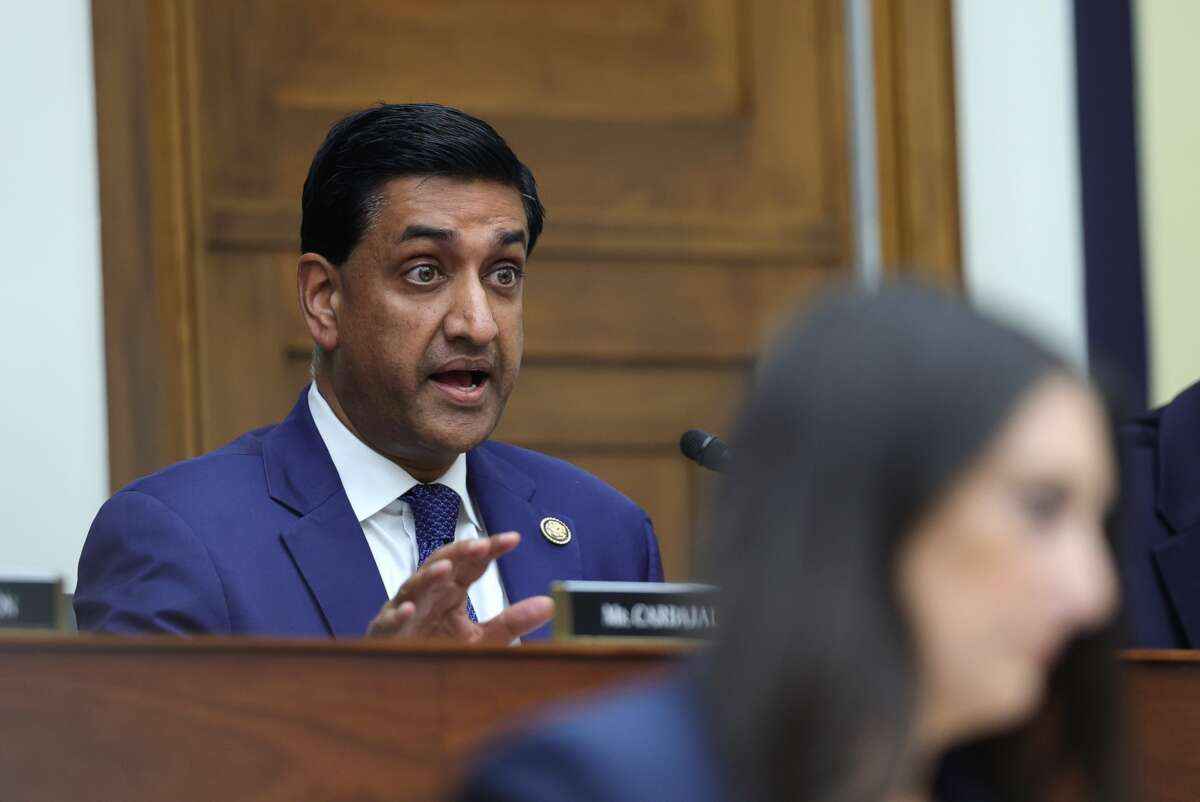
Democratic Rep. Ro Khanna (California) attempted to remove Section 224 of the NDAA, which calls for an increase in military cooperation between the U.S. and Israel, but was met with opposition, including from fellow Democrats.
Section 224 of the NDAA calls for an increase in military technical cooperation between the U.S. and Israel’s defense industries, with the creation of a position in the Pentagon to “synchroniz[e] cooperative efforts,” and “expand and accelerate bilateral defense technology research, development, testing, evaluation, integration, and industrial cooperation.” This would also entail more cooperation on missile defense, AI, and other technology, “joint training exercises,” and more collaboration across “government, private sector, and academic institutions” in the U.S. and Israel.
Khanna introduced an amendment to strike down the proposal on Thursday, but was met with widespread opposition, with only a single Democrat voicing approval.
Khanna attempted to appeal to lawmakers across the political spectrum in his remarks, saying, “Everyone in America – whether you’re a Republican, an independent or a Democrat – says that we need to tell Netanyahu that America calls the shots, not the prime minister of any other country.”
Khanna was referring to a letter penned by Israeli Prime Minister Benjamin Netanyahu that endorsed the measure and called for the U.S.-Israel relationship “to move from aid recipient to partner” under a “new framework of joint defense cooperation.” Khanna claimed that Section 224 echoed Netanyahu’s demand.
“[Americans] want less cooperation and blank checks to Israel, not more. Only the United States Congress would dream up at this moment, ‘Let’s actually do more for Israel,’ not less,” Khanna said.
But eight committee members – including Democrats – spoke against Khanna’s amendment. They said that the creation of the liaison position would ensure U.S. supervision of the program, and that the technology-sharing would allow the U.S. to benefit from Israeli technology.
This technology has been developed through the subjugation of Palestinians – Gaza especially has been used as a “testing ground” for Israeli technology. Since 2024, south Lebanon, too, has become a testing ground for Israeli weapons technologies.
Washington Rep. Adam Smith – the lead Democrat on the committee – said that he was “sympathetic” to Khanna’s argument. “Mr. Netanyahu insisted on this war with Iran that has strengthened Iran and weakened our position. I do not like his leadership of Israel or where he is going,” he said.
But Smith insisted that having a military partnership with Israel is useful “because Israel has actually been having to fight.”
“They have faced drone attacks and missile attacks. They have had to develop new technologies, technologies that we’ve benefitted from,” he continued.
Smith also stated that the framework was not new. “We have three existing programs right now where we do military cooperation with Israel to develop technologies. Those programs already exist,” he said.
Only Rep. Sara Jacobs (D-California) spoke in favor of the amendment. “The United States should have the same standards for Israel as we do for everyone else,” she said. “If any other country in the world had been credibly accused of violating U.S. and international law again and again, of killing tens of thousands of civilians, of blocking food and medicine from reaching a starving population, we would not be moving to deepen and permanently expand our military ties with them.”
But the lack of support from other Democrats is a reminder that the U.S. sees working more closely with Israel as in its own interests, too, not just Israel’s – and a long line of both Democratic and Republican presidents have maintained this position for decades.
An important fundraising appeal: 4 Days to raise $35,000
Donations are down for Truthout at a time when media is under immense pressure. Google’s AI search has driven our traffic down by 15 percent, Trump is arresting journalists, and many independent media organizations face heartbreaking cutbacks and closures.
At the same time, movement media is vital in the fight against Trump’s authoritarian reign. Our mandate to tell the truth, share strategies for resistance, and speak against fascism is ever more urgent in this deluge of political censorship and misinformation. Yet, we are struggling to meet our publishing costs when our work is so urgently needed.
We are fundraising right now for those basic operating expenses — we need $35,000 in the next 4 days. If you can support Truthout with a one-time or monthly donation, you will make a significant impact on our work. Anything you can do makes a difference.