Support justice-driven, accurate and transparent news — make a quick donation to Truthout today!
BP has abandoned its most recent “top kill” effort to contain its well, a company official announced Saturday evening.
“After three full days, we have been unable to overcome the flow,” said the company’s chief operating officer, Doug Suttles.
In its next effort to halt what its officials have called an “environmental catastrophe,” BP will cut off the leaking riser at the top of the five-story blowout preventer atop the wellhead to get an even surface on the broken pipe.
Then the company will install what’s called a lower marine riser package, a cap containment system that would be connected to a new riser from the Discoverer Enterprise drillship 5,000 feet above on the surface. The aim is to minimize the amount of oil reaching the shore until BP can drill relief wells, Suttles said.
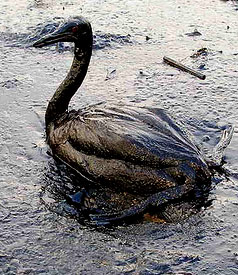
He estimated that the procedure would take about four days to complete, but if it also fails, it could be several months before BP can finish drilling two relief wells to intersect the runaway well. During that time, millions more gallons of crude oil could contaminate the Gulf of Mexico, poison wildlife, destroy fragile marshlands, close fishing grounds and deprive fisherman, resort workers and many others of their livelihoods.
Coast Guard Rear Adm. Mary Landry said officials were disappointed that the top kill method failed, but added that the Coast Guard and BP are still fighting to keep the oil from reaching the shoreline.
“It’s a little bit of a roller coaster ride for everyone,” she said. “Obviously, we’ve said we’ve had to prepare for a worst-case scenario from day one, that this could fail totally and release a tremendous amount more than it is releasing now.”
After three days in which BP said it pumped more than 30,000 barrels of drilling lubricant known as mud into the runaway wells blowout preventer, BP engineers determined that it was time to try something else, Suttles said.
He said the decision was made in consultation with Interior Secretary Ken Salazar and Energy Secrtary Steven Chu, a Nobel laureate in physics.
Engineers had hoped that the drilling mud pumped into the blowout preventer using the top kill method would block the crude oil and gas from spewing out of the damaged wellhead and blowout preventer.
However, from the beginning technicians said that most of the mud flowed right back out, along with the oil and natural gas. BP halted pumping the mud for an extended period within hours after it began on Wednesday, and in the ensuing days, it also pumped debris into the blowout preventer in hopes of blocking leaks and allowing the mud to accumulate. Those efforts apparently failed, too.
An urgent fundraising appeal: 5 Days to raise $38,000
Truthout is one of only a few platforms for justice-oriented, grassroots journalism. Today, we face an existential threat.
Due to Google’s launch of AI search, we’ve seen a drastic plunge in our site traffic and, as a result, our revenue. We lost 15 percent of our readership overnight. This was a readership we painstakingly built over decades, and it vanished because Google chose corporate greed over a healthy democracy.
We are fundraising right now to meet our basic operating expenses. If you can support Truthout with a one-time or monthly donation, you will make a significant impact on our work. Anything you can do makes a difference — we appreciate your support.