Truthout is an indispensable resource for activists, movement leaders and workers everywhere. Please make this work possible with a quick donation.
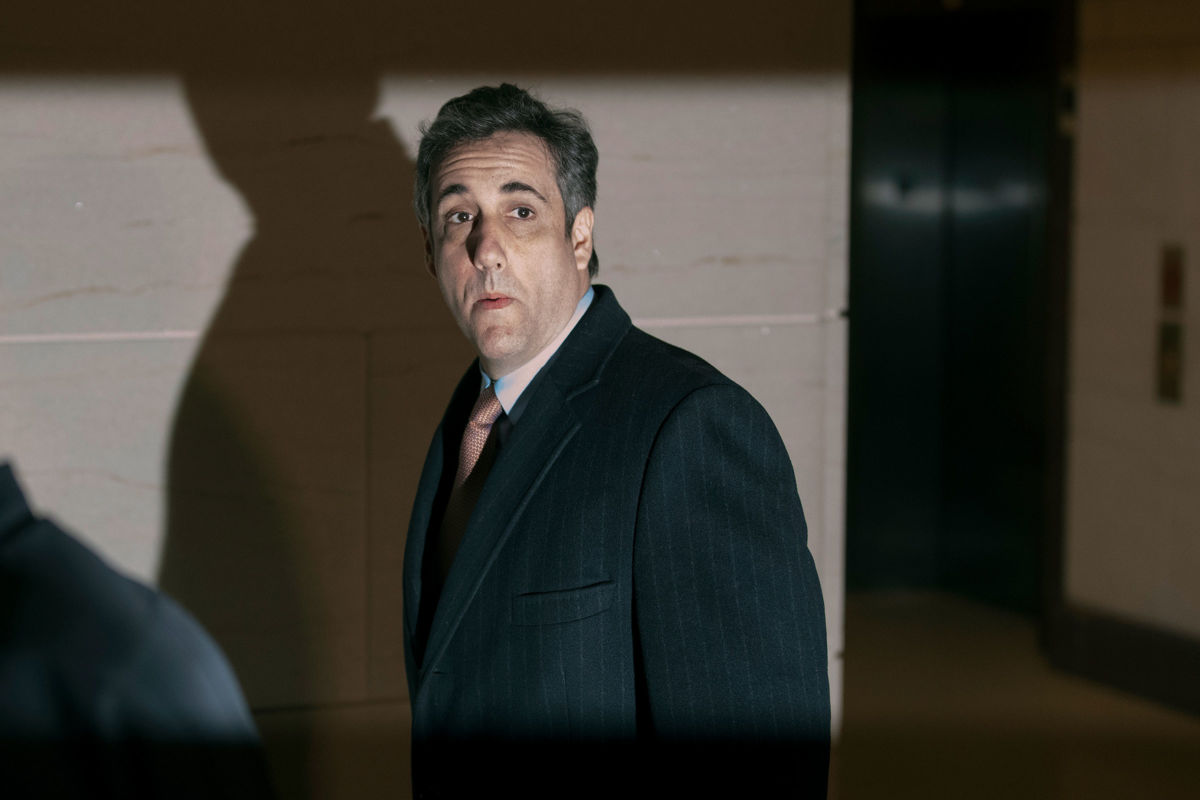
Two weeks ago, President Trump’s ex-lawyer Michael Cohen gave dramatic testimony before the House Oversight Committee on a range of topics that included the president’s potential campaign finance crimes and bank fraud.
Cohen’s testimony was a marathon, not a sprint. Hour after hour, he testified as committee members alternated between grandstanding and asking actual substantive questions. One of Cohen’s claims that seemed to generate incredulity from ranking member Congressman Jim Jordan (R-OH) was that Cohen himself had encouraged Trump to run for president back in 2011.
But this claim was true. In 2011, Cohen set up a webpage called ShouldTrumpRun.com. And back in 2011, Trump tweeted about the website. At the time, Cohen’s efforts around ShouldTrumpRun generated a complaint to the FEC from a Ron Paul campaign staffer. According to the complaint, ShouldTrumpRun should have been registered as a political committee under federal campaign finance law—and the website violated bans against corporate involvement in a federal campaign by using resources from the Trump Organization like its plane.
As I’ve written about previously, one of the oldest parts of present campaign finance law is the Tillman Act of 1907, which bans corporations from giving money (or other things of value) to federal candidates. This law is still in effect because of a Supreme Court decision from 2003 called Beaumont.
The complaint against ShouldTrumpRun was eventually dismissed by the FEC in 2013, after the 2012 election. The FEC concluded when it closed the matter:
“DISPOSITION: The Commission found no reason to believe Trump failed to file a Statement of Candidacy or that ShouldTrumpRun failed to register and report as a political committee. The Commission also found no reason to believe that Cohen, Rahr, Trump LLC or ShouldTrumpRun made, or that Trump accepted, excessive or prohibited contributions. The Commission closed the file in connection with the remaining allegations.”
But it’s not just the FEC that administers campaign finance laws. The Department of Justice has jurisdiction to enforce campaign finance laws, too—a fact that was probably lost on Trump and Cohen after the FEC closed their file.
A December 2017 handbook called Federal Prosecution of Election Offenses details the myriad ways the DOJ can, under 52 U.S.C. § 30109, enforce campaign finance laws against willful violations involving $2,000 or more within a calendar year. However, the handbook clarifies, “[c]riminal violations of federal campaign financing laws require proof that the conduct was committed ‘knowingly and willfully.’ …[T]his means that the defendant must know that his or her conduct is unlawful.”
Trump may have been an unindicted co-conspirator in Michael Cohen’s two campaign finance crimes of (1) violating the contribution limits and (2) violating the ban on corporations donating to federal candidates related to his payment of hush money to Stormy Daniels. These campaign finance violations were enforced against Cohen by the DOJ, not the FEC. There is one recurring question: did Trump have the requisite knowledge to willfully violate these laws, which would place him within the ambit of the DOJ?
ShouldTrumpRun’s alleged misuse of corporate funds took place in 2011 and took another two years to resolve. As journalist Marcy Wheeler has pointed out, this incident should have put Trump on notice about the campaign finance laws that bar corporations from being involved in campaigns. So yes, Trump likely had the requisite knowledge in 2016 that the Tillman Act existed. The harder question is whether his alleged violation was willful.
It’s possible that what Trump learned from this episode back in 2011 is that the FEC would not enforce campaign finance laws. And here’s a coda to this tale. In 2013, then-FEC Commissioner Don McGahn released a statement in support of Trump’s position that there had been no violation of the campaign finance law of ShouldTrumpRun.com. McGahn went on to become Trump’s election lawyer in 2016, then served as White House Counsel. But it may all end up being karma because McGahn has cooperated extensively in the Mueller investigation, according to the New York Times. What the public doesn’t know yet is whether that cooperation included anything about campaign finance crimes.
We lost 15 percent of our traffic overnight.
We now have three full months of data since Google changed its search to feature AI results. The numbers are worse than we anticipated. Overall readership that comes to Truthout through Google is down 54 percent against last year. The number of new readers who discover Truthout via Google searches is down 49 percent, and returning users from Google are down 51 percent.
We lost 15 percent of our readership overnight. This was a readership we painstakingly built over decades, and it vanished because Google chose corporate greed over a healthy democracy.
We anticipate a loss of roughly $500,000 in online revenue as a result of this massive traffic plunge in the next year alone.
The only way we can keep publishing is with strong reader support. We are asking you to start a monthly donation to Truthout today — anything you can do, whether $5 or $25, makes a difference.