Truthout is a vital news source and a living history of political struggle. If you think our work is valuable, support us with a donation of any size.
My old teacher Rudi Dornbusch – whose presence is sorely missed in this world gone mad – wrote an influential 1989 analysis, with Sebastian Edwards, of what they called “macroeconomic populism.” This is the historical tendency of some (not all) populist governments to engage in wishful thinking and to believe that they can repeal the usual rules – that they can indefinitely contain inflation in an overheated economy with price controls, for example, or that they can ignore limits on capacity.
It’s slightly tricky to talk about this problem in times like these – macroeconomic populism is heterodox economics, but not all heterodox economics is macroeconomic populism. For instance, capital controls have often been an ultimately destructive attempt to mask underlying reality, but in some cases, like Iceland in recent years, they’ve proven to be a great way to calm a market panic.
Macroeconomic populism in the bad sense has been a real problem at certain times and in certain places; it’s clearly part of the mess that Venezuela is in, and Argentina has, sadly, slid from the useful heterodoxy behind its stunning recovery after 2002 to a lot of old-fashioned vices.
But let’s not talk about Latin America. Instead, let’s talk about Russia.
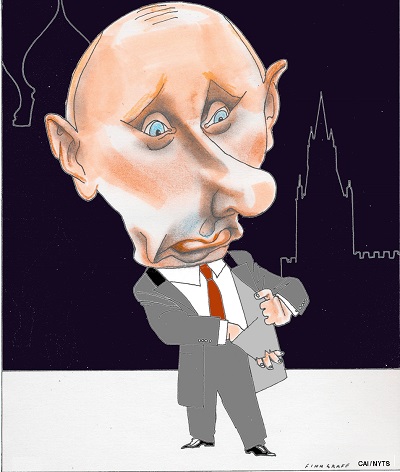
President Vladimir Putin’s decision to reject advice from economists who tell him anything he doesn’t want to hear feels very familiar to me and, I’m sure, to many others who’ve followed Latin America over the decades. Basically, it sounds a lot like good old-fashioned macroeconomic populism.
There is, however, one interesting difference.
The stories that Mr. Dornbusch and Mr. Edwards analyzed in their paper involved governments that really were trying to help low-wage workers and the poor. That is, they really were populist regimes, even if they didn’t end up serving the interests of their constituency. But nobody would call the Putin regime populist; he’s rejecting economics as we know it to defend a kleptocracy, not the downtrodden masses.
Have there been comparable examples? Malaysia’s imposition of capital controls in 1998 was, in part, about rescuing its version of an oligarchy, but it was also a reasonable policy given the circumstances, and it worked O.K. Otherwise I’m coming up blank.
So Mr. Putin seems to have brought something new, or at least formerly rare, into the world of economic policy: macroeconomic cronyism – an effort to suspend the laws of economics on behalf, not of the broad populace, but of a tiny group of well-connected malefactors of great wealth. Innovation!
25 Years of Truthout: An important fundraising appeal
This September, Truthout is celebrating 25 years of publication. For over two decades, we have been a trusted source for fiercely independent journalism thanks to readers like you.
As we look to the next 25 years, we have launched a special fundraising campaign. Looking to a sustainable future for our publication, we have a fundraising goal of $63,000 in the next 4 days.
We are asking for your support at this juncture because we face greater threats than ever before in our organizational history. Trump and his MAGA allies are determined to control the information ecosystem, and movement-based organizations are subject to dangerous censorship and scrutiny.
If you can support Truthout with a one-time or monthly donation, you will make a significant impact on our work and our legacy. Anything you can do makes a difference!